Is OCD a Disability? Understanding When Obsessive-Compulsive Disorder May Qualify
July 17, 2026
OCD and ADHD: Understanding the Similarities, Differences, and Overlap
July 30, 2026
Is OCD Neurodivergent? Discover what experts say about OCD, neurodiversity, autism, ADHD, brain differences, diagnosis, and treatment in this evidence-based guide.
Here’s what nobody tells you about this question: there isn’t a clean yes or no.
You’ve probably searched “is OCD neurodivergent” hoping for a simple answer. One word. Done.
You’re not going to get that here. And if anyone tells you otherwise, they’re oversimplifying something that genuinely doesn’t have a single right answer.
Here’s the reality: OCD is classified as a mental health condition, not a neurodevelopmental one. But the word “neurodivergent” was never built for tidy medical boxes, it’s a social and identity-based term as much as a clinical one. Some people with OCD feel it fits them perfectly. Others don’t feel it at all.
Both are right. That’s not a cop-out, that’s the actual truth about how this term works.
What this article will and won’t do: We’re not here to hand you a label. We’re here to explain how OCD affects the brain, how it compares to autism and ADHD, why the neurodivergent conversation exists at all, and how to get an accurate diagnosis regardless of what word you use to describe yourself. Let’s break it down properly.
What “Neurodivergent” Actually Means (And Why It’s Not a Diagnosis)
Here’s the first thing to understand: neurodivergent was never a medical term.
It came out of advocacy movements, originally built around autism, that pushed back on the idea that there’s only one “correct” way for a brain to work. Instead of treating every difference as a deficit, the neurodiversity movement argued for acceptance, inclusion, and recognising strengths alongside challenges.
Over time, the term grew. It now shows up in conversations about learning differences, sensory processing, cognitive styles, way beyond where it started.
Conditions that typically get discussed under this umbrella include:
- Autism
- ADHD
- Dyslexia and other learning differences
- Tourette syndrome
- Other neurological or developmental differences
But here’s where it gets messy: there’s ongoing debate about exactly which conditions belong on that list. No governing body hands out neurodivergent memberships.
Neurotypical vs. neurodivergent, what the terms are actually doing:
Neurotypical describes people whose neurological functioning lines up with what a society considers standard. Neurodivergent describes people whose brains work differently from that baseline.
The bottom line: neurodivergence isn’t a diagnosis. It’s a descriptive label, not a medical category. Two people with identical diagnoses might use completely different language to describe themselves, one embracing “neurodivergent,” the other sticking with their clinical diagnosis. Neither is wrong.
This is exactly why there’s no simple medical answer waiting for you at the end of a Google search. The neurodiversity conversation runs on both science and personal experience, and those two things don’t always agree.
What OCD Actually Is (Because It’s Not What You Think)
Let’s kill a myth right away: OCD is not “being really tidy.”
Obsessive-Compulsive Disorder is a mental health condition built around recurring, unwanted thoughts, images, or urges, followed by repetitive behaviours or mental rituals aimed at reducing the distress those thoughts cause.
Here’s the part people miss: people with OCD don’t choose these thoughts. Most of them know the fear isn’t rational. They still feel compelled to respond to it anyway.
This isn’t a personality quirk. It affects:
- Work and education
- Relationships
- Daily routines
- Confidence and emotional wellbeing
- Ability to relax or focus
Obsessions and Compulsions: The Two-Part Cycle
Obsessions are the intrusive thoughts, images, or urges that show up uninvited and won’t leave. Common ones include:
- Fear of contamination or illness
- Fear of making a serious mistake
- Worries about causing accidental harm
- Disturbing intrusive thoughts
- Excessive concerns about uncertainty or responsibility
These thoughts are distressing precisely because they clash with the person’s actual values.
Compulsions are the repetitive actions, physical or mental, performed to neutralise that anxiety. Common ones include:
- Washing or cleaning repeatedly
- Checking doors, appliances, or documents
- Repeating phrases or numbers mentally
- Seeking reassurance from others
- Arranging objects until they feel “right”
Here’s the trap: compulsions bring short-term relief. But they strengthen the OCD cycle over time. The relief is the hook.
OCD Doesn’t Look the Same in Everyone
OCD shows up in several recognisable patterns:
Contamination OCD , intense fear of germs or illness, driving excessive cleaning or avoidance.
Checking OCD , repeated checking of locks, appliances, or work tasks, fuelled by fear of mistakes.
Harm OCD , distressing intrusive thoughts about accidentally harming yourself or others. These thoughts don’t reflect intent.
Relationship OCD , persistent doubts about relationships, compatibility, or feelings.
Pure OCD , primarily internal obsessions and mental rituals, with few visible compulsions.
Sound familiar? If any of this resonates, know this: OCD is far more varied than the stereotype suggests.
Where Normal Habits End and OCD Begins
Everyone double-checks the stove occasionally. That’s not OCD.
The difference is intensity, frequency, and impact. Someone without OCD checks the lock once and moves on. Someone with OCD might check repeatedly, for an extended period, despite knowing full well the behaviour doesn’t make sense.
OCD isn’t defined by having unusual thoughts. It’s defined by the distress and disruption those thoughts create.
So, Is OCD Neurodivergent?
Here’s the honest answer: there’s no universal clinical consensus. And there won’t be one anytime soon.
Traditionally, OCD sits in its own category, a psychiatric disorder, discussed separately from neurodevelopmental conditions like autism and ADHD.
But some communities use “neurodivergent” as a wider umbrella, one that includes any meaningful difference in brain functioning, not just formally recognised neurodevelopmental diagnoses.
Both perspectives genuinely exist:
- Some people view OCD as part of neurodiversity because it involves real differences in cognition, perception, and brain function.
- Others keep it separate, treating it primarily as a mental health disorder, one where symptoms often improve significantly with treatment.
This is where most people get it wrong, they assume there’s a “correct camp” to belong to. There isn’t. Clinical discussions tend to focus on diagnosis, symptoms, and treatment. Neurodiversity discussions tend to focus on identity, inclusion, and understanding difference. Neither replaces the other.
Why do some people with OCD identify as neurodivergent and others don’t?
Some feel their patterns of thinking, sensory processing, or emotional response genuinely diverge from what’s typical, and the neurodiversity framework gives them useful language for that, plus a community to connect with.
Others see OCD primarily as a treatable condition and don’t feel the identity framing adds anything for them.
Neither answer is wrong. How someone frames their own experience is personal, shaped by symptoms, beliefs, support needs, and their individual relationship with the diagnosis.
The bottom line: respect the language each person chooses. Don’t assume everyone with OCD sees it the same way, and don’t correct someone’s self-description based on your own view of the term.
What’s Actually Happening in the Brain
Here’s the truth about OCD and brain science: differences exist, but differences alone don’t decide classification.
Research points to variations in specific brain circuits, networks responsible for detecting threats, processing emotion, evaluating risk, and controlling repetitive behaviour. This doesn’t mean the brain is damaged. It means communication between these regions works differently.
One frequently discussed system is the cortico-striato-thalamo-cortical (CSTC) circuit. Differences here may explain why it’s so hard to simply “stop” a repetitive thought or behaviour once it starts, even when you logically know it’s unnecessary.
Genetics and environment both play a role:
Having a close family member with OCD increases risk. But genetics alone doesn’t determine the outcome. Environmental contributors include:
- Stressful life experiences
- Major transitions or changes
- Childhood experiences
- Learned patterns of responding to anxiety
Here’s why this matters: the fact that OCD involves measurable brain differences doesn’t automatically make it neurodivergent by classification. Plenty of mental health conditions show differences in brain activity. Classification depends on diagnostic frameworks, not just neuroscience. That’s precisely why this question keeps generating debate instead of a tidy answer.
OCD vs. Autism vs. ADHD: Where the Confusion Comes From
Let’s separate the two, actually, the three.
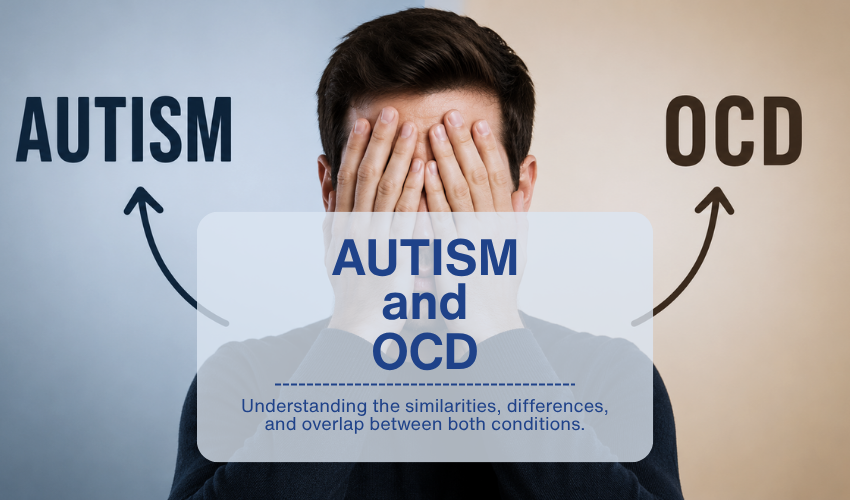
OCD, autism, and ADHD are distinct conditions. But surface-level overlaps create genuine confusion:
- Repetitive behaviours
- Difficulty with change
- Intense interests or focus
- Sensory sensitivities
- Challenges with emotional regulation
Here’s what actually separates them: motivation.
A person with autism might follow a routine because it’s comforting and reduces sensory overwhelm. A person with OCD might follow a routine because they feel driven to prevent something bad from happening. Same behaviour on the surface, completely different engine underneath.
OCD vs. autism, specifically:
Autism-related routines tend to:
- Provide enjoyment, comfort, or stability
- Reflect genuine personal preference
- Reduce sensory difficulty
OCD-related compulsions tend to:
- Be driven by fear, anxiety, or distress
- Feel unwanted or hard to resist
- Exist to prevent a feared outcome
OCD vs. ADHD, specifically:
ADHD involves differences in attention regulation, impulse control, and activity level, difficulty maintaining focus, impulsivity, disorganisation, time management struggles, and a drive for stimulation.
OCD runs on a different engine entirely: intrusive thoughts and compulsive responses. Someone with OCD might look distracted, but it’s because they’re consumed by intrusive thoughts, not because their attention regulation works differently.
Can you have OCD alongside autism or ADHD? Yes.
- A person with autism and OCD may experience both a need for predictability and anxiety-driven compulsions.
- A person with ADHD and OCD may juggle attention difficulties and intrusive thoughts simultaneously.
A proper assessment untangles which symptoms belong to which condition, and shapes the right treatment plan accordingly.
Why OCD Sometimes Gets Included in Neurodiversity Conversations
People include OCD in these discussions because it involves noticeable differences in how thoughts, emotions, and behaviours get processed, things like:
- Heightened threat awareness
- Strong feelings of responsibility
- Difficulty dismissing intrusive thoughts
- Different responses to uncertainty
- Repetitive patterns of thinking
But here’s the nuance: recognising real differences doesn’t automatically mean OCD belongs in the same category as neurodevelopmental conditions.
Why identity language matters to some people:
Identifying as neurodivergent can help people understand themselves better, reduce self-blame, find community, and explain their experience to others. Others prefer medical language centred on symptoms, diagnosis, and treatment.
Both can coexist, as long as conversations stay respectful and grounded in evidence. This is an ongoing discussion among researchers, clinicians, and people with lived experience, and the language will likely keep evolving.
How OCD Actually Gets Diagnosed
No online quiz diagnoses OCD. A proper clinical assessment does.
A qualified mental health professional, psychiatrist or psychologist, conducts a detailed evaluation covering:
- The nature of obsessive thoughts
- Compulsive behaviours
- Symptom frequency
- Level of distress
- Impact on daily functioning
- Other possible mental health conditions
Diagnostic criteria generally require:
- Recurrent obsessions, compulsions, or both
- Significant distress or impairment
- Symptoms that are difficult to control
- Symptoms not better explained by another condition
Diagnosis is based on the overall pattern, not one isolated behaviour or thought.
Because OCD can overlap with other conditions, a clinician will typically also consider:
- Autism
- ADHD
- Generalised anxiety disorder
- Depression
- Trauma-related conditions
Getting to the underlying reason behind symptoms is what makes the treatment plan actually work.
Treatment That Actually Works
Here’s the good news buried under all this nuance: OCD is treatable. Many people see real, significant improvement.
First-line treatment: Cognitive Behavioural Therapy (CBT), specifically Exposure and Response Prevention (ERP).
ERP works by gradually exposing you to situations or thoughts that trigger anxiety, while helping you resist the urge to perform the compulsion. Over time, this weakens the anxiety-compulsion cycle.
Let’s be honest about what this isn’t: it’s not about eliminating every intrusive thought. That’s not realistic for anyone, OCD or not. It’s about changing how you respond to those thoughts. Treatment moves at a pace that’s manageable for you, guided by a qualified professional.
When medication enters the picture:
For moderate-to-severe symptoms, or when therapy alone hasn’t been enough, a psychiatrist may recommend a Selective Serotonin Reuptake Inhibitor (SSRI), a type of antidepressant that can reduce the intensity of obsessions and compulsions for some people.
Medication decisions factor in:
- Severity of symptoms
- Previous treatment experiences
- Other physical or mental health conditions
- Potential benefits and side effects
- Personal preferences
Medication tends to work best combined with psychological therapy, not as a standalone fix.
Lifestyle strategies that support (not replace) treatment:
- Maintaining regular sleep patterns
- Engaging in regular physical activity
- Managing stress through relaxation techniques
- Limiting excessive reassurance-seeking
- Following treatment plans consistently
- Learning more about OCD through reliable sources
- Building supportive relationships with family and friends
Here’s what this means for you: no two people experience OCD identically. A genuinely personalised treatment plan accounts for your specific symptoms, goals, other health conditions, life responsibilities, and treatment history, regardless of whether you call yourself neurodivergent or not.
Myths That Need to Die
Myth: OCD is officially a neurodevelopmental condition.
It’s not. Current diagnostic systems classify it as an obsessive-compulsive and related disorder, not alongside autism or ADHD. Measurable brain differences don’t override that classification.
Myth: Everyone with OCD identifies as neurodivergent.
They don’t. Some find the term empowering. Others prefer to simply describe themselves as someone living with OCD. Neither view is more valid than the other.
Myth: OCD and autism are the same thing.
They’re not, distinct conditions with different underlying mechanisms. OCD compulsions are driven by anxiety and intrusive thoughts. Autistic routines often provide predictability or help regulate sensory experience. Some people have both. One doesn’t automatically mean the other.
Why does the language keep shifting? Because research keeps developing and communities keep sharing lived experience. Terms mean different things depending on whether you’re in a medical, educational, advocacy, or personal context. Staying open to that is more useful than trying to lock the terminology down.
When to Actually Get Help
Here’s when it’s time to stop guessing and get assessed:
- Spending several hours a day on obsessions or compulsions
- Avoiding work, education, or social situations
- Feeling unable to control repetitive thoughts or behaviours
- Experiencing significant distress or anxiety
- Struggling to maintain relationships or daily responsibilities
An assessment is worth booking if:
- You’re unsure whether your symptoms match OCD
- Symptoms are becoming more frequent or severe
- You suspect autism or ADHD might also be present
- Current coping strategies have stopped working
- Your quality of life is being affected
Why accurate diagnosis matters, especially with overlapping conditions:
OCD can occur alongside autism, ADHD, anxiety disorders, or depression. Getting the diagnosis right ensures symptoms are understood correctly, treatment is properly targeted, support plans cover all relevant needs, and you get clear information about what’s actually happening.
The goal was never to hand you a label. It’s to understand the whole person and build a plan that works.
Frequently Asked Questions
Is OCD officially recognised as neurodivergent?
No universal clinical consensus exists. OCD is medically recognised as a mental health condition, though some people and communities include it in broader neurodiversity discussions because of the differences it involves in brain function and information processing.
Can you have both OCD and autism?
Yes. They’re separate conditions but can occur together. A comprehensive assessment distinguishes which symptoms belong to each and shapes the right support.
Can ADHD and OCD occur together?
Yes. ADHD affects attention regulation, impulsivity, and executive functioning. OCD centres on intrusive thoughts and compulsions. When both are present, treatment needs to address how each one affects you individually.
Does being neurodivergent mean having a mental illness?
Not necessarily. Neurodivergence describes differences in how the brain functions or processes information. Some neurodivergent people have medical diagnoses; others don’t. And not every mental health condition is universally considered part of neurodiversity.
Is OCD considered a neurodevelopmental disorder?
No. Current diagnostic systems classify OCD as an obsessive-compulsive and related disorder, not a neurodevelopmental one. That’s exactly why this conversation stays nuanced instead of settling into a simple answer.
The Bottom Line
OCD involves real, measurable differences in brain function. But that alone doesn’t make it universally classified as neurodivergent, classification depends on diagnostic frameworks, not just neuroscience.
“Neurodivergent” is a broader concept than a formal diagnosis. Different professionals, researchers, and individuals use it differently, and that’s exactly why “is OCD neurodivergent” deserves a nuanced answer, not a yes-or-no.
OCD can coexist with autism, ADHD, and other conditions. Having OCD doesn’t rule out other diagnoses. Careful assessment identifies what’s actually going on and builds treatment around all of it.
Professional assessment is what actually moves you forward. Whether you’re questioning your symptoms, wondering about another condition, or working out how neurodiversity fits your experience, a proper assessment with a qualified mental health professional gives you clarity that no label can.
Here’s the truth to walk away with: there’s no universal agreement on whether OCD is neurodivergent, and there probably won’t be one soon. But there’s broad agreement on something more important, people living with OCD deserve real understanding, effective treatment, and language that respects both the science and their lived experience.