
Stress Breakdown Recovery: What’s Actually Happening, And How to Get Through It
May 5, 2026
Stress Counselling: Understanding Therapy Options for Managing Stress
May 13, 2026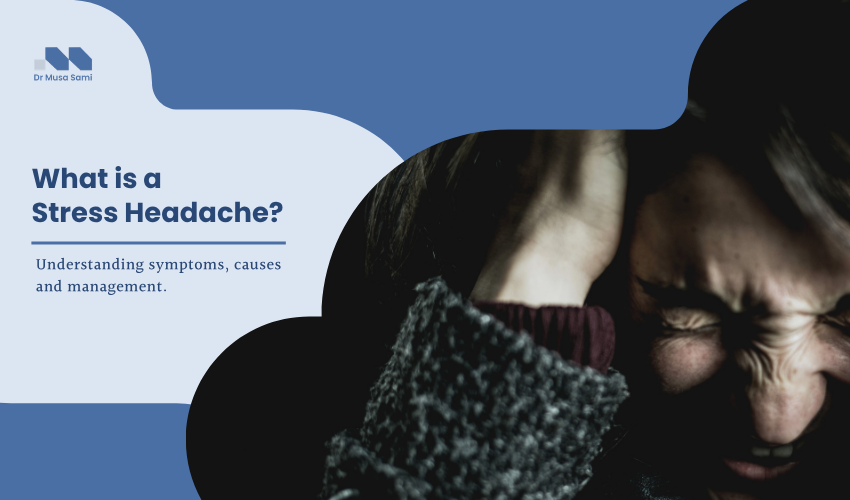
What Is a Stress Headache? Learn the symptoms, causes, triggers, and practical ways to manage stress headaches with this clear guide.
You don’t have a mystery illness.
You’re not going crazy. And no, it’s probably not a tumour.
But that relentless tightness squeezing your skull at the end of a brutal workday? That dull, pressing ache that camps behind your forehead every time life gets overwhelming? That’s real. It’s your body talking, and it’s worth understanding what it’s actually saying.
Here’s what this article will do: explain what stress headaches are, what causes them, and what you can actually do about them. What it won’t do is promise you a miracle cure or pretend this is simpler than it is. Some of you will need professional help. We’ll get to that. But first, let’s start with what nobody usually explains clearly.
What a Stress Headache Actually Is (and What It Isn’t)
The clinical name is tension-type headache. It’s the most common headache disorder on the planet, and stress is one of its primary triggers.
Here’s the reality: a stress headache isn’t a sign of weakness. It isn’t “just in your head”, despite what well-meaning people in your life might suggest. It’s a physical pain response, rooted in real physiological mechanisms.
What distinguishes it from other headaches is the type of pain. Stress headaches feel like pressure, tightness, or a dull ache, not the pulsating, nauseating, shut-the-curtains agony of a migraine. Think of it as your head being slowly squeezed in a vice. Steady, not throbbing.
They also come in two flavours, and the difference matters.
Acute stress headaches show up occasionally, usually tied to a specific stressful event. Presentation at work, difficult conversation, sleepless night. They resolve when the trigger passes.
Chronic stress headaches are a different problem. Occurring 15 or more days per month, they stop being an inconvenience and start genuinely degrading your quality of life. If you’ve reached this point, self-help strategies alone probably aren’t going to cut it.
What Does a Stress Headache Feel Like?
Sound familiar? A tight band around your head. Pressure or heaviness across your forehead. A dull, persistent ache rather than sharp pain. Tightness creeping into your scalp, neck, and shoulders.
The pain is steady, not pulsating, not severe, rarely debilitating in the way a migraine is. It sits in your forehead, temples, or the back of your head, sometimes spreading down into your neck. Some people describe it as their skull being compressed from the outside in.
Duration varies. A stress headache can last 30 minutes or stretch into days. Intensity tends to stay mild to moderate, although chronic versions can grind you down over time in ways that go beyond just the physical pain.
Here’s what’s usually NOT present, and this is important for knowing what you’re dealing with:
No severe nausea or vomiting. No visual disturbances or flashing lights. No dramatic sensitivity to light and sound. Those are migraine territory. If you’re experiencing those symptoms alongside your headache, you need to reconsider what you’re dealing with.
The Physical Symptoms Beyond the Head Pain
Stress headaches don’t travel alone.
The headache itself is accompanied by tight, tender muscles in the neck and shoulders. You might notice scalp tenderness, pressure on certain spots that makes you wince. Jaw tension is common. So is a mild ache around the temples.
Beyond the physical tightness, most people also experience mental fatigue, irritability, and difficulty concentrating. Feeling emotionally wrung out. That foggy, frayed-at-the-edges state that comes with sustained stress.
This is where most people get it wrong: they treat only the headache, not the state that caused it. The head pain is a symptom. The stress response underneath it is the actual problem.
Here’s What’s Actually Happening in Your Body
Your stress system, the fight-or-flight response, was designed for short-term threats. Danger appears, your body floods with stress hormones like cortisol, your muscles tighten ready for action, and your pain sensitivity increases.
That’s a survival mechanism. Brilliant for escaping predators. Less brilliant for navigating a relentless inbox and a difficult manager.
When stress becomes chronic, those muscles, particularly around the neck, scalp, jaw, and shoulders, stay partially contracted for extended periods. Pain receptors activate. The nervous system becomes sensitised to pain signals. Cortisol disrupts your sleep, elevates inflammation, and lowers your pain threshold further.
The result? A feedback loop. Stress causes tension. Tension causes pain. Pain creates more stress. And on it goes.
This is where most people get it wrong: they think stress headaches are a psychological problem. They’re not. They’re a physiological response to psychological pressure. The distinction matters, because the solution has to address both.
What’s Actually Triggering Your Headaches
Let’s be honest, knowing the common triggers doesn’t automatically make them avoidable. But it does let you start connecting the dots.
Work pressure and mental overload top the list. Heavy workloads, relentless deadlines, and constant context-switching are headache fuel. Emotional stress, anxiety, relationship tension, financial worry, burnout, runs a close second.
Posture and screen time deserve more credit than they get. Prolonged desk work with poor ergonomics creates sustained muscular tension in the neck and shoulders, and that tension has to go somewhere. Sleep deprivation compounds everything, it lowers pain tolerance and keeps muscles from properly recovering. Dehydration and skipped meals are simpler culprits than most people expect, especially during high-stress periods when basic self-care goes out the window.
Caffeine is worth mentioning specifically: excessive intake can trigger headaches, and, here’s the irony, stopping caffeine abruptly after heavy use causes them too.
What is Stress Headache vs. Other Headaches: Know the Difference
Getting this wrong wastes time and money. Here’s a quick breakdown.
Migraines involve pulsating pain (usually one-sided), significant nausea, and real sensitivity to light and sound. Visual auras, flashing lights, zig-zag lines, can precede them. If this sounds like you, you’re likely dealing with migraines, not tension headaches, and they require different management.
Cluster headaches are severe, sharp pain concentrated around one eye, often with tearing or a runny nostril. Completely different animal. If you’ve had one, you know.
Stress headaches are more diffuse, steady, and bilateral. Present on both sides of the head. Not severe enough to stop you in your tracks, more like persistent background noise that slowly erodes your ability to function.
Correct identification matters. Not because the label is important, but because what you do about it depends on what it actually is.
How Stress Headaches Are Diagnosed
There’s no blood test, no scan, no definitive marker. Diagnosis is based on your clinical history and symptom patterns.
A healthcare professional will ask about the location and character of your pain, how often it occurs, how long it lasts, what seems to trigger or worsen it, and what else is going on in your life. They’re building a picture, not just chasing a number.
Additional investigation may be considered if something in that picture doesn’t fit, if symptoms are unusually severe, changing rapidly, or accompanied by other worrying features.
Here’s when to seek urgent medical attention for stress headache:
A sudden, extremely severe headache, one that’s unlike anything you’ve experienced before, needs immediate evaluation. Same applies to headaches alongside neurological symptoms (confusion, weakness, speech problems), fever, or seizures. These are red flags that require prompt medical assessment, not a wait-and-see approach.
What You Can Do About Stress Headache (Honest Edition)
Let’s separate what actually helps from what sounds nice on a mental wellness blog.
Basic self-care isn’t glamorous, but it works. Drinking enough water throughout the day, resting in a quiet environment, reducing screen exposure, and taking genuine breaks during work can all reduce symptom frequency. This isn’t groundbreaking, but most people do it inconsistently.
Over-the-counter pain relief can help with acute episodes. The catch: using it too frequently, more than 10-15 days per month, can actually trigger what’s called medication overuse headache, making the underlying problem worse. If you’re reaching for painkillers that often, talk to a healthcare professional.
Heat therapy and physical approaches, warm compresses on the neck and shoulders, gentle stretching, massage, directly address the muscular tension component. These aren’t placebo. When muscle contraction is driving your headache, reducing that tension reduces pain.
Stress Management That Actually Does Something
Breathing exercises and mindfulness aren’t just wellness buzzwords. Controlled breathing activates the parasympathetic nervous system, the opposite of fight-or-flight, and can directly reduce muscular tension. Progressive muscle relaxation works on the same principle: deliberately tensing and releasing muscle groups reduces baseline tension.
Exercise is one of the most robust interventions available. It improves mood, sleep quality, circulation, and stress regulation. It also gives stress hormones somewhere to go. Thirty minutes of moderate activity most days isn’t a miracle protocol, it’s just sound biology.
Sleep hygiene has an outsized impact. Consistent sleep and wake times, reducing evening screen exposure, and treating poor sleep as a medical issue rather than a lifestyle choice can significantly reduce headache frequency. Chronic sleep deprivation and chronic headaches are deeply entangled.
Preventing the Next One Before It Starts
Keep a headache diary. Track when headaches occur, how severe they are, how long they last, and what was happening in the hours before. Over two to four weeks, patterns usually emerge. Specific triggers become visible. That information is actionable in a way that general advice isn’t.
Ergonomics matter more than most people accept. If you spend most of your working day at a screen, your monitor height, chair support, and how often you move deserve serious attention. Sustained awkward posture is a reliable headache factory.
Long-term resilience, and this is where honesty matters, isn’t built through a single habit change. It’s built through better work-life boundaries, stress management skills applied consistently, regular physical activity, social connection, and sometimes professional psychological support. These aren’t luxuries. For people with frequent or chronic headaches, they’re often the difference between managing the problem and not.
When to Stop Self-Managing and See Someone
Here’s the truth about stress headaches: most people can manage occasional tension headaches with the strategies above. But some can’t, and recognising the difference matters.
See a healthcare professional if your headaches are becoming more frequent, increasingly severe, or interfering with your work, relationships, or sleep. See someone if you’re taking pain relief regularly to function. See someone if you’re not sure what type of headache you’re experiencing, or if there are any of the red flag symptoms mentioned earlier.
This is not “just stress”, at least, not in the dismissive sense. Stress-related symptoms are genuine physical experiences that deserve proper attention. The fact that stress is involved doesn’t make them less real, or less worth treating properly.
Common Misconceptions, Cleared Up
“It’s just stress, so there’s nothing I can do.” False. Stress headaches respond to intervention. The stress might be difficult to eliminate, but how your body responds to it is genuinely modifiable.
“Stress headaches aren’t serious.” They’re rarely dangerous, but chronic headaches that significantly affect your quality of life are absolutely worth taking seriously. Suffering through them isn’t stoic. It’s unnecessary.
“If I knew what it was, I could treat it myself.” Understanding what a stress headache is helps, but it doesn’t replace professional assessment when symptoms are persistent, worsening, or unusual. Context matters.
Frequently Asked Questions
What is a stress headache, and how is it different from a migraine?
A stress headache (tension-type headache) produces steady pressure or tightness, usually on both sides of the head. Migraines typically involve pulsating pain, nausea, and significant sensitivity to light and sound. The distinction matters for treatment.
How long do stress headaches typically last?
Anywhere from 30 minutes to several hours. Chronic versions can persist longer, sometimes across multiple days.
Can stress headaches occur daily?
Yes. Chronic tension-type headaches can occur 15 or more days per month, and in some people, essentially daily. At that frequency, professional assessment is appropriate.
Are stress headaches a sign of something more serious?
Usually not, but persistent or unusual headaches should be medically assessed to rule out other causes.
What are the best ways to relieve a stress headache at home?
Hydration, rest in a quiet space, heat or massage for neck and shoulder tension, breathing exercises, and gentle stretching. If you’re using pain relief, use it sparingly.
The Bottom Line
Stress headaches, tension-type headaches, are your body’s physical response to sustained psychological pressure. They’re real. They’re common. And they’re treatable.
The pain is real. The muscle tension driving it is real. The impact on your focus, mood, and daily functioning is real. Dismissing it as “just stress” helps no one.
Most people can reduce frequency and severity through better sleep, hydration, movement, stress management, and attention to posture and ergonomics. Some will need professional support, and that’s not a failure, it’s a sensible response to a persistent problem.
If your headaches are occasional and manageable, use the strategies in this article. If they’re frequent, worsening, or affecting your life in meaningful ways, see a healthcare professional. Don’t wait until it becomes a crisis to take it seriously. Your head is trying to tell you something. It might be time to listen.