
Is PTSD a Disability in the UK? Here’s What the Law Actually Says
April 4, 2026
PTSD Stages: What Actually Happens After Trauma And Why You’re Not “Broken”
April 7, 2026
Discover the connection between trauma and workplace PTSD, including key symptoms, causes, and how it affects employees. Learn how workplace PTSD develops and what steps can support recovery.
Most people think PTSD is just about emotions.
They’re wrong.
PTSD rewires your brain. It physically changes how you form memories, how fast you think, how well you concentrate, and if it’s happening at work, it turns your professional life into a minefield.
Here’s what nobody tells you: the memory lapses, the brain fog, the inability to focus in meetings? Those aren’t personal failings. They’re neuroscience. And understanding why they happen is the first step to doing something about it. This article won’t promise a quick fix. What it will do is give you a clear, honest explanation of how trauma affects your brain, what Workplace PTSD actually looks like day-to-day, and what genuinely helps.
What Workplace PTSD Actually Is (And Why It’s Not Just “Being Stressed”)
Everyone gets stressed. Stress is temporary. Your nervous system spikes, then calms down.
PTSD is different.
It’s what happens when your brain gets stuck in survival mode, long after the threat is gone. The core symptoms cluster into four areas: intrusive memories and flashbacks, active avoidance of anything that triggers those memories, hyperarousal (constant alertness, disrupted sleep, being easily startled), and a persistent shift in how you think and feel about yourself and the world.
The workplace makes this uniquely brutal.
In most environments, you could theoretically avoid your triggers. But work doesn’t give you that option. Meetings, email chains, performance reviews, difficult colleagues, they just keep coming. And if any of those things are connected to your trauma, your brain is running a low-grade threat response all day long.
Workplace PTSD can develop from a single incident, an accident, a violent confrontation, a sudden termination, or it can build slowly through sustained exposure: chronic bullying, relentless pressure, or high-risk roles where traumatic events are part of the job description.
Here’s the reality: the workplace that hurt you may also be the place you feel you can’t leave. That tension is exhausting in a way that’s hard to explain to people who haven’t lived it.
What Trauma Does to Your Brain (The Part Most Articles Skip)
This is where the “just toughen up” advice completely falls apart.
When you experience trauma, your brain doesn’t file it away like a normal memory. Instead, it stores it in fragments, sensory pieces without proper context or sequence. That’s why flashbacks feel so disorienting. You’re not “remembering” in the normal sense. You’re re-experiencing something your brain never properly processed.
The stress hormone cortisol is a major culprit here.
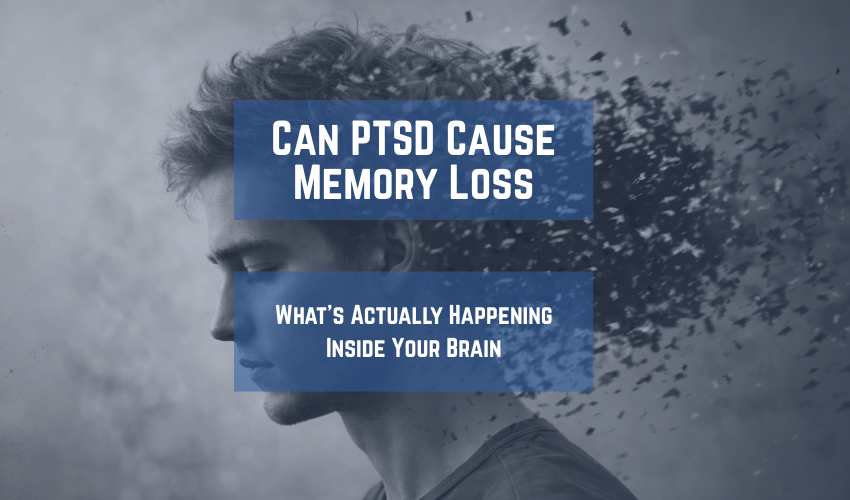
During trauma, and during the ongoing stress response that follows, cortisol levels spike. That affects the hippocampus, the part of your brain most responsible for forming and retrieving memories. When cortisol is chronically elevated, your hippocampus struggles. New memories don’t form properly. Existing memories become harder to access.
This is why someone with Workplace PTSD isn’t being careless when they forget a task or lose track of a conversation. Their hippocampus is genuinely impaired by the neurochemistry of trauma.
Beyond memory, hyperarousal keeps your brain’s threat-detection system on constant overdrive. Your nervous system is scanning for danger at all times. That leaves very little cognitive bandwidth for concentration, decision-making, or following complex instructions.
Then there’s dissociation—a less-discussed but common experience where you feel detached from yourself or your surroundings. During dissociative episodes, memory encoding is disrupted entirely. You can be present in a conversation and retain almost none of it.
What Workplace PTSD Looks Like at Your Desk
Let’s separate the neuroscience from the lived experience.In real terms, Workplace PTSD often looks like this: you walk into a meeting and within minutes feel completely overwhelmed, like there’s too much happening and none of it sticking. You finish a task, then genuinely can’t remember if you finished it. Someone tells you something important and it evaporates. You misread a colleague’s tone and spiral into anxiety for the rest of the afternoon.
And because none of this is visible, it can look to others, and to you, like incompetence or laziness.
It’s neither. It’s trauma.
Not Everyone Experiences This the Same Way
This is where most people get it wrong: they assume PTSD symptoms follow a predictable pattern.
They don’t.
How much your cognition is affected depends on several factors working together. The severity and duration of the trauma matters, chronic, prolonged exposure generally does more cognitive damage than a single incident, though that’s not a rule without exceptions. Your individual resilience and coping strategies play a significant role. So does whether you’re also dealing with depression or anxiety, both of which layer additional cognitive impairment on top of PTSD.
Short-term memory and long-term memory are typically affected in different ways. Short-term memory suffers most from impaired concentration, if you can’t focus, information doesn’t encode properly in the first place. Long-term memory, particularly around the traumatic events themselves, tends to involve fragmented or partial recall rather than clean gaps.
The bottom line: your experience is your own. Comparing your symptoms to someone else’s is rarely useful.
Getting a Proper Assessment
If you suspect Workplace PTSD, a proper clinical assessment is worth pursuing, and it’s more thorough than many people expect.
A good assessment goes beyond a checklist of symptoms. A clinician will take a detailed history, explore what’s triggering your symptoms and how, and evaluate how significantly your functioning has been affected. In cases where cognitive impact is significant, structured tools may be used to assess attention, working memory, and processing speed.
One important thing to rule out: PTSD-related memory issues can, in some cases, resemble symptoms of neurological conditions or dementia. A trained clinician will distinguish between these, but it’s worth knowing that what feels like cognitive decline may have a very different underlying cause.
If you’re accessing support through your GP, they can provide initial assessment and refer to specialist services. Private psychiatric assessment is also an option if NHS waiting times, which commonly stretch from six months to over a year—aren’t workable for your situation.
What Actually Helps Regarding WOrkplace PTSD
There’s no shortage of unhelpful advice here. Let’s focus on what has evidence behind it.
Trauma-focused psychological therapies are the first-line treatments, not a last resort. Two have the strongest evidence base:
Trauma-focused cognitive behavioural therapy (TF-CBT) helps you process traumatic memories in a structured way, reducing their power to intrude and disrupt your thinking. EMDR, Eye Movement Desensitisation and Reprocessing, uses bilateral stimulation to help the brain reprocess traumatic memories so they’re stored more like normal ones. Both have solid evidence for improving not just emotional symptoms but cognitive functioning too.
Cognitive rehabilitation can complement these therapies. This means working specifically on memory strategies, attention training, and organisational systems, practical tools that help while deeper processing is underway.
Medication isn’t a cure for the cognitive symptoms of PTSD, but it can reduce the underlying anxiety and hyperarousal that make those symptoms worse. Less cortisol flooding your system means better hippocampal function.
Here’s the truth: improvement is realistic. The cognitive symptoms of PTSD are not permanent in most cases. With appropriate treatment, they can and do improve.
Your Rights at Work
PTSD is likely to qualify as a disability if it has a substantial and long-term effect on your ability to carry out normal day-to-day activities. That means you may be legally entitled to reasonable adjustments.
What that looks like in practice: flexible working arrangements to reduce exposure to specific triggers, temporary reduction of workload during recovery, access to a quieter workspace, additional time for tasks that require concentration.
Whether to disclose your diagnosis is entirely your decision. There’s no legal obligation. Some people find that formal disclosure opens up formal support. Others prefer to make informal arrangements without putting a diagnosis on record. What matters most is that you get what you need to function.
Practical Coping Strategies That Work
While you’re working through treatment, these approaches can help reduce the cognitive load at work:
Written reminders and task lists are not a sign of weakness, they’re compensation for a system under strain. Use them without apology. Breaking complex tasks into smaller, discrete steps reduces overwhelm and makes progress more visible. Structured daily routines reduce the cognitive tax of decision-making. Digital tools for organization, calendar reminders, project management apps, recorded meeting notes, extend your working memory externally.
None of these fix the underlying issue. But they reduce the daily friction while treatment does its work.
When to Get Help
Consider seeking professional support if memory problems are persistent, if your work performance has declined noticeably, or if symptoms are causing you significant distress. You don’t have to wait until things are at crisis point.
Start with your GP for an initial assessment and referral pathway. If waiting times are prohibitive, private psychiatric assessment offers a faster route to evaluation and a treatment plan.
One last thing: memory difficulties in PTSD are not a character flaw. They’re not weaknesses. They’re not experiencing cognitive decline. They’re a neurological consequence of what your brain has been through, and brains, given the right support, are capable of significant recovery.
Frequently Asked Questions (FAQs)
Can PTSD cause permanent memory loss?
In most cases, memory difficulties are not permanent and can improve with treatment.
How can PTSD affect short-term versus long-term memory?
Short-term memory is often affected by concentration issues, while long-term memory may involve fragmented recall.
Are memory problems common in workplace PTSD?
Yes, memory and concentration difficulties are frequently reported in Workplace PTSD.
Can therapy improve memory issues related to PTSD?
Yes, therapies such as TF-CBT and EMDR can reduce symptoms and improve cognitive functioning.
Is medication effective for cognitive symptoms in PTSD?
Medication can help reduce underlying symptoms, indirectly improving memory and attention.
The core takeaways
PTSD does real, measurable damage to memory and cognitive function, not through weakness, but through neuroscience. Workplace PTSD makes this harder because your triggers don’t stay outside office hours. The cognitive symptoms are not permanent. Evidence-based therapies work. You have legal protections. And the sooner you seek proper assessment, the sooner you can start recovering the version of yourself that isn’t fighting its own brain at 9am every morning.