Who Can Actually Diagnose PTSD in the UK? (And Why Getting This Wrong Costs You Months)
March 28, 2026
Understanding the Link Between Trauma And Workplace PTSD
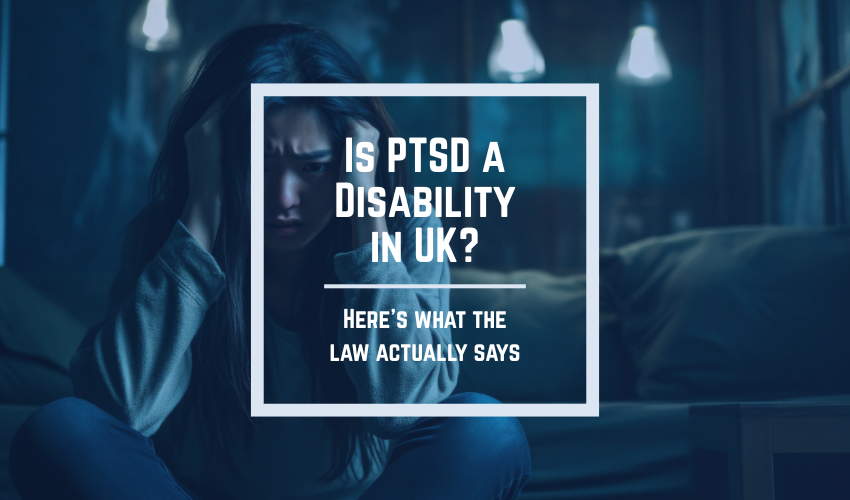
April 6, 2026Is PTSD a disability UK? Discover what UK law actually says, who qualifies for protection, and how PTSD can impact legal rights at work. Most people asking this question have already been through something that’s cost them dearly. They’re not looking for a lecture.
So let’s get to it.
PTSD can be a disability under UK law. But not automatically. Whether it qualifies depends on how your symptoms are affecting your actual life, not just what’s written in a clinical report. Understanding the difference between a diagnosis and a legal designation could determine what support, protections, and financial help you’re entitled to.
Here’s what this article will give you: a clear breakdown of what the law says, who can diagnose PTSD, how the disability classification actually works, and what to do next if you think you qualify.
What it won’t give you: a shortcut, a guarantee, or a promise that everything will be simple. But it will give you clarity, which is more than most people get when they go looking for this information..
What PTSD Actually Is (Not the Textbook Version)
Here’s the reality: trauma is something the human brain was never designed to just “get over.”
PTSD, Post-Traumatic Stress Disorder, is a mental health condition that can develop after experiencing or witnessing something genuinely terrible. Serious accidents. Violence. Military combat. Abuse. Events that leave a mark that doesn’t fade on its own.
The symptoms typically fall into four patterns: re-experiencing the trauma through flashbacks, nightmares, or intrusive memories; avoidance of anything that triggers a reminder; hyperarousal, constantly on edge, unable to sleep, always braced for something; and negative changes in mood, thinking, or sense of self.
Here’s the part that gets misunderstood.
Feeling distressed after a traumatic event is normal. That’s not PTSD. PTSD is what happens when those symptoms don’t ease off over time, when they persist, intensify, and start to erode the quality of your daily life. The clinical distinction matters because it determines what kind of help is available to you.
What “Disability” Actually Means Under UK Law
This is where most people get confused.
The Equality Act 2010 defines disability as: a physical or mental impairment that has a substantial and long-term adverse effect on a person’s ability to carry out normal day-to-day activities.
Two words there do a lot of heavy lifting.
Substantial doesn’t mean catastrophic. It means more than minor or trivial. If your symptoms are meaningfully disrupting how you function day-to-day, that threshold is likely met.
Long-term generally means 12 months or more, or if the condition is likely to recur. It’s about persistence, not permanence.
And here’s something that often surprises people: mental health conditions are treated the same as physical ones under this law. The legal system doesn’t see PTSD as somehow “less real” than a broken leg. The question it asks is always the same, how is this affecting your life?
So Is PTSD a Disability UK? Here’s the Honest Answer
It can be. It isn’t automatically.
PTSD may meet the legal definition of disability if your symptoms are persistent and long-term, if they’re significantly disrupting your daily functioning, and if they affect your ability to work, maintain relationships, or take care of yourself.
Here’s what functional impact actually looks like in practice: difficulty leaving the house; inability to concentrate at work; severe, ongoing sleep disruption; emotional numbness that affects relationships; or avoidance behaviours that limit your ability to go about your normal life.
The law is looking at what you can’t do as a result of your condition, not simply what your diagnosis says.
That’s why two people with identical PTSD diagnoses can have very different legal standings. One may recover relatively quickly. Another may experience long-term, severe symptoms that absolutely meet the threshold. The label is the same. The functional reality is not.
Whether PTSD is considered a disability often depends on how significantly it affects your day-to-day functioning, which is usually determined through a structured clinical assessment. If you’d like to understand how PTSD is formally assessed and diagnosed, you can read our detailed guide here.
The bottom line: legal recognition depends on your individual circumstances, documented over time. Which brings us to the question of how you get that documentation in the first place.
Who Can Diagnose PTSD in the UK
Let’s separate the two things people often conflate here: initial assessment and formal diagnosis.
A GP is usually your first port of call. They can assess your symptoms, rule out physical causes, and refer you to appropriate mental health services. In some cases, a GP may make an initial diagnosis. But for formal, clinical diagnosis, the kind that carries weight in legal, employment, or benefits contexts, you typically need a specialist.
Psychiatrists are medical doctors who have specialised in mental health. They can assess, diagnose, and prescribe treatment.
Clinical psychologists are trained in psychological assessment and therapy. They work extensively with conditions like PTSD and can provide formal diagnostic assessments.
In complex cases, NHS services may involve a multidisciplinary team, multiple professionals contributing to your overall picture.
One important point: a private PTSD diagnosis is accepted for benefits and legal purposes, provided it’s conducted by a suitably qualified professional and supported by appropriate documentation. You’re not obligated to wait for an NHS referral if private assessment is accessible to you.
The Diagnosis Process: What to Expect
Here’s what happens when you seek a formal assessment.
It begins with a detailed conversation about your symptoms, when they started, how frequent they are, and how they’re affecting your life. This isn’t a tick-box exercise. A good clinician is building a comprehensive picture of your experience.
From there, they’ll assess your symptoms against recognised diagnostic criteria, most commonly the ICD-11 (International Classification of Diseases), the framework used in UK clinical settings.
The pathway to get there varies:
NHS referral from a GP is the standard route, though waiting times can be significant, often 6-18 months for specialist assessment. Self-referral to certain therapy services like IAPT (now NHS Talking Therapies) is available for some presentations. Private psychiatric or psychological assessment offers faster access, often within days or weeks.
This is where most people get stuck, waiting. And in the meantime, symptoms continue and documentation doesn’t build.
Evidence, Documentation, and Why It Matters
If you’re going to pursue disability recognition, whether for benefits, workplace adjustments, or legal purposes, documentation is everything.
Medical records and clinical reports from your healthcare team form the foundation. Functional assessments that detail how your symptoms affect your day-to-day capacity add weight. Statements from employers, carers, or occupational health professionals can strengthen your case further.
Here’s what nobody tells you: consistent, ongoing documentation is far more persuasive than a single report. A pattern of clinical records showing persistent, long-term impact is what supports a strong claim, not a one-off letter from a GP.
If your PTSD is significant enough that you’re reading this article, it’s significant enough to start building that paper trail now.
The Support Available to You
If PTSD meets the definition of disability under the Equality Act, you may be entitled to meaningful support across several areas.
Personal Independence Payment (PIP) is a benefit designed to support people with long-term health conditions that affect daily living and mobility. Eligibility is assessed based on functional impact—not diagnosis alone. Evidence matters here.
Employment and Support Allowance (ESA) provides financial support if your condition prevents you from working, or significantly limits the work you can do.
Workplace adjustments are a legal requirement for employers once a condition meets the disability threshold. These might include flexible working hours, adjusted workload, a quieter working environment, or regular breaks. An employer cannot legally ignore this obligation.
These aren’t handouts. They’re protections that exist precisely because conditions like PTSD can be genuinely disabling, and the law recognises that.
Treatment: What Actually Works
A diagnosis isn’t the end of the road. It’s the beginning of the treatment pathway.
The two evidence-based therapies most widely recommended in the UK are Trauma-Focused Cognitive Behavioural Therapy (TF-CBT) and Eye Movement Desensitisation and Reprocessing (EMDR). Both have strong clinical evidence behind them and are recommended by NICE (the National Institute for Health and Care Excellence).
These aren’t passive treatments. They require you to engage actively with your trauma in a structured, supported way. They work for many people, but they take time, and recovery isn’t always linear.
When symptoms are severe, medication, typically antidepressants, may also be considered. This is often used alongside therapy rather than as a replacement for it.
Recovery usually involves ongoing support: regular reviews, lifestyle adjustments, and sometimes a return to therapy during difficult periods. That’s not failure. That’s how long-term conditions work.
Common Misconceptions Worth Clearing Up
Let’s be honest about a few things that trip people up.
PTSD doesn’t automatically equal disability. The legal threshold is functional impact, not diagnosis. Plenty of people have PTSD and recover well. Others experience long-term, severe symptoms that absolutely qualify. Don’t assume either way, get assessed.
Self-diagnosis isn’t enough. PTSD has overlapping symptoms with other conditions. Getting it wrong means getting the treatment wrong. A formal assessment protects you.
Stigma is real, but it isn’t a reason to wait. Concerns about what a diagnosis “means” or how it might affect how others see you are understandable. But untreated PTSD doesn’t get better on its own, and the longer it goes unaddressed, the harder it typically becomes to treat.
When Should You Seek Help?
Consider reaching out now if: your symptoms have persisted for several weeks or longer; your ability to function day-to-day is affected; you feel unable to cope; or your work, relationships, or self-care have deteriorated.
You can start by speaking openly with your GP. If you prefer, you can self-refer to NHS Talking Therapies or explore private psychiatric assessment for faster access.
What you shouldn’t do is wait and hope it resolves on its own. If it’s been long enough for you to be researching this article, it’s been long enough to make the call.
Quick Answers to the Questions People Actually Ask
Does a PTSD diagnosis automatically qualify you for disability benefits?
No. Eligibility depends on functional impact, not diagnosis alone.
Who can officially diagnose PTSD in the UK?
Psychiatrists and clinical psychologists. GPs can identify symptoms and initiate referral.
How long must symptoms last to qualify as a disability?
Typically 12 months or more, or if symptoms are expected to recur.
Is a private PTSD diagnosis accepted for benefits or legal purposes?
Yes, provided it’s conducted by a qualified professional with appropriate documentation.
Can PTSD qualify for reasonable adjustments at work?
Yes, if it meets the legal definition of disability under the Equality Act.
The Bottom Line
PTSD can be a disability. Whether it is depends on your individual circumstances, specifically, how significantly and persistently your symptoms affect your ability to function.
A clinical diagnosis and a legal designation are different things, and conflating the two leads to confusion, missed support, and sometimes, delayed treatment.
What you need is formal assessment by a qualified professional, consistent documentation of your symptoms over time, and a clear understanding of what you’re entitled to once that assessment is in place.
The support exists. The legal protections exist. The pathway to accessing them starts with getting assessed. If you think you may have PTSD, speak to your GP or explore private ptsd assessment uk. Don’t wait for things to get worse before you take that step.