
PTSD Treatments and Therapy: What Actually Works, And What Nobody Tells You
March 25, 2026
Is PTSD a Disability in the UK? Here’s What the Law Actually Says
April 4, 2026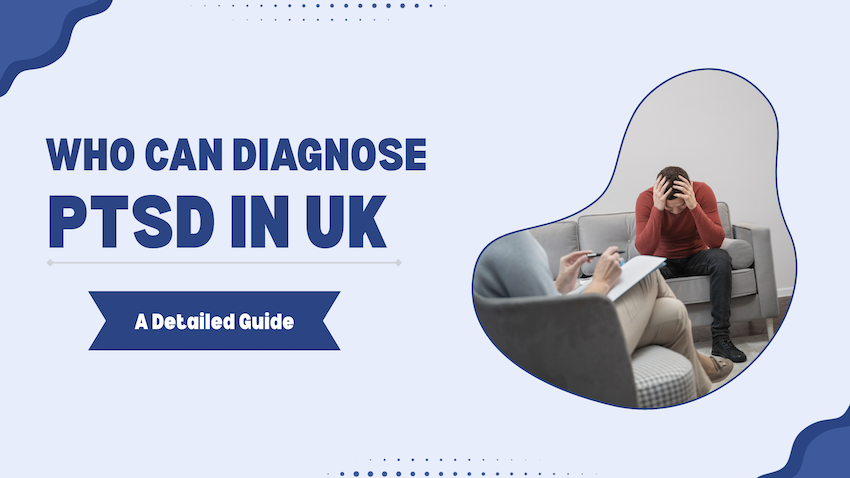
Struggling with trauma symptoms? Find out who can diagnose PTSD UK and how to access the right help, assessment, and treatment options.
Most people searching for this answer are already exhausted.
They’ve spent weeks, sometimes years, knowing something is deeply wrong. The flashbacks. The hypervigilance. The emotional shutdown that nobody around them quite understands. And now they’re trying to figure out who the right person even is to talk to.
Here’s the reality: the system isn’t always clear about this. And that confusion costs people time they don’t have.
This article won’t promise you a magic solution. What it will do is give you a straight, honest breakdown of who can formally diagnose PTSD in the UK, how the process actually works, both NHS and private, and what you should realistically expect at each step. No fluff. No false hope. Just clarity.
Living Without a Diagnosis Is Its Own Kind of Suffering
Here’s what nobody tells you when you’re stuck in that limbo: undiagnosed PTSD doesn’t just sit there quietly.
Without a formal diagnosis, access to the right treatment gets delayed. Symptoms often worsen. And people frequently get mislabelled with anxiety or depression, and treated for the wrong thing. That’s not a small problem. Wrong treatment for the wrong diagnosis means months of effort going nowhere.
This is where most people get it wrong: they assume their GP will handle it, or that a therapist can make it official. Sometimes that works. Often, it doesn’t, and we’ll explain exactly why below.
What PTSD Actually Is (Because the Definitions Matter Here)
Before we get into who diagnoses it, you need to understand what clinicians are actually looking for, because this directly affects which professional you need.
In the UK, clinicians use two main diagnostic frameworks: ICD-11 (the International Classification of Diseases) and DSM-5 (the Diagnostic and Statistical Manual of Mental Disorders). Both define PTSD as a condition that develops following exposure to a traumatic event, characterised by three core clusters: re-experiencing the trauma through flashbacks or nightmares, actively avoiding reminders of what happened, and a persistent sense of threat or hyperarousal.
Here’s the key distinction most people miss: it’s not just about having these symptoms. It’s about how long they persist and how severely they disrupt your daily life.
Feeling distressed after trauma is a normal human response. PTSD is different. Symptoms that persist for more than a month, significantly interfere with your functioning, and don’t resolve on their own, that’s when a formal assessment becomes necessary.
What about Complex PTSD?
C-PTSD is recognised in ICD-11 and typically develops from prolonged or repeated trauma,abuse, neglect, domestic violence. Beyond the core PTSD symptoms, it includes difficulties with emotional regulation, a deeply negative self-concept, and significant problems in relationships.
Why does this distinction matter? Because C-PTSD and standard PTSD aren’t always treated identically. And C-PTSD shares features with Borderline Personality Disorder, which means accurate diagnosis by an experienced clinician is critical, not optional.
Who Can Diagnose PTSD UK
Let’s be honest: this is where the confusion usually lives. So let’s separate it out clearly.
Psychiatrists, the primary diagnostic authority
Psychiatrists are medical doctors who have specialised in mental health. They sit at the top of the diagnostic chain for good reason: they conduct detailed psychiatric assessments, make formal diagnoses, and can prescribe medication when it’s part of the treatment plan.
If your case is complex, if you’ve had prior mental health diagnoses, or if medication may be involved, a psychiatrist is who you need.
Clinical psychologists, equally qualified to diagnose
Clinical psychologists aren’t medical doctors, but they are highly trained in psychological assessment. They can carry out structured PTSD assessments, provide a formal diagnosis, and deliver evidence-based therapies like EMDR and Trauma-Focused CBT.
Before deciding on treatment, it’s important to first understand how PTSD is properly assessed and diagnosed, as different approaches may be appropriate depending on the individual. You can read more about the full PTSD diagnosis process here.
For many people, a clinical psychologist is the right first step, particularly if therapy rather than medication is the primary goal.
GPs, important, but limited
Your GP is almost always the entry point. They’ll listen to your symptoms, assess immediate risks, and decide whether a referral is appropriate. In straightforward cases, they may provide an initial working diagnosis.
But here’s the reality: GPs don’t typically conduct comprehensive PTSD assessments for complex presentations. Their role is to recognise, support, and refer, not to serve as the endpoint of the diagnostic process.
Trauma therapists, therapeutic, not diagnostic
Trauma-informed therapists are invaluable for treatment. But not all of them are qualified to diagnose PTSD formally. Their role is typically therapeutic. If a therapist tells you that you have PTSD without the qualifications to back that up, that’s not a formal clinical diagnosis; it won’t hold up for legal, employment, or insurance purposes.
The NHS Route: What Actually Happens
If you’re going through the NHS, here’s the realistic pathway.
You start with your GP. They take your history, assess risk, and make a referral decision. Depending on what they find, you may be directed to:
- IAPT (Improving Access to Psychological Therapies), typically for mild to moderate presentations
- CMHT (Community Mental Health Teams), for more complex cases
- Specialist trauma services, where available
Waiting times vary significantly by region. IAPT referrals can range from a few weeks to several months. Specialist trauma services often take considerably longer.
The bottom line: the NHS route is free and legitimate, but it requires patience. If your symptoms are severe, or if you’re waiting 6-18 months for specialist input, private assessment is worth considering.
The Private Route: Faster, But Know What You’re Getting
Private care doesn’t replace the NHS. But for many people, it solves a specific problem: time.
A private psychiatrist or clinical psychologist can typically see you within days or weeks. Assessments are comprehensive. Reports are detailed. A formal private diagnosis carries real weight; it can be shared with your GP, used to support treatment planning, submitted for workplace accommodations, or used in legal proceedings.
What to look for when choosing a private assessor:
GMC registration for psychiatrists. HCPC registration for psychologists. Direct experience in trauma and PTSD, not just general mental health. Ask about it directly. Any reputable clinician will be transparent.
Here’s what private diagnosis cannot do: it won’t fast-track you to NHS treatment automatically. It opens doors, but you’ll still need to work with your GP to navigate the NHS side. Be realistic about that.
What a PTSD Assessment Actually Involves
Understanding the process removes a lot of the fear around it.
A proper PTSD assessment isn’t a single questionnaire and a box-ticking exercise. It’s a detailed clinical interview covering your symptoms, trauma history, and how everything is affecting your daily life. Experienced clinicians approach trauma history carefully, there’s no pressure to disclose everything at once, and the environment should feel safe.
Clinicians may also use validated tools to improve diagnostic accuracy. The two most common in the UK are the PCL-5 (PTSD Checklist for DSM-5) and the CAPS-5 (Clinician-Administered PTSD Scale). These aren’t replacements for clinical judgement, they’re supplements to it.
What to bring to your assessment:
Think through when your symptoms started, how frequent and intense they are, and how they’re affecting your relationships, work, and daily function. If you have GP records or previous mental health assessments, bring them. With your consent, input from a trusted family member can sometimes add helpful context.
The more clearly you can describe your experience, the more useful the assessment will be.
Why PTSD Gets Missed And Why That’s Not Your Fault
PTSD is genuinely hard to diagnose. Not because clinicians aren’t skilled, but because the condition is a chameleon.
Its symptoms overlap with anxiety disorders, depression, and personality disorders. Some people don’t connect their current symptoms to a traumatic experience, especially when trauma happened years ago, or when it was prolonged rather than a single event. And stigma still prevents a significant number of people from seeking help at all.
Certain groups are particularly underdiagnosed: veterans, refugees, and men often present differently or face additional barriers to being taken seriously. If you’ve been dismissed before, that doesn’t mean your experience doesn’t meet the criteria.
What Happens After Diagnosis
A diagnosis is a starting point. Not a finish line.
Once you have a formal PTSD diagnosis, you’ll be guided through the evidence-based treatment options available to you. In the UK, NICE recommends two first-line therapies: Trauma-Focused Cognitive Behavioural Therapy (TF-CBT) and Eye Movement Desensitisation and Reprocessing (EMDR). Both have strong evidence bases. Both require working with trained specialists.
Your clinician will discuss which approach fits your presentation, arrange follow-up, coordinate with your GP, and refer you for therapy if they’re not providing it directly.
While You Wait: You Don’t Have to Do This Alone
If you’re still waiting for assessment, support is available now. PTSD UK, Mind, and Combat Stress (for veterans) offer helplines, resources, and peer support. These won’t replace clinical treatment, but they can make the wait more manageable.
The Honest Answers to the Questions Everyone Searches
Can a therapist diagnose PTSD?
Depends on their qualifications. Many cannot be formally diagnosed. Psychiatrists and clinical psychologists are your most appropriate options when you need a diagnosis that carries clinical and legal weight.
Can online tools diagnose PTSD?
No. They can raise awareness and help you understand whether an assessment might be worthwhile. They cannot replace clinical evaluation.
What if your GP doesn’t take you seriously?
You can request a second opinion, ask explicitly for a referral, or seek a private assessment. You are entitled to advocate for yourself.
Can children be diagnosed with PTSD in the UK?
Yes. CAMHS (Child and Adolescent Mental Health Services) handles assessment and diagnosis for children and young people.
The Bottom Line
Psychiatrists and clinical psychologists are the professionals equipped to formally diagnose PTSD in the UK.
Your GP is the starting point, not the endpoint. Trauma therapists treat, but don’t always diagnose. And if NHS waiting times are making things worse, private assessment is a legitimate and worthwhile option.
The symptoms you’re experiencing deserve a proper name. And a proper name opens the door to proper treatment.
If something in this article resonated, the next step is straightforward: speak to your GP, or explore a private ptsd assessment uk with a psychiatrist or clinical psychologist who specialises in trauma. Don’t wait until things deteriorate further. Early, accurate diagnosis doesn’t just help, it changes the trajectory entirely.