
Bipolar Test: Here’s What Online Screening Tools Can (and Can’t) Actually Tell You
July 5, 2026
Bipolar and Memory Loss: What’s Actually Happening in Your Brain
July 11, 2026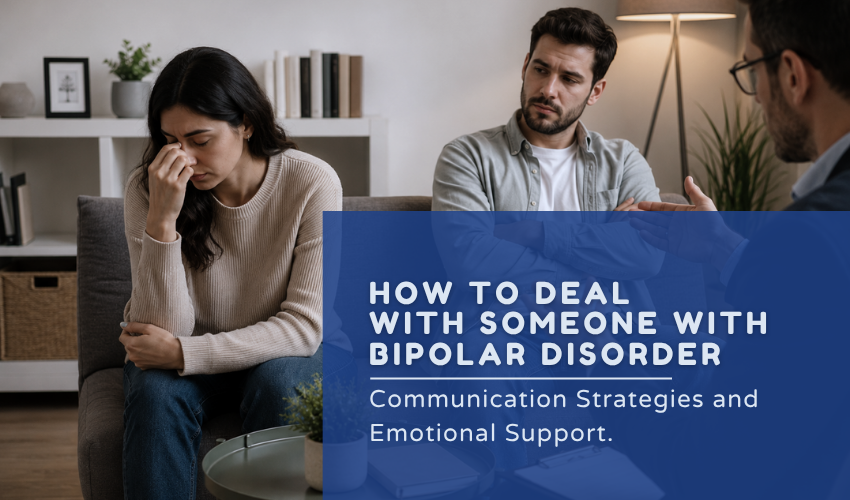
How to Deal With Someone With Bipolar Disorder with practical communication strategies, emotional support tips, and expert guidance to build healthier, more supportive relationships.
Here’s something nobody tells you when you start supporting someone with bipolar disorder:
You can do everything right and still find it incredibly hard.
You can be patient, informed, empathetic, and still feel completely lost during a manic episode at 2am, or when the person you love has barely left their room in a week. That’s not failure. That’s what this condition actually looks like from the inside of a relationship.
This guide won’t promise you a formula that fixes everything. Bipolar disorder is complex, and anyone who tells you otherwise is selling false hope.
What this guide will give you: practical, evidence-based communication strategies, realistic boundary-setting approaches, and clear guidance on when professional support needs to take over from personal support. Let’s get into it.
What Bipolar Disorder Actually Does to a Person (And to the People Around Them)
Before you can support someone effectively, you need to understand what you’re actually dealing with.
Bipolar disorder isn’t extreme moodiness. It isn’t being “a bit up and down.” It’s a medical condition involving clinically significant shifts in mood, energy, cognition, and behaviour, shifts that can fundamentally change how a person thinks, communicates, and relates to the world around them.
Here’s what those shifts look like in practice.
Depressive episodes often involve persistent low mood, profound fatigue, reduced motivation, feelings of hopelessness, and social withdrawal. The person isn’t being lazy or dramatic. Their brain chemistry is working against them.
Manic or hypomanic episodes often bring increased energy, reduced need for sleep, elevated or irritable mood, heightened confidence, and impulsivity. This can look like excitement or productivity on the surface, but underneath, it frequently involves poor judgement and significant risk.
Bipolar I disorder includes at least one full manic episode. Bipolar II disorder involves depressive and hypomanic episodes. Both forms can significantly affect daily functioning and relationships.
Here’s why this matters for you: the person you’re supporting isn’t always acting from their baseline self during episodes. Their behaviour, communication, and decision-making are being shaped by a medical condition. Understanding that distinction changes everything about how you respond.
How Bipolar Disorder Affects Your Relationship Specifically
This is where most people get stuck.
You know your loved one has bipolar disorder. You understand it intellectually. But when the mood shifts happen, when the person in front of you seems like someone you barely recognise, intellectual understanding doesn’t automatically translate into knowing what to do.
During manic or hypomanic episodes, conversations can become intense, fast-moving, or confrontational. Plans get made impulsively. Sleep disappears. The person may seem energised and confident in ways that feel exciting at first, and alarming soon after.
During depressive episodes, communication often shuts down. Withdrawal, silence, and disengagement aren’t personal rejection. They’re symptoms.
The hardest part for most supporters is the unpredictability. Even someone who manages their condition well may experience unexpected symptom changes. Routines get disrupted. Trust can take a hit when impulsive decisions during mania have real-world consequences. And over time, the emotional labour of navigating all of this builds up.
Let’s be honest about that last part: caregiver fatigue is real, it’s common, and it’s not a sign that you don’t love or care enough. It’s a sign you’re human.
The Communication Strategies That Actually Help
Here’s the truth about communication with someone who has bipolar disorder: timing is almost everything.
Important conversations belong in stable periods. Raising something significant during an acute manic or depressive episode rarely ends well. If a discussion needs to happen, wait for a window of stability where it can actually land.
When you do communicate, keep these principles in front of you:
Stay calm, even when it’s difficult. Calm language reduces tension. Raised voices, criticism, or emotionally charged accusations tend to escalate rather than resolve. This isn’t about suppressing your own feelings, it’s about choosing the moment and method strategically.
Listen to understand, not to respond. Active listening means giving your full attention, asking clarifying questions, and genuinely acknowledging what the other person is experiencing. It doesn’t mean agreeing with everything. It means making the person feel heard before you try to problem-solve.
Validate the feeling without validating harmful behaviour. There’s a difference between saying “I can see this feels really overwhelming for you” and endorsing decisions made during an acute episode. Both can be true simultaneously.
Avoid arguments during acute episodes. This is one of the most consistently effective strategies when learning how to deal with someone with bipolar disorder, not because conflict should always be avoided, but because acute episodes are genuinely the worst time to try to resolve anything.
Setting Boundaries Without Abandoning Support
This is where many supporters get it wrong, in both directions.
Some people have no boundaries at all. They absorb everything, cover everything, excuse everything. They become so enmeshed in managing their loved one’s condition that their own wellbeing gradually disappears.
Others set boundaries so rigidly that support disappears with them.
Healthy boundaries aren’t walls. They’re structures that make sustainable support possible.
In practice, healthy boundaries might look like: maintaining personal time and space, setting clear limits around abusive or damaging behaviour, protecting your own financial stability, and clarifying what you can and cannot reasonably take on.
Here’s how to communicate those limits without it becoming a confrontation: clearly, calmly, and consistently. Not as ultimatums issued in frustration, but as honest statements about what you need to continue showing up well.
The bottom line: you cannot pour from an empty cup. Supporting someone with a long-term mental health condition is a marathon, not a sprint. Your needs matter in this equation.
Recognising Early Warning Signs Before Episodes Escalate
This knowledge can change the course of an episode.
Early signs of mania or hypomania often include reduced sleep, increased energy, rapid speech, heightened goal-directed activity, and impulsive spending. Sleep disruption in particular tends to be one of the earliest indicators.
Early signs of depressive episodes often include low mood, increased fatigue, social withdrawal, reduced motivation, and changes in appetite or sleep patterns.
Here’s what most people miss: identifying patterns over time is more valuable than reacting to individual episodes. If you and your loved one can discuss triggers and warning signs during stable periods, you build a shared toolkit that’s available when things start to shift.
Early recognition means earlier support. Earlier support often means shorter or less severe episodes. It’s not foolproof, but it consistently makes a difference.
How to Respond During Manic or Hypomanic Episodes
The instinct to challenge, reason with, or correct someone in a manic state rarely helps. And often, it actively makes things worse.
Stay calm. Reduce stimulation where possible. A quieter environment, fewer competing demands, and a non-confrontational tone can help prevent further escalation.
Avoid direct challenges to elevated beliefs or grandiose thinking during acute mania. This isn’t about dishonesty, it’s about recognising that the episode is not the time for that conversation.
Encourage professional contact when symptoms are worsening. If you’re seeing signs that a manic episode is escalating, especially if risk behaviours are increasing, such as impulsive financial decisions, dangerous driving, substance misuse, or aggression, professional intervention is the appropriate response, not personal management alone.
Safety takes precedence. Always.
How to Support Someone Through Depressive Episodes
Depression during bipolar disorder can be severe. Don’t underestimate it.
The most helpful approach is gentle, low-pressure engagement. A short walk. A shared meal. Maintaining regular, non-demanding contact. Small acts of presence matter more than grand solutions.
Encouraging routine without criticism, consistent sleep times, basic meals, maintaining hygiene, can quietly support recovery even when motivation is minimal.
Here’s what not to do: don’t interpret low motivation, withdrawal, or fatigue as laziness or lack of effort. These are symptoms of a medical condition. Framing them otherwise adds shame to an already difficult experience.
And if depressive symptoms become severe, particularly if there are any concerns about self-harm or suicidal thinking, encourage professional support immediately. This is not something to manage alone.
What Not to Do: Mistakes That Make Things Harder
A few things worth saying directly.
Don’t blame someone for symptoms they’re not choosing. Bipolar disorder affects mood, cognition, and emotional regulation. During episodes, behaviour often reflects those changes rather than deliberate choices.
Don’t minimise what they’re experiencing. Comments like “everyone feels like that sometimes” or “you just need to push through it” invalidate real suffering and rarely motivate change.
Don’t take full responsibility for their recovery. This is a common but unsustainable pattern. Recovery requires professional treatment, personal engagement, and shared responsibility. You can support, you cannot do it for them.
Don’t argue during acute episodes. It increases stress, reduces effective communication, and rarely achieves anything useful.
The Role of Professional Treatment, And How You Can Support It
Here’s the reality: personal support and professional treatment aren’t competing approaches. They work together.
Medication often plays a central role in reducing symptom severity and preventing relapse. Psychological therapies, including CBT and psychoeducation, help individuals understand their condition, identify triggers, and build coping strategies. Regular psychiatric follow-up allows treatment to be adjusted as circumstances change.
Your role as a supporter includes encouraging treatment engagement, appointment attendance, medication adherence, and continued involvement in treatment plans, while respecting personal autonomy. You’re not their clinician. But your encouragement matters.
Crisis Situations: When to Get Immediate Help
Some situations require professional intervention rather than personal support.
Seek urgent help if you’re witnessing: severe manic episodes with psychotic symptoms or significant agitation, loss of insight, suicidal thoughts or self-harm behaviours, or any situation where immediate safety is at risk.
In the UK, support options include NHS crisis teams, emergency departments, NHS 111, community mental health services, and emergency services where appropriate.
Don’t wait to see if it passes. If you’re genuinely concerned about safety, act.
Looking After Yourself, Not as an Afterthought
This section matters as much as any other.
Providing long-term support for someone with a significant mental health condition is emotionally demanding. Burnout is a real risk. Repeated mood episodes, high-stakes moments, and the weight of ongoing vigilance take a toll, even when you’re doing everything right.
Rest, social connection, personal interests, and your own mental health are not indulgences. They’re what makes sustainable support possible.
Peer support groups and carer networks offer something that professional advice alone can’t: the experience of people who genuinely understand what you’re navigating. Many supporters find this invaluable.
And if caregiving is beginning to affect your own mental health, seek professional support. You’re allowed to need help too.
Building Long-Term Stability Together
Here’s what good long-term support actually looks like.
Consistent routine and structure support mood stability. Predictability in sleep patterns, daily schedules, and relationship rhythms can help reduce the frequency and severity of episodes over time.
Shared understanding of triggers and early warning signs turns crisis management into collaborative preparedness. Open conversations about these patterns, held during stable periods, build both trust and practical readiness.
Collaborative relapse prevention planning means that when warning signs do appear, there’s already an agreed plan in place rather than a scramble for answers under pressure.
Learning how to deal with someone with bipolar disorder isn’t a one-time lesson. For most families and couples, it’s an ongoing process of adaptation, communication, and genuine understanding, and that process strengthens relationships over time.
Common Misconceptions Worth Addressing Directly
“They’re just moody.” Bipolar disorder involves clinically significant mood episodes, not ordinary mood fluctuations. These are not the same thing.
“They could control it if they tried.” Many symptoms arise from underlying neurological and chemical changes. They are not deliberate choices.
“It defines who they are.” Symptoms may influence behaviour during episodes. They don’t define someone’s identity, capacity for connection, or potential.
Stigma remains a real barrier, to treatment, communication, and relationships. Recognising bipolar disorder as the medical condition it is helps dismantle that barrier.
Frequently Asked Questions
How do I talk to someone with bipolar disorder without upsetting them?
Use calm language, listen actively, and choose stable periods for important conversations. Timing and tone matter more than having the perfect words.
What should I do during a manic episode?
Remain calm, avoid confrontation, reduce stimulation where possible, encourage professional support, and prioritise safety if risk behaviours are present.
Can relationships survive bipolar disorder?
Yes, and many do, with lasting strength and depth. The consistent ingredients are access to appropriate professional treatment, honest communication, and realistic mutual expectations.
How do I set boundaries without being unsupportive?
Communicate them clearly, calmly, and consistently. Healthy boundaries make sustainable support possible. They aren’t the opposite of care, they’re what allows care to continue.
When should I seek emergency help?
Immediately, if there are concerns about psychosis, severe mania, suicidal ideation, self-harm, or any immediate safety risk.
Key Takeaways
Supporting someone with bipolar disorder is not a single skill. It’s a set of them, communication strategies, boundary-setting, early recognition, crisis response, and ongoing self-care, that develop and strengthen over time.
Symptoms may shape behaviour during episodes. They do not define the person.
And professional treatment isn’t separate from personal support, it’s the foundation that makes everything else more effective. The most sustainable approach combines both. If you or someone you love is navigating bipolar disorder and you’d like a professional clinical assessment, Dr. Musa Sami offers private psychiatric evaluations in the UK. A proper assessment can be the first step toward clarity, an accurate diagnosis, and a treatment pathway that actually works.