Before You Trust That Online Stress Test, Read This
May 26, 2026
Is Bipolar Disorder a Disability UK? Here’s What the Law Actually Says
June 17, 2026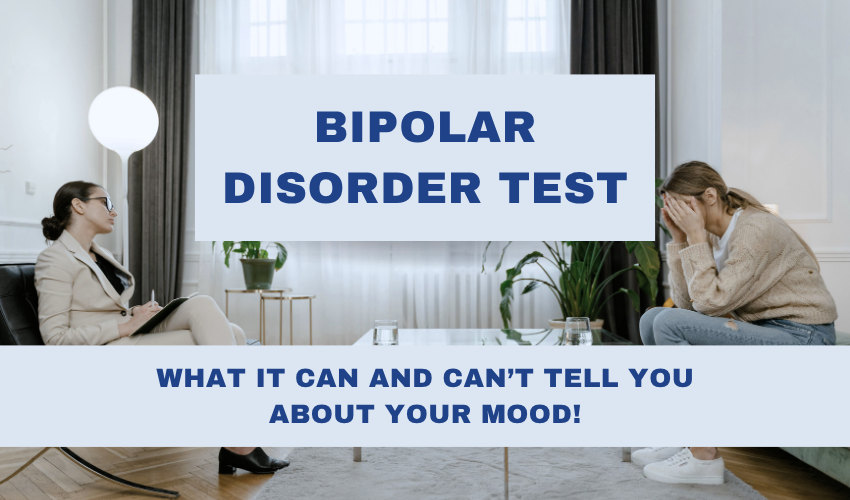
Here’s something most people don’t realise when they search for a bipolar disorder test online:
The result doesn’t tell you whether you have bipolar disorder.
Not even close.
And yet, millions of people take these questionnaires every year, see a “high score,” and either spiral into panic or walk away falsely reassured. Both outcomes can cost you years of your life.
So let’s be honest about what these tools actually are, what they’re for, and why the real conversation still needs to happen with a qualified professional.
First: What Is a Bipolar Disorder Test, Really?
It’s a screening questionnaire. That’s it.
A screening tool is designed to identify people who might benefit from further assessment. It asks about your mood, energy, sleep, behaviour, and whether you’ve experienced periods of unusually elevated or depressed states. It looks for patterns.
What it doesn’t do is diagnose you.
A clinical diagnosis is an entirely different process. It requires a qualified psychiatrist who considers your full history, symptoms, medical background, family history, current circumstances, and how everything is affecting your daily life. A questionnaire score is input. A diagnosis is a professional clinical judgement.
Here’s the clearest way to understand the distinction: a screening tool identifies possible concerns. A diagnosis determines whether a specific condition is actually present.
Why People Reach for Bipolar Disorder Tests
Most people searching for a bipolar disorder test aren’t being hypochondriacal. They’re confused.
They’ve noticed patterns they can’t explain, cycles of unusually high energy followed by weeks of exhaustion and low mood. Maybe they’ve already been diagnosed with depression but something doesn’t quite fit. Maybe a partner, parent, or close friend has expressed concern about their behaviour.
Online questionnaires are accessible, anonymous, and immediate. When you’re struggling to make sense of your own mind, that combination is genuinely appealing.
That’s a legitimate reason to use them. Just not as a final answer.
The Tools Clinicians Actually Use
Three screening instruments come up most often in clinical and research settings.
The Mood Disorder Questionnaire (MDQ) is one of the most widely used. It focuses on symptoms associated with mania and hypomania, increased energy, reduced need for sleep, racing thoughts, impulsive behaviour.
The Goldberg Bipolar Spectrum Screening Questionnaire, developed by psychiatrist Dr Ivan Goldberg, aims to identify symptoms across the broader bipolar spectrum.
The Hypomania Checklist-32 (HCL-32) was specifically developed to catch hypomanic symptoms in people who initially present with depression, a common and costly diagnostic gap.
Each tool has strengths. Each has blind spots. And none of them was designed to replace a clinical assessment. They were created to support earlier recognition and referral, not to hand people a diagnosis through a browser window.
What These Tests Can Actually Tell You
Here’s where screening tools earn their place.
For many people, completing one of these questionnaires is the first time they’ve ever looked at their experiences as a pattern rather than a series of disconnected events. Suddenly, those weeks of sleeping four hours a night and feeling unstoppable, followed by months of barely leaving the house, they’re not random. They have a shape.
That recognition matters.
A positive screening result also gives you something concrete to bring to a GP or psychiatrist. Instead of trying to reconstruct years of experiences from memory in a 10-minute appointment, you have a structured starting point. Many clinicians find this genuinely useful, it flags areas worth exploring that might otherwise be missed.
Think of a bipolar disorder test as an invitation to ask questions, not a verdict.
Whether your score is high or low, professional assessment is the only reliable way to understand what’s actually going on.
What These Tests Cannot Tell You
This is where most people get it wrong.
Online screening tools cannot account for the factors that actually determine a diagnosis. Duration of symptoms, severity of episodes, functional impact, medical history, family history, medication effects, substance use, and alternative explanations for your symptoms, none of this can be adequately assessed by a questionnaire.
And the misinterpretation risk is real.
A high score doesn’t mean you have bipolar disorder. A low score doesn’t mean you don’t. False positives happen when symptoms that resemble bipolar disorder are actually caused by something else entirely. False negatives happen when genuine bipolar symptoms don’t surface through the specific questions asked.
Neither outcome should be treated as definitive.
Why Your Score Might Be Misleading
Several conditions can produce responses on a bipolar screening tool that look very similar to bipolar disorder. ADHD, borderline personality disorder, anxiety disorders, PTSD, sleep disorders, and certain substance-related conditions all share overlapping symptoms.
This isn’t a minor caveat. It’s the central reason these tools cannot diagnose.
There are also situational factors that affect your score directly. Significant stress can alter mood and behaviour in ways that mirror what screening questions are looking for. Sleep deprivation alone can cause increased irritability, racing thoughts, elevated energy, and emotional instability. Major life events, financial pressure, relationship difficulties, all of it can shift how you respond.
And then there are medical factors. Thyroid disorders, hormonal imbalances, neurological conditions, certain vitamin deficiencies, and medication side effects can all produce symptoms that resemble bipolar disorder. A proper assessment considers physical health alongside mental health.
A number on a questionnaire doesn’t know any of this about you.
Understanding What Bipolar Disorder Actually Is
Before you can judge what a screening tool is measuring, you need a clear picture of the condition itself.
Bipolar disorder is a mood disorder characterised by distinct episodes. Not general moodiness. Not being “up and down.” Distinct episodes involving significant changes in mood, energy, activity, thinking, and behaviour that go well beyond ordinary emotional fluctuation.
There are three main presentations:
Bipolar I involves at least one manic episode, markedly elevated or irritable mood and increased energy severe enough to cause significant impairment or require hospital treatment.
Bipolar II involves episodes of depression alongside hypomania. Hypomania resembles mania but is generally less severe and doesn’t cause the same degree of functional disruption.
Cyclothymia involves chronic fluctuations between mild depressive symptoms and hypomanic symptoms that persist over an extended period without meeting the full criteria for Bipolar I or II.
These are meaningfully different presentations. The distinction matters enormously for treatment. And a screening questionnaire cannot reliably tell them apart.
Why Bipolar Disorder Gets Misdiagnosed So Often
Here’s the reality: bipolar disorder is one of the most commonly misdiagnosed psychiatric conditions. Many people spend years seeking answers before getting an accurate diagnosis.
The biggest reason is simple. For most people, depressive episodes are more frequent, longer-lasting, and more distressing than elevated periods. Hypomania, in particular, often doesn’t feel like a problem, it can feel like productivity, confidence, and motivation. People don’t bring it up in medical appointments because they’re not struggling during those phases.
If a clinician only hears about depressive symptoms, a diagnosis of depression is the logical conclusion. It’s not a failure of the system. It’s a consequence of incomplete information.
This is actually where a bipolar screening questionnaire can be genuinely useful, not as a diagnostic tool, but as a prompt. The right questions can surface experiences that someone would never think to mention otherwise.
Research consistently shows significant delays between onset of symptoms and accurate diagnosis. Symptoms develop gradually. Hypomanic episodes get overlooked. People only seek help during depression. The conditions overlap with ADHD, borderline personality disorder, and anxiety disorders in ways that require careful clinical untangling.
Earlier recognition leads to better outcomes. That’s the entire point of screening.
Who Should Actually Take One of Bipolar Disorder Tests?
Three groups in particular.
Adults who experience recurring periods of unusually elevated mood, increased energy, impulsivity, or depression that follows a cyclical pattern and has persisted for months or years without a clear explanation.
People already diagnosed with depression who recognise periods of increased confidence, reduced sleep need, heightened activity, or unusual impulsivity that doesn’t fit neatly into unipolar depression.
Anyone whose family members or close friends have expressed concern about recurring mood episodes or significant behavioural changes, because sometimes the people around us notice patterns before we do.
What to Do After You Take the Bipolar Disorder Test
If a screening result raises concerns, your GP is the right first call.
Before that appointment, make notes. Write down your mood changes over time, sleep patterns, energy levels, significant behavioural shifts, any family history of mental health conditions, and any concerns others have raised. Don’t just bring the score, bring the story behind it.
A psychiatric assessment goes much deeper than any questionnaire. A psychiatrist will explore current symptoms, past mood episodes, personal and family history, medical history, medication use, substance use, social circumstances, occupational functioning, and relationships. The goal is to understand the full picture, not to evaluate symptoms in isolation.
In the UK, the usual route is through your GP, who can refer to community mental health services or for specialist psychiatric assessment. Private psychiatric assessment is also available and can offer faster access to specialist evaluation. Both pathways can provide comprehensive diagnostic assessment and treatment planning.
When to Skip Bipolar Disorder Test and Go Straight to Help
Some situations don’t need a screening tool first.
If mood changes are significantly affecting your work, relationships, financial decisions, physical health, or daily responsibilities, that’s enough. You don’t need a questionnaire to tell you something needs attention.
If symptoms are becoming more intense, more frequent, or increasingly difficult to manage, seek professional support. Warning signs include severe sleep disruption, increasing impulsivity, significant depressive episodes, escalating risk-taking, and emotional distress that feels overwhelming.
And if someone is experiencing thoughts of self-harm or suicide, severe distress, or symptoms that pose immediate risk to themselves or others, the priority is urgent clinical care, not a questionnaire.
In the UK, that means emergency services, the nearest A&E, or local crisis mental health services.
Frequently Asked Questions
Can a bipolar disorder test tell me if I have bipolar disorder?
No. And this is the most important thing to understand before you take one.
Online screening tools can identify patterns that may warrant further investigation. They cannot diagnose you. Diagnosis requires a full psychiatric assessment by a qualified clinician who considers your complete history, not just your answers to a set of structured questions.
What’s the difference between bipolar I and bipolar II?
Bipolar I involves at least one full manic episode, elevated or irritable mood and increased energy severe enough to cause significant impairment or require hospitalisation.
Bipolar II involves episodes of depression alongside hypomania. Hypomania is similar to mania but less severe, and it doesn’t cause the same level of functional disruption.
The distinction matters enormously for treatment. A screening questionnaire cannot reliably tell them apart.
I scored high on an online Bipolar Disorder test. Does that mean I have bipolar disorder?
Not necessarily. A high score means the questionnaire flagged symptoms that may be associated with bipolar disorder, it doesn’t confirm the condition is present.
Several other conditions produce similar scores: ADHD, borderline personality disorder, anxiety disorders, PTSD, and certain sleep or substance-related conditions all share overlapping symptoms. Stress, sleep deprivation, and some physical health conditions can also push your score higher.
Take it seriously enough to follow up with a professional. Don’t treat it as a diagnosis.
I scored low in the bipolar disorder test. Does that mean I definitely don’t have bipolar disorder?
Also not necessarily. False negatives happen, particularly with bipolar II, where hypomanic episodes are often subtle and easy to overlook or dismiss. If you’re concerned about your mood despite a low score, that concern is reason enough to speak with a GP or psychiatrist.
Why is bipolar disorder so often misdiagnosed as depression?
Because most people only seek help during depressive episodes.
Hypomania, in particular, often doesn’t feel like a problem. It can feel like a productive, energetic, confident phase. People don’t mention it in appointments because they’re not struggling during those periods. A clinician working only from what they’re told will logically diagnose depression.
This is one area where a bipolar screening questionnaire genuinely helps, the right questions can surface experiences people would never think to bring up on their own.
The Bottom Line
A bipolar disorder test is a useful starting point and a poor ending point.
It can help you recognise patterns, prompt reflection on experiences you might have dismissed, and give you something structured to bring into a clinical conversation. For some people, it’s the first step towards finally understanding what’s been happening.
But it cannot diagnose you. It cannot account for your full history, your medical situation, your circumstances, or the dozens of alternative explanations that a skilled psychiatrist will methodically work through.
Accurate diagnosis requires professional clinical assessment. No online questionnaire changes that.
If recurring mood episodes are affecting your life, the most important thing you can do is speak with a qualified healthcare professional. Bipolar disorder is a well-understood and manageable condition. With the right support, the right diagnosis, and the right treatment, the picture changes significantly.
The test is a door. The assessment is what’s behind it.Dr Musa Sami is a consultant psychiatrist. If you’re concerned about your mood and want a thorough, expert assessment, private psychiatric evaluation is available.