Mental Abuse and Emotional Abuse: What They Are, How They Differ, and Why Both Destroy You From the Inside Out
April 18, 2026
What Is a Stress Headache? (The Honest Guide Nobody Bothered to Write)
May 11, 2026
Learn about stress breakdown recovery, what’s really happening in the body and mind during a breakdown, and practical steps to support healing and regain stability.
Here’s something nobody in the mental health space wants to say out loud:
A “stress breakdown” isn’t a diagnosis. There’s no clinical definition, no checkbox in the DSM-5, no blood test that confirms it. And yet millions of people use that exact phrase to describe one of the most frightening experiences of their lives.
That matters. Because if you’re calling it the wrong thing, you might be looking for the wrong solutions.
What’s actually happening when someone “breaks down” from stress is real, serious, and treatable. But recovery doesn’t start until you understand what you’re actually dealing with.
This article won’t give you a 3-step cure. It won’t promise you’ll feel better in a week. What it will give you is an honest, clear-eyed breakdown of what’s happening in your mind and body, what recovery actually looks like, and where to start, whether this is happening to you or someone you care about.
Let’s get into it.
“Stress Breakdown” Isn’t a Diagnosis, Here’s What It Actually Is
Let’s be honest about the language first.
When people say “stress breakdown,” they’re describing a point where stress has completely overwhelmed their ability to cope. Not just a bad week. Not just feeling tired. A genuine collapse of functioning, where ordinary tasks feel impossible, emotions feel unmanageable, and the person you were a month ago feels like a stranger.
Clinically, this experience usually maps onto recognised conditions: anxiety disorders, depressive episodes, or burnout. Sometimes all three at once.
The non-clinical label isn’t a weakness in the vocabulary, it’s actually useful. It gives people a way to name something deeply distressing before they have a formal diagnosis. It creates a starting point. And starting points matter.
Here’s why this distinction is important: knowing that a stress breakdown likely reflects an underlying condition means there are evidence-based treatments that actually work. You’re not navigating uncharted territory. You just need the right map.
What’s Going On Inside Your Body (And Why You Feel So Awful)
Here’s the science, without the textbook tone.
Your body has a built-in threat response: fight, flight, or freeze. When your brain perceives danger, it floods your system with cortisol and adrenaline. Your heart rate goes up. Your focus narrows. Your body prepares to act.
That system is brilliant in short bursts. It kept our ancestors alive.
The problem is your nervous system can’t tell the difference between a deadline and a predator. And when the stressors never stop, when there’s always another pressure, another demand, another crisis, your body stays in that heightened state indefinitely.
The result? Total system overload.
Sleep falls apart. Concentration disappears. Mood becomes volatile or flat. Physical symptoms show up, headaches, muscle tension, digestive problems, persistent fatigue. And because these things feed each other in a loop, the whole thing compounds fast.
This isn’t weakness. This is biology doing exactly what it’s designed to do, just for far too long.
The Symptoms of Stress People Rarely Talk About
Most people expect the emotional signs. The crying. The anxiety. The feeling of dread for no obvious reason.
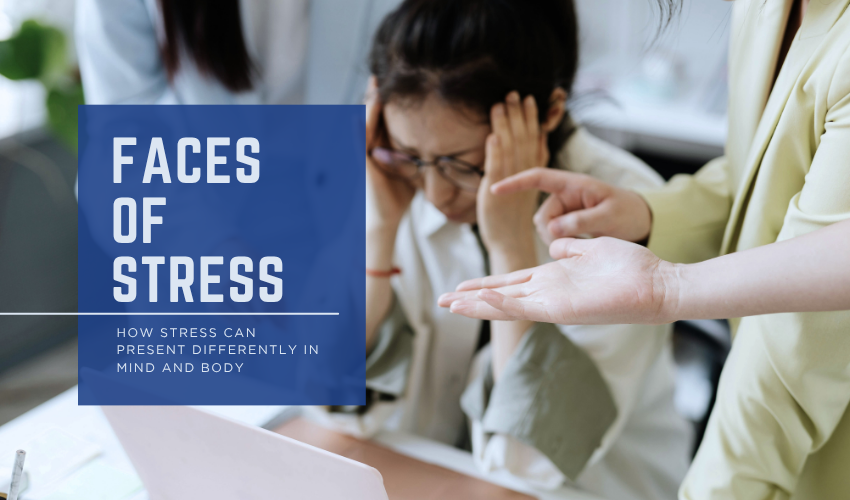
But a stress breakdown hits on four levels simultaneously, and if you’re not expecting all of them, it’s easy to miss what’s happening.
Emotionally, you might feel persistently anxious, tearful, or irritable, sometimes all three in the same hour. Emotional sensitivity goes through the roof. Things that wouldn’t normally register feel catastrophic.
Cognitively, concentration becomes genuinely impaired. Decisions feel impossible. Thoughts race or go completely blank. Memory gets patchy. If you’ve ever sat staring at a simple email for 20 minutes and not been able to write a single sentence, that’s this.
Physically, the body starts sending signals: fatigue that sleep doesn’t fix, tension headaches, changes in appetite, gut issues. These aren’t psychosomatic in a dismissive sense. They’re real physical responses to prolonged physiological stress.
Behaviourally, withdrawal kicks in. Social contact drops off. Work becomes harder to show up for. Motivation evaporates. The things that used to bring enjoyment stop working.
Sound familiar? Then keep reading, because this is also where recovery begins.
What Pushes Someone Over the Edge
There’s rarely one single cause.
Sometimes it’s an acute event, a bereavement, a relationship breakdown, a redundancy, a trauma. Something that exceeds what a person’s coping mechanisms can absorb in the moment.
More often, it’s accumulation. Months or years of chronic pressure, relentless work demands, caregiving responsibilities, financial strain, with never enough recovery time in between. Resilience doesn’t disappear overnight. It erodes.
And some people are more vulnerable than others. Previous mental health difficulties, a lack of social support, perfectionist tendencies, or ongoing physical health challenges can all lower the threshold. That’s not a character flaw. It’s context.
Understanding what contributed to yours isn’t about assigning blame. It’s about building a recovery plan that actually addresses the roots, not just the symptoms.
The Truth About Recovery Timelines (Stop Comparing Yourself)
Here’s the reality: there is no standard timeline.
Some people begin to feel meaningfully better within a few weeks. Others need several months. Some need longer. The variables, severity of symptoms, underlying conditions, quality of support, life circumstances, are different for every person.
Comparing your recovery to someone else’s is one of the most counterproductive things you can do. And yet almost everyone does it.
What we do know is that recovery tends to move through recognisable phases:
- Stabilisation, reducing the acute crisis, ensuring safety, stepping back from immediate stressors
- Adjustment, gradually rebuilding routine and basic coping capacity
- Rebuilding, developing stronger resilience and returning to meaningful life
These phases aren’t neat. You’ll move between them, sometimes backwards. That’s normal. Progress isn’t linear, but it is possible.
Where Recovery From Stress Actually Starts: The First Steps
Recovery doesn’t begin with a breakthrough therapy session or the perfect medication. It begins with the basics, and the basics are non-negotiable.
The first priority is stabilisation. That means reducing acute pressure wherever possible. Taking time off work if you’re able. Stepping back from commitments that aren’t essential. Reducing exposure to the environments and demands that are keeping your nervous system in overdrive.
Then come the foundations:
Regular sleep patterns. Consistent, balanced food. Adequate hydration. These aren’t suggestions. They are physiological prerequisites for any form of mental recovery. You cannot regulate your emotions or access your cognitive capacity reliably when you’re running on four hours of sleep and two coffees.
Simple? Yes. Easy when you’re in the middle of a breakdown? Absolutely not.
That gap, between knowing what to do and being able to do it, is exactly why professional support matters.
The Treatments That Actually Work For Stress
This isn’t alternative wellness advice. These are evidence-based approaches with a real track record.
Psychological therapy is typically the cornerstone of recovery. Cognitive behavioural therapy (CBT) helps you identify and shift the thought patterns that are sustaining and amplifying your distress. Other approaches, counselling, trauma-focused therapies, mindfulness-based cognitive therapy, may be more appropriate depending on your specific situation.
There’s no universally “best” therapy. A personalised approach is almost always more effective than a one-size-fits-all programme.
Medication can play an important role where clinically appropriate. It’s not for everyone, and it’s not a cure. But for managing acute anxiety, depression, or sleep disturbance, the right medication can create enough stability to make other recovery work possible. Any decision about medication should be made in consultation with a qualified healthcare professional, not based on what worked for someone else.
Stress management and coping skills are the long game. Relaxation techniques, emotional regulation skills, better time management, these aren’t just nice extras. They’re the infrastructure that prevents the next breakdown.
Self-Help That Actually Helps (And What to Skip)
Let’s be direct: self-help has real value in recovery. But it has limits.
What genuinely helps: returning to activities gradually (not all at once), regular mindfulness or breathing practice, maintaining social contact even when you don’t feel like it, limiting alcohol, which feels like relief but reliably makes symptoms worse over time.
What doesn’t help: trying to push through, isolating because you don’t want to burden people, and expecting rest alone to do the work.
Rest is necessary. It is not sufficient.
Recovery usually requires behavioural and psychological change, not just a holiday or a duvet week. The people who recover most effectively combine rest with structure, self-care with professional support, and patience with consistent action.
The Three Myths About Stress That Hold People Back
Myth 1: “If I just rest enough, I’ll be fine.” Rest helps. Rest alone usually isn’t enough. The patterns of thinking, the unresolved stressors, the underlying conditions, rest doesn’t address any of those.
Myth 2: “Recovery means getting back to who I was before.” Not necessarily. For many people, recovery means developing new coping strategies, adjusting how they live and work, and building a version of themselves that’s more sustainable, not identical to the one that burned out.
Myth 3: “I should handle this on my own.” This one causes the most damage. Seeking professional help isn’t weakness. It’s the same logic as seeing a physiotherapist for a torn muscle. The injury is real, and the right expertise accelerates healing.
When to Stop Waiting and Get Professional Help For Stress
There are warning signs that require clinical attention, not next week, now.
If you’re unable to perform basic daily tasks, experiencing persistent low mood or anxiety that isn’t lifting, having thoughts of self-harm, or noticing a rapid worsening of symptoms, those are signals to act.
In the UK, you can access support through your GP, NHS mental health services, or a private mental health professional. Early intervention consistently improves outcomes. Waiting for things to get worse before seeking help is a pattern that costs people months of unnecessary suffering.
If you’re experiencing thoughts of self-harm, contact emergency services or a mental health crisis team immediately.
If Someone You Know Is Going Through This
Supporting someone through a stress breakdown matters, and it’s harder than it looks.
The most useful things you can do: listen without trying to fix, offer practical help rather than just emotional reassurance, and encourage them to seek professional support without pressuring them. Patience isn’t passive. In this context, it’s one of the most active forms of care.
Also: look after yourself. Supporting someone in crisis is emotionally demanding. Maintaining your own boundaries isn’t selfish, it’s what allows you to keep showing up.
Long-Term: Building a Life That Doesn’t Break You
Once the acute phase passes, the real work begins.
Long-term recovery means looking honestly at what contributed to the breakdown in the first place. That might mean adjusting work demands, renegotiating responsibilities, setting clearer boundaries, improving work-life balance. Not comfortable conversations, but necessary ones.
Resilience isn’t something you either have or don’t. It’s built through consistent habits: regular physical activity, strong social connections, ongoing self-reflection, and a willingness to ask for help before things reach crisis point again.
The goal isn’t just recovery from this breakdown. It’s building a life where the next one is far less likely.
Frequently Asked Questions
What is meant by a “stress breakdown”?
A “stress breakdown” is a non-clinical term for a period of intense mental and emotional overwhelm where normal functioning becomes impossible. It often reflects underlying conditions, anxiety, depression, or burnout that require proper support and treatment.
How long does stress breakdown recovery take?
It varies significantly. Some people begin to feel better within a few weeks; others need several months or longer. Severity of symptoms, available support, and any underlying conditions all affect the timeline.
Can I recover without professional help?
Some people improve with rest, lifestyle changes, and social support alone. But if symptoms are severe or persistent, professional help, therapy, medication, or both meaningfully improve outcomes.
What are the first steps after a stress breakdown?
Ensure your safety, reduce immediate stressors, and focus on the basics: sleep, food, hydration. Then speak with a healthcare professional to assess what support is appropriate for your situation.
Is a stress breakdown the same as burnout?
Not exactly. Burnout develops gradually through prolonged stress, typically in work contexts. A stress breakdown can occur more suddenly and involves a broader range of symptoms. The two can and do overlap.
The Bottom Line
A stress breakdown is a sign that the pressure exceeded what your system could carry. Not a character flaw. Not a failure. A signal that something needs to change, and that you need support to change it.
Recovery is real. It takes time, the right help, and more patience with yourself than you probably think you deserve right now.
Start with the basics. Get professional support. Don’t try to rush a process that has its own timeline.
The experience you’re going through, or watching someone you love go through, is one of the hardest things a person can face. But people get through it every day.
You can too.