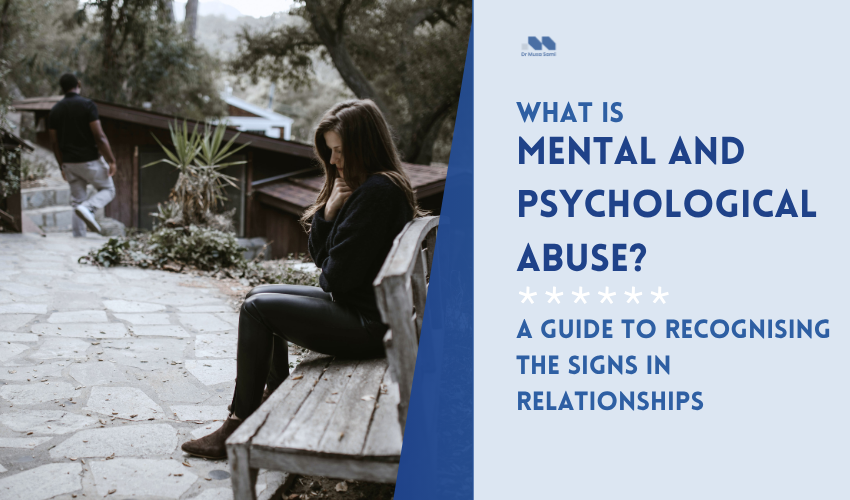
What Is Mental and Psychological Abuse? A Guide to Recognising the Signs in Relationships
April 17, 2026
Stress Breakdown Recovery: What’s Actually Happening, And How to Get Through It
May 5, 2026
Discover what mental abuse and emotional abuse are, how they differ, and why both can deeply impact your wellbeing. Learn to recognise the signs, understand their effects, and know when to seek help.
Here’s something most people won’t say out loud:
You don’t need to be hit to be broken.
Mental and emotional abuse leave no bruises. No evidence. No visible proof that anything even happened. And that’s exactly what makes them so devastating, and so easy to dismiss.
If someone in your life has made you feel stupid, worthless, confused, or like you’re “too sensitive,” this article is for you. Not to give you a label. Not to make you feel like a victim. But to give you clarity on something that may have been slowly eating away at you for months or years.
Let’s get into it.
It’s Not “Just Conflict.” There’s a Real Difference.
People throw around “emotional abuse” and “mental abuse” like they mean the same thing. They’re close, but they’re not identical.
Emotional abuse targets how you feel. Persistent criticism, humiliation, rejection, manipulation, all designed to make you feel inadequate, unworthy, or small. It goes after your self esteem and your sense of value.
Mental abuse, sometimes called psychological abuse, targets how you think. Gaslighting, reality distortion, coercive control. The goal isn’t just to hurt your feelings. It’s to make you question your own perception of reality.
Here’s the truth: they almost always show up together.
Someone who gaslights you (mental abuse) usually also insults and belittles you (emotional abuse). The distinction matters less in day to day experience and more when you’re trying to understand what happened to you, and when you’re explaining it to a professional.
Both are real. Both are serious. And both cause lasting harm.
This Happens Everywhere. Not Just in “Bad” Relationships.
Stop picturing a stranger or a movie villain. Mental and emotional abuse happen in ordinary relationships, with ordinary people, in ordinary settings.
Romantic relationships are the most commonly discussed context, controlling partners, jealousy, manipulation, persistent criticism disguised as “concern.”
Families are just as common. Controlling parenting, sibling dynamics, patterns of criticism and emotional invalidation. Many people spend decades before they recognise what they experienced growing up.
Workplaces too. Bullying, exclusion, intimidation, being talked down to constantly these aren’t just “difficult bosses.” In sustained patterns, they meet the threshold of psychological abuse.
The point: this doesn’t discriminate. It doesn’t care about your background, your gender, your intelligence, or your relationship status.
The Tactics. Recognise Any of These?
Mental and emotional abusers don’t usually sit down and plan their strategy. But the patterns are remarkably consistent.
Gaslighting is the most insidious. “That never happened.” “You’re imagining things.” “You’re too sensitive.” Over time, you stop trusting your own memory and perception. That’s the goal.
Isolation comes next. Gradually, you see less of your friends, your family, your support network. The abuser becomes your primary sometimes only source of reality. That’s not an accident.
Persistent criticism and humiliation. Not occasional conflict constant, targeted put downs that chip away at your confidence until there’s very little left.
Coercive control is subtler. It’s not always threats. Sometimes it’s monitoring, restricting choices, or making you feel like you need permission to exist in your own life.
The silent treatment and stonewalling. Withdrawal of communication used as punishment. It sounds minor. It isn’t.
Unpredictability and intimidation. Walking on eggshells. Never knowing what mood you’ll come home to. Living in low grade fear becomes your baseline, and you start to think that’s normal.
Why It’s So Hard to See While Mental Abuse and Emotional Abuse Is Happening
This is where most people get it wrong: they assume they’d know if they were being abused.
The reality is that mental and emotional abuse rarely arrives fully formed. It builds. Slowly.
It often starts with love bombing, intense affection, attention, feeling like you’ve found something extraordinary. Then comes the first criticism. Then the first gaslighting incident. By the time the pattern is clear, you’re already invested, already confused, already doubting yourself.
The cycle of idealisation and devaluation is deliberately disorienting. When someone oscillates between making you feel special and making you feel worthless, your brain tries to chase the good version. You stay. You try harder. You blame yourself.
And then there’s the self doubt. “Maybe I am too sensitive.” “This isn’t really abuse nothing physical happened.” “Other people have it worse.” Sound familiar?
That internal voice doubting your own experience? That’s often the abuse talking.
What Mental Abuse and Emtoional Abuse Does to You, Physically and Psychologically
Let’s be honest about the damage here.
The psychological effects are well documented: anxiety, depression, persistent low self worth, difficulty making decisions, emotional exhaustion, and a distorted sense of self. You stop trusting your own judgement. You shrink.
For some people, particularly where the abuse is prolonged or severe the outcome is PTSD or complex PTSD. This isn’t dramatic language. It’s a clinical reality for many survivors.
The physical effects are real too. Chronic psychological stress doesn’t stay in your head. Sleep disturbances, headaches, fatigue, immune dysfunction, your body absorbs what your mind is processing. That’s not weakness. That’s biology.
Long term, the impact on identity and relationships can be profound. Trust doesn’t come easily after this. Forming healthy connections feels dangerous. Some people carry these effects for years without connecting them to what they experienced.
What People Get Wrong About This
“It’s not real abuse if nothing physical happened.”
This one causes real harm. It stops people from seeking help. Mental and emotional abuse can be just as destructive as physical abuse, sometimes more so, because there’s nothing visible to point to and say, “this is what was done to me.”
“If it was really that bad, they’d just leave.”
Leaving is complicated. There’s emotional dependency, financial entanglement, fear of what happens if you do leave, hope that things will change, self blame, and often years of psychological conditioning that have made you doubt your own perceptions. Asking “why didn’t they just leave” is the wrong question.
“This only happens in certain kinds of relationships or to certain kinds of people.”
No. It doesn’t. Intelligent, strong, successful people experience this. Loving, caring, empathetic people experience this. The idea that it only happens to weak or naive people is false, and it keeps people from recognising their own situation.
How Professionals Actually Assess This
When you speak to a psychiatrist, psychologist, or mental health professional about potential psychological and domestic abuse, they’re not just taking your word for it or dismissing it. They’re looking at patterns.
Specifically: patterns of behaviour, the impact on your mental health and functioning, and evidence of control or manipulation over time. They use established clinical frameworks and safeguarding tools to build a complete picture.
Here’s what this means for you: you don’t need to have everything perfectly articulated. You don’t need to have proof. Your experience, your symptoms, and your account matter.
What professionals strongly advise against is self diagnosing and leaving it there. Awareness is valuable, but it’s the starting point, not the destination. A professional assessment gives you clarity, context, and a path forward.
If Someone You Know Is Going Through This
Approach carefully. The wrong words at the wrong moment can do real damage.
Do: Listen. Validate their experience without projecting. “I believe you” and “that doesn’t sound okay” are more powerful than you think.
Don’t: Push them to leave immediately, minimise what they’re describing, or suggest they’re overreacting. Don’t say “just leave” or “why do you put up with it?” these questions often deepen shame.
Signpost gently. Let them know what’s available without forcing a decision. Your job isn’t to rescue them, it’s to make sure they know they’re not alone and that help exists.
Recovery From Emotional Is Real. But It Takes Time and Support.
Here’s what support actually looks like for people recovering from mental and emotional abuse:
Talking therapies are the primary route. Cognitive Behavioural Therapy (CBT), trauma informed care, and EMDR (for trauma symptoms) are all evidence based approaches. They help you process what happened, rebuild yourself concept, and develop healthier patterns.
In the UK, NHS pathways start with your GP. From there, referrals can be made to mental health services or specialist providers. Waiting times vary, and for some people, private routes offer faster access to specialist support.
Specialist organisations provide confidential advice, advocacy, and emotional support, often without requiring you to involve police or formal services. These can be invaluable when someone is still in the situation or navigating early steps.
Recovery isn’t linear. It doesn’t follow a set timeline. It depends on the nature of what you experienced, your support network, and the quality of the help you receive.
But people do recover. Fully. And that’s not a platitude, it’s a clinical reality.
When to Get Help Regarding Mental Abuse and Emotional Abuse
Some situations require urgent attention. If you’re experiencing severe distress, persistent fear, or your ability to function day to day is significantly impacted, don’t wait.
If you’re still in the situation, safety planning matters before anything else. There are organisations that can help you navigate this carefully, without putting you at greater risk.
In the UK, the following are available:
- National Domestic Abuse Helpline (Refuge): 0808 2000 247 (free, 24/7)
- Mind Infoline: 0300 123 3393
- Samaritans: 116 123 (free, 24/7)
- NHS 111 for urgent mental health support
- 999 in immediate danger
The Questions People Ask Most
Is mental abuse the same as emotional abuse?
They overlap heavily but aren’t identical. Mental abuse focuses on distorting how you think; emotional abuse on how you feel. In practice, they usually occur together.
What’s the difference between a difficult relationship and an abusive one?
Difficult relationships involve conflict, misunderstanding, and friction, but both people retain their sense of self, and neither is systematically undermined or controlled. Abuse involves a consistent pattern of control, harm, and power imbalance. The distinction isn’t always obvious in the moment, which is exactly why professional input matters.
How long does recovery take?
Honestly? It varies. There’s no universal timeline. What you experienced, how long it lasted, your support system, and the quality of treatment all play a role. What matters more than timelines is getting the right support.
The Bottom Line
Mental and emotional abuses are real. They are serious. And they don’t require bruises to be legitimate.
If something in this article felt uncomfortably familiar, that recognition is important. Don’t dismiss it. Don’t minimise it.
You don’t need certainty to seek support. You need enough doubt to take one step.
Talk to a GP. Contact a helpline. Speak to a therapist. Tell someone you trust.
The experience of being psychologically harmed can make you feel like your instincts can’t be trusted, like you’re overreacting, oversensitive, or imagining things. You’re probably not. And even if you have questions, a professional can help you work through them. That’s what they’re there for.