






Private Psychiatrist in Glasgow: 7 Things You Must Consider Before Booking
January 14, 2026
Choosing a Private Psychiatrist in Cardiff: What Actually Matters
January 17, 2026
Struggling with long NHS waits? Here’s your comprehensive guide to finding a private psychiatrist in uk.
The private mental health sector is a minefield. Wildly different fees. Questionable credentials. Vague promises. And zero transparency about what you’re actually getting for your money.
You’re already dealing with distressing symptoms. Maybe you’ve been staring down an 18-month NHS waiting list. Or you’ve been bounced around between services that don’t quite fit.
Now you’re expected to navigate an opaque private market where a “psychiatrist” could range from a fully-trained consultant with 15 years of experience to someone who completed a weekend course.
Here’s the reality:
Finding a good private psychiatrist isn’t complicated, but you need to know what to look for. And more importantly, what to avoid. This guide gives you the exact checklist. No fluff. No corporate speak. Just the practical information you need to make a safe, informed decision and actually get help.
What a Private Psychiatrist in UK Actually Does (And Doesn’t Do)
Let’s start with basics, because confusion here wastes everyone’s time.
The Difference That Actually Matters
A psychiatrist is a medical doctor. They went to medical school, completed foundation training, then spent years specializing in mental health.
This means they can:
- Diagnose mental health conditions using recognized frameworks
- Prescribe and manage medication
- Assess complex or high-risk presentations
- Provide medical opinions and formal reports
A psychologist is not a medical doctor. They specialize in psychological assessment and therapy. They cannot prescribe medication.
A therapist or counsellor provides talking therapy and emotional support. They don’t diagnose medical conditions or prescribe medication.
Here’s why this matters:
If you need medication, diagnostic clarity, or medical-level assessment, you need a psychiatrist. If you’re looking for therapy alone, a psychologist or therapist might be more appropriate (and less expensive).
What Private Psychiatrists Actually Treat
Private psychiatrists assess and manage:
Depression and anxiety disorders, bipolar disorder, ADHD and autism (in adults), PTSD and trauma-related difficulties, OCD, psychotic disorders, and complex overlapping presentations where diagnosis isn’t clear.
They also provide second opinions when treatment hasn’t worked or you’re questioning an existing diagnosis.
What they don’t do:
They don’t cure you in one appointment. They don’t magically solve years of complex mental health issues. And despite what some clinic websites suggest, they can’t guarantee specific outcomes.
Step 1: Get Clear About What You Actually Need
This is where most people get it wrong.
They book an expensive appointment without knowing what they’re asking for—then wonder why they didn’t get what they expected.
Assessment Only vs Ongoing Care
Some people want a one-off assessment: clarity, diagnosis, treatment recommendations. Done.
Others need ongoing psychiatric care: follow-ups, medication adjustments, long-term management.
Here’s the problem:
Not all private psychiatrists offer long-term follow-up. Some only do assessments. If you book with the wrong one, you’ll get a report and recommendations, then you’re on your own to implement them.
Ask before you book.
What Are You Actually Seeking?
Be honest with yourself:
Are you looking for an initial diagnostic assessment? A medication review because what you’re taking isn’t working? A second opinion on treatment that’s going nowhere? A comprehensive report for work or benefits?
Knowing this shapes everything, from which psychiatrist you choose to what questions you ask.
In-Person or Online?
Many UK private psychiatrists now offer secure video consultations. They work well for most assessments.
But some people need face-to-face appointments. Maybe you’re uncomfortable on video. Maybe the nature of your difficulties requires it.
Both options are clinically sound when done properly. Choose what works for you, not what’s cheapest or most convenient if it compromises your comfort.
Step 2: Check Their Credentials (This Is Non-Negotiable)
Here’s the truth about private mental health care in the UK:
Anyone can call themselves a “mental health professional.” The regulations are looser than you’d think.
Your safety depends on checking credentials yourself.
Consultant Psychiatrist Status
In the UK, the highest psychiatric qualification is Consultant Psychiatrist.
This means they’ve:
- Completed medical school
- Done foundation training
- Completed specialist psychiatric training (usually 6+ years)
- Been assessed as competent to practice independently
When searching for a private psychiatrist, always verify consultant status. Don’t assume it.
GMC Registration and Specialist Training
Every practicing psychiatrist must be registered with the General Medical Council (GMC).
You should verify:
- Their GMC registration number (searchable on the GMC website)
- Specialist registration in psychiatry
- Any conditions or restrictions on their practice
Many also list membership or fellowship of the Royal College of Psychiatrists—this reflects ongoing professional standards and education.
Why This Actually Matters
Psychiatric assessment involves complex decision-making around diagnosis, risk assessment, and medication.
Improper training leads to misdiagnosis, inappropriate prescribing, and potentially dangerous practice.
The bottom line:
If a psychiatrist isn’t willing to share their GMC number or consultant status upfront, move on. Immediately.
Step 3: Understand the Assessment Before You Book
You’re about to spend £300-£800 on a single appointment.
Know what you’re getting.
What Actually Happens in a Private Psychiatric Assessment
A proper assessment includes:
Detailed exploration of your current symptoms, full mental health and medical history, family and developmental background, how you’re functioning socially and professionally, and risk assessment where relevant.
But here’s what makes it different from a GP appointment:
The psychiatrist isn’t just checking boxes. They’re building a complete picture of how and why your symptoms developed, not just what they are.
Appointment Length and Format
Most private psychiatric assessments run 60-90 minutes. Some complex cases take longer.
This isn’t a 10-minute GP slot. You should have time to explain yourself properly without feeling rushed.
Appointments can be face-to-face or online via secure video. Both work when done correctly.
Red flag:
If someone offers a “full psychiatric assessment” in 30 minutes, it’s not comprehensive. Walk away.
What You’ll Need to Provide
Many psychiatrists request information before your appointment:
Pre-assessment questionnaires, details of previous diagnoses or treatment, current and past medications, relevant medical reports or letters.
This isn’t busywork. Accurate background information makes the assessment more useful and saves time during the appointment itself.
Step 4: Understand Costs Upfront (Or Regret It Later)
Let’s talk money—because this is where private psychiatry gets murky.
What Private Psychiatrists Actually Charge
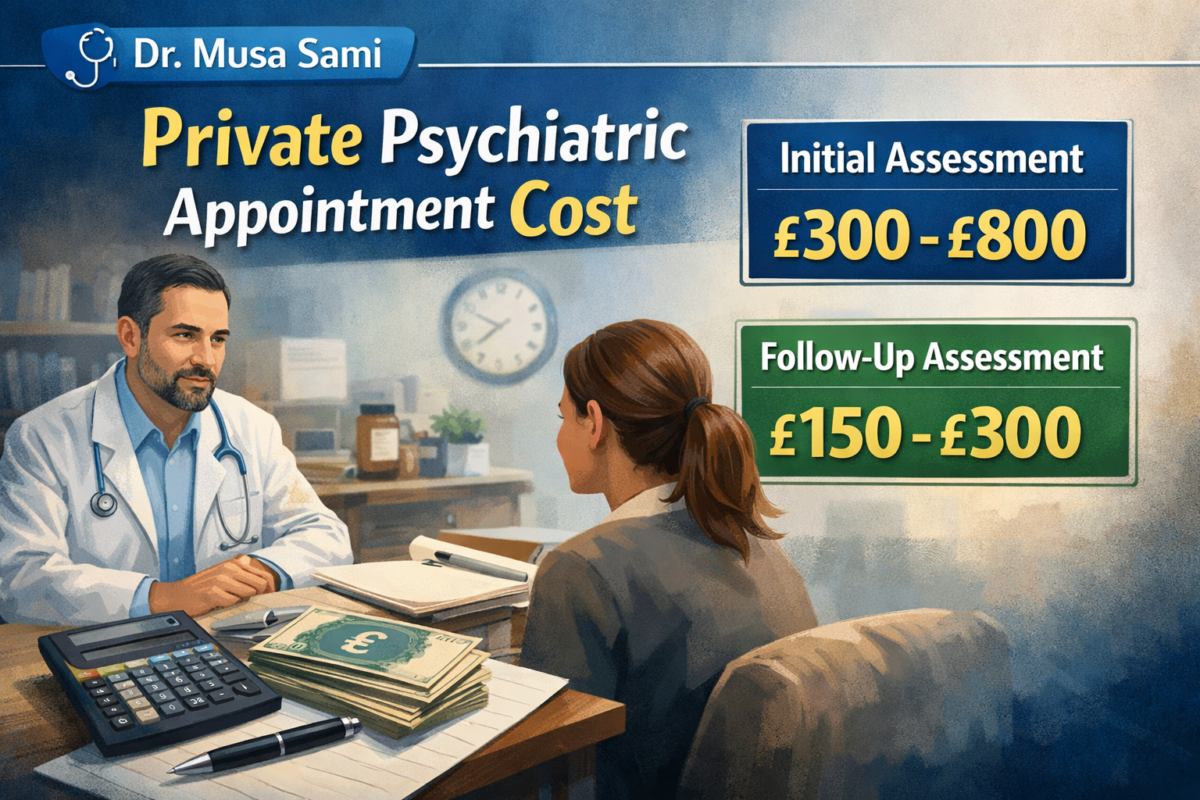
Typical fees in the UK:
Initial assessment: £300-£800 Follow-up appointments: £150-£400
Fees vary based on experience, location, appointment length, and complexity.
Highly specialized assessments (like ADHD or autism evaluations) sometimes cost more because they take longer and require additional expertise.
What’s Included in That Fee?
Here’s where people get burned:
Some psychiatrists include a comprehensive written report in their assessment fee. Others charge extra, sometimes hundreds of pounds more.
Before you book, clarify:
Is a written report included? Will they write to your GP? Are medication recommendations part of the service? Do they liaise with other professionals if needed?
If they’re vague about this, push for specifics. You’re paying their mortgage, you deserve clear answers.
Additional Costs That Sneak Up on You
Watch for:
Follow-up appointments (often required for medication adjustments), prescription fees, therapy referrals, specialist assessments your psychiatrist might recommend.
None of this is unreasonable, but it should be explained upfront, not sprung on you later.
Step 5: How Private Psychiatry Works with the NHS
Here’s a common fear:
“If I go private, will the NHS refuse to help me later?”
Short answer: No.
GP Communication After Your Assessment
With your consent, your private psychiatrist typically writes to your GP summarizing:
Assessment findings, diagnosis or formulation, treatment recommendations, and any medication prescribed.
This maintains continuity of care and ensures your GP knows what’s happening.
Important:
You control whether this happens. If you don’t want your GP informed, say so, though it usually makes your ongoing care easier.
Shared Care Arrangements
Sometimes medication started privately can later be managed by the NHS through “shared care” arrangements.
This means the psychiatrist initiates treatment, then your NHS GP continues prescribing once you’re stable.
But here’s the catch:
Shared care depends on local NHS policies and whether your GP agrees. It’s not guaranteed. Ask your psychiatrist about this before starting medication you’ll need long-term.
What Happens If You Return to NHS Services
Private psychiatric reports are generally recognized by NHS clinicians.
They might reassess you themselves (NHS policy often requires this), but your private assessment usually helps clarify diagnosis and speed up treatment planning.
Your private care doesn’t reset the clock, it adds to the clinical picture.
Step 6: Practical Factors That Actually Affect Your Experience
Clinical expertise matters. But so does basic convenience.
Waiting Times and Availability
This is often why people go private in the first place.
Some private psychiatrists have appointments available within days or weeks—not the 6-18 months you’re staring down with the NHS.
But popular psychiatrists book up fast. If you find someone good, don’t wait weeks to decide.
Location and Accessibility
Consider the obvious:
Where’s the clinic? Can you actually get there? Is parking available? Are there good transport links?
For people with mobility issues, anxiety about travel, or demanding work schedules, online consultations solve this problem entirely.
Online vs Face-to-Face: Which Is Better?
Honest answer: Both work.
Online consultations offer convenience and accessibility. You can have your appointment from home without travel stress.
Face-to-face appointments feel more personal for some people. The physical presence matters to them.
The clinical effectiveness is roughly equal when done properly. Choose based on your comfort and practical needs, not what you think you “should” prefer.
Common Mistakes People Make (And How to Avoid Them)
Let’s be honest about where people go wrong:
Choosing based on price alone. The cheapest option isn’t always the worst, but rock-bottom fees often correlate with rushed appointments or questionable credentials.
Assuming a diagnosis is guaranteed. Sometimes the answer is “we need more information” or “it’s not clear-cut.” Good psychiatrists admit uncertainty rather than forcing a label.
Not checking GMC registration. This takes 2 minutes online. There’s no excuse.
Expecting immediate medication changes. Responsible prescribing often means starting carefully and adjusting gradually, not throwing pills at you in the first appointment.
Not clarifying what’s included in the fee. Then acting surprised when the report costs extra.
These mistakes are avoidable. Don’t be lazy about the basics.
Private vs NHS Psychiatry: What’s Actually Different
Here’s the straightforward comparison:
Access: Private is faster. NHS is free at the point of use.
Time: Private appointments are longer and less rushed.
Choice: Private lets you choose your psychiatrist. NHS assigns whoever’s available.
Continuity: Private often offers the same psychiatrist for follow-ups. NHS can be a rotating cast.
Cost: Private costs hundreds of pounds. NHS costs zero (but you might wait a year).
Neither is objectively “better.” They serve different needs. Many people use both private for initial assessment, NHS for ongoing care.
Your Pre-Booking Checklist
Before you book anything, verify:
Consultant psychiatrist status – Not just “psychiatrist.” Consultant specifically.
GMC registration – Look it up. Confirm they’re registered with no restrictions.
Clear fee structure – Know exactly what you’re paying and what’s included.
Assessment length and format – 60-90 minutes minimum for a thorough evaluation.
Report and GP communication – Clarify if these are included or cost extra.
Questions Worth Asking Before Your Appointment
Don’t be shy. Ask:
What’s included in the assessment fee? Will I receive a written report, or does that cost extra? Do you offer follow-up appointments if needed? How do you work with GPs and NHS services? What happens if medication is recommended can my GP continue prescribing it?
Good psychiatrists appreciate these questions. It shows you’re taking this seriously.
Psychiatrists who get defensive or vague about basic logistics? That’s your signal to look elsewhere.
Frequently Asked Questions About Private Psychiatrists in the UK
Can a Private Psychiatrist Prescribe Medication in the UK?
Yes. A private psychiatrist in the UK can prescribe medication, as long as they are a GMC-registered medical doctor on the specialist register in psychiatry.
This includes antidepressants, antipsychotics, mood stabilisers, ADHD medication, and other psychiatric treatments, when clinically appropriate.
Will the NHS accept a private psychiatric assessment?
Yes. Private psychiatric assessments are usually recognised by NHS clinicians. The NHS may still carry out their own assessment before continuing treatment, but a private report often helps clarify diagnosis and speed up decision-making.
How much does a private psychiatrist cost in the UK?
Initial assessments typically cost £300-£800, depending on the psychiatrist’s experience, appointment length, and location. Follow-up appointments usually range from £150-£400. Some services, such as written reports or specialist assessments, may cost extra.
Final Thoughts
Finding a private psychiatrist in UK doesn’t have to feel like navigating a scam-filled maze.
Here’s what it comes down to:
Check credentials. Understand costs. Know what you’re actually getting. Ask direct questions. Trust your gut if something feels off.
Private psychiatric care can provide timely, thoughtful, clinically sound support when you need it. But only if you do your homework first.
At Dr Musa Sami’s psychiatric practice, the approach is straightforward: careful assessment, ethical decision-making, and helping patients understand their mental health clearly without pressure, shortcuts, or false promises. You deserve competent care that respects your intelligence and your time. Don’t settle for less.