
What Is Generalised Anxiety Disorder? The Truth About Living With Constant Worry
January 22, 2026
Overcoming Social Anxiety: Understanding the Process, Not Just the Symptoms
January 26, 2026
Here’s what nobody tells you about managing anxiety:
Those breathing exercises? The meditation apps? The “just think positive” advice?
They’re not useless. But they’re also not enough if your anxiety has moved past the occasional worry and into something that runs your life.
Let’s be honest about what’s happening when you’re searching for ways to managing anxiety at 2 AM. You’re not looking for another listicle about lavender tea and gratitude journals. You’re looking for clarity on why your anxiety feels so relentless, why some strategies work for a day then stop, and whether what you’re experiencing is still “normal” or if you’ve crossed into something that needs actual help.
Here’s what this article will give you: a grounded, evidence-based look at what anxiety actually is, what genuinely helps (backed by clinical evidence, not wellness influencers), and when your anxiety has moved past the self-help stage into territory that needs professional support.
Here’s what it won’t give you: miracle cures, quick fixes, or promises that you’ll never feel anxious again.
Because that’s not how this works.
What Anxiety Actually Is (Before We Talk About Managing It)
Your brain isn’t broken, it’s just overprotective
Anxiety is not a character flaw. It’s not weakness. It’s not evidence that something’s fundamentally wrong with you.
It’s your nervous system doing its job, just doing it way too enthusiastically.
When your brain perceives threat or uncertainty, it activates your body’s alarm system. Heart rate increases. Breathing quickens. Attention narrows. This response evolved to keep us alive, and in genuinely threatening situations, it’s exactly what you want happening.
In everyday life, this shows up as nervousness before a presentation, concern about your health or finances, or heightened alertness when something feels uncertain. In these situations, anxiety is temporary. It does its job, and then it settles.
That’s normal human functioning.
Here’s where it becomes a problem
Anxiety crosses the line when it persists even when there’s no real threat, feels impossible to switch off, interferes with sleep and concentration, or leads you to avoid situations or constantly seek reassurance to feel okay.
For some people, this develops into Generalised Anxiety Disorder (GAD), where worry becomes ongoing, wide-ranging, and absolutely exhausting. It’s not just “being stressed.” It’s a pattern where your nervous system has essentially forgotten how to stand down.
And here’s the truth: if you’re at that stage, most popular anxiety advice isn’t designed for what you’re dealing with.
What Actually Helps When Managing Anxiety (And Why Most Advice Misses the Mark?)
Let’s separate the two paths here.
Managing anxiety isn’t about eliminating anxious thoughts. If that’s your goal, you’re going to be disappointed and frustrated. Thoughts are involuntary. They show up whether you want them to or not.
The real work is changing how you relate to anxious thoughts, reducing their impact on your behavior, and restoring some sense of balance to your nervous system.
Here’s what genuinely helps:
It’s consistent rather than extreme. It’s evidence-based rather than trend-driven. It’s personalized to your specific pattern rather than one-size-fits-all.
This is why some strategies that work brilliantly for situational anxiety (like distraction before a job interview) can actually make GAD worse by reinforcing avoidance patterns.
Context matters. Your specific anxiety pattern matters.
The Psychological Approaches That Help with Managing Anxiety
Talking therapies aren’t just “having a chat”
Psychological therapies are among the most effective tools for managing persistent anxiety. Not because they make you feel better in the moment (though they might), but because they teach you to function differently despite the anxiety.
The most commonly used and well-researched approaches include:
Cognitive Behavioural Therapy (CBT) helps you identify and modify unhelpful thinking patterns and behaviours. It’s structured, practical, and focused on what you can control.
Acceptance and Commitment Therapy (ACT) takes a different angle—instead of trying to change your thoughts, it focuses on changing your relationship with them. You learn to notice anxious thoughts without letting them dictate your behavior.
Psychodynamic therapy explores the underlying emotional patterns and long-standing sources of anxiety. It’s less about quick fixes and more about understanding the deeper dynamics at play.
These approaches provide structure, insight, and practical tools, not just reassurance or validation.
The shift that changes everything
Here’s the most important concept in anxiety management: thoughts are not facts.
Anxiety is incredibly convincing. It produces detailed, vivid predictions of disaster. It feels like truth. But feeling true and being true is not the same thing.
Effective anxiety management involves noticing anxious thoughts without immediately reacting to them, allowing uncertainty rather than trying to eliminate it through checking or reassurance-seeking, and reducing the mental rumination that keeps anxiety alive.
This shift is particularly crucial for GAD, where worry tends to be constant and jump from topic to topic. You can’t think your way out of it. You have to learn to function alongside it.
Skills that actually reduce the intensity
Psychological approaches also teach emotional regulation skills that help you tolerate anxiety without it becoming overwhelming:
Grounding techniques that bring you back to the present moment, breathing strategies that calm your nervous system (not the shallow “take a deep breath” advice, but actual evidence-based techniques), attention-shifting skills that break rumination cycles, and increased tolerance of uncomfortable feelings.
These don’t remove anxiety instantly. But they reduce how overwhelming it feels over time.
That’s the real goal.
The Lifestyle Factors That Support Anxiety Management (But Won’t Cure It)
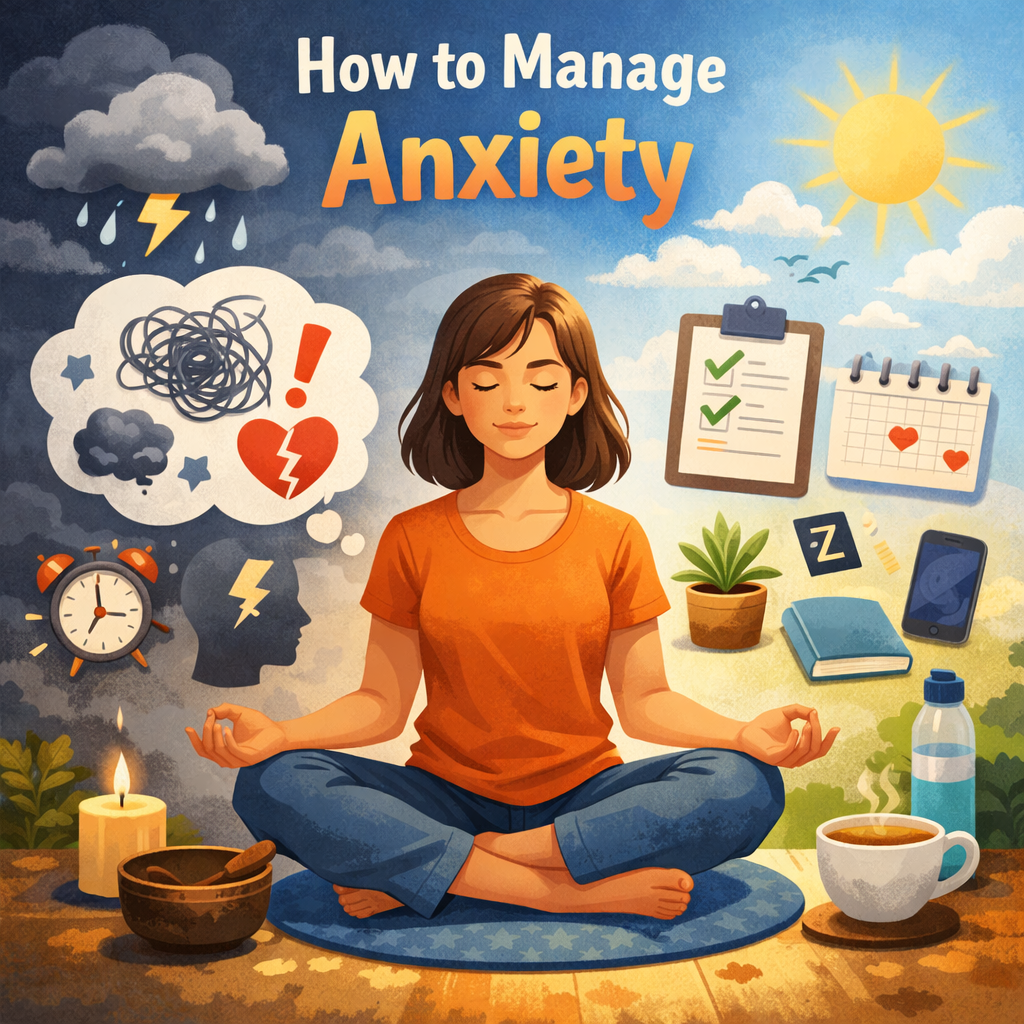
Sleep and anxiety feed each other
Poor sleep increases emotional reactivity. Anxiety disrupts sleep. You end up in a cycle where each makes the other worse.
Breaking this cycle involves maintaining a consistent sleep schedule (yes, even on weekends), reducing stimulation before bed, and avoiding excessive screen time late at night.
Regular routines provide predictability, which helps calm an overactive nervous system. This isn’t about perfection, it’s about consistency.
Physical activity isn’t just about fitness
Physical activity helps regulate anxiety by reducing stress hormones, improving sleep quality, and increasing overall resilience to stress.
But here’s what matters: this doesn’t require intense exercise. Regular walking, stretching, or gentle movement can be enough to support anxiety management.
The key is regularity, not intensity.
The substances you’re not thinking about
Many people overlook how caffeine and alcohol affect their anxiety.
Caffeine can heighten physical anxiety symptoms, palpitations, restlessness, that jittery feeling that anxiety already creates. When you are drink three coffees a day and wonder why your anxiety feels physical, start there.
Alcohol may temporarily reduce anxiety (which is why people use it), but it often makes anxiety worse in the longer term. It disrupts sleep, affects mood regulation, and can create a dependence cycle.
People with GAD are often particularly sensitive to both of these effects.
Here’s the bottom line: lifestyle factors support anxiety management. They don’t replace structured psychological work, especially if you’re dealing with persistent anxiety. But they create the foundation that makes everything else more effective.
Why Some Strategies Work for You and Not Your Friend
This is one of the most frustrating parts of managing anxiety.
Someone tells you meditation changed their life. You try it and feel worse. Another person swears by exercise. You work out regularly and your anxiety hasn’t budged. You start wondering if you’re doing it wrong or if you’re somehow unfixable.
Neither is true.
Anxiety is influenced by personality traits, past experiences, current stress levels, biological sensitivity, and the specific anxiety pattern you’re dealing with. What works depends on all of these factors.
For example, distraction can help situational anxiety (nervousness before a specific event) but can reinforce avoidance in GAD. Reassurance might calm anxiety briefly but increase dependency over time. Deep breathing might help panic symptoms but do nothing for chronic worry.
Effective anxiety management requires flexibility and self-understanding, not rigid rules from internet lists.
When Managing Anxiety on Your Own Stops Working
Signs you’ve crossed into territory that needs professional support
Self-help strategies are valuable. But there are times when they’re not enough.
Signs that anxiety needs professional assessment include anxiety lasting months rather than weeks, constant worry across multiple areas of life (work, health, relationships, finances), increasing avoidance of situations or responsibilities, physical symptoms without clear medical explanation, and feeling emotionally exhausted or stuck despite trying multiple strategies.
These patterns are common in GAD and often benefit from structured professional assessment.
Understanding the difference between coping and struggling
Here’s what matters: coping doesn’t mean “not feeling anxious.” It means being able to function despite anxiety.
When anxiety consistently limits your ability to live your life, when you’re avoiding important situations, when relationships are suffering, when you can’t work effectively, when you’re exhausted from the constant internal battle, it’s no longer something to manage alone.
Seeking help isn’t a failure. It’s often the most practical step toward recovery.
Professional Support Options in the UK
Your pathways to getting help
In the UK, anxiety support can be accessed through your GP (who can assess symptoms and discuss options), NHS psychological services including talking therapies, or private psychological or psychiatric assessment, particularly when symptoms are complex or long-standing.
Each pathway has different waiting times and levels of support. NHS waiting times can stretch 6-18 months depending on your area. Private assessment is typically available within 1-2 weeks but involves cost.
Understanding the difference between psychologists and psychiatrists
Psychologists focus primarily on therapy and behavioural change. They’re trained in psychological approaches like CBT, ACT, and psychodynamic therapy.
Psychiatrists assess mental health conditions from a medical perspective. They can provide diagnosis, consider complexity and co-occurring conditions, and prescribe medication when appropriate.
For individuals with significant GAD or complex anxiety patterns, psychiatric assessment can help clarify the full picture and guide appropriate treatment.
Neither is “better” they serve different but often complementary roles.
The Myths That Keep People Stuck
“Strong people don’t feel anxious”
This is complete nonsense.
Anxiety affects people of all strengths, backgrounds, and achievements. In fact, highly responsible and conscientious individuals, the people who take their commitments seriously and care about doing things well, are often more prone to anxiety.
Strength isn’t the absence of anxiety. It’s the willingness to address it constructively instead of pretending it doesn’t exist.
“Anxiety means something is wrong with you”
Anxiety is a response, not a defect.
It reflects a nervous system that’s trying, often too hard, to protect you. Understanding this reduces shame and supports recovery. You’re not broken. Your alarm system is just overly sensitive.
That’s fixable. But first you have to stop treating it like a character flaw.
Common Questions about Managing Anxiety
What is the best way to deal with anxiety?
The best way to deal with anxiety is to focus on regulation, understanding, and gradual change rather than trying to eliminate anxiety completely.
For most people, this means learning how to calm the nervous system first (through breathing, grounding, and sleep), then understanding what fuels their anxiety (thought patterns, stressors, avoidance behaviours), and finally making small, consistent changes in how they respond to it. Psychological therapies like CBT, ACT, or trauma-informed therapy help many people because they teach skills that reduce anxiety over time rather than offering short-term relief.
Medication can be helpful for some, especially when anxiety is severe or disabling, but it works best alongside psychological strategies. The most effective approach is usually personalised and layered, not one single technique.
How to manage anxiety without medication?
Many people manage anxiety effectively through therapy, lifestyle changes, and psychological skills alone. Medication is not always necessary. It’s considered on an individual basis depending on severity, impact on functioning, and personal preference. Neither path is better; they’re different tools for different situations.
How to manage anxiety in a relationship?
Anxiety in relationships often involves fear of rejection or excessive reassurance-seeking. This can strain relationships over time. Open communication about what you’re experiencing, establishing boundaries around reassurance, and addressing underlying anxiety patterns through therapy are key. Your partner can’t fix your anxiety, but they can support you while you do the work to manage it.
How can you reduce stress and anxiety?
You reduce stress and anxiety by addressing both your body and your environment, not just your thoughts.
Regular sleep, movement, and predictable routines help stabilise the nervous system and make anxiety easier to manage. Reducing constant stimulation (news, social media, caffeine) also lowers background stress levels. At the same time, learning to notice anxious thoughts without fighting them, and gently redirecting attention to the present moment, can significantly reduce mental overload.
Long-term stress reduction comes from changing what you repeatedly tolerate, avoid, or overextend yourself with. Small, practical adjustments done consistently work better than extreme lifestyle changes that are hard to maintain.
What triggers anxiety attacks?
Anxiety attacks are usually triggered when the nervous system perceives threat, overload, or loss of control, even if there is no real danger.
Common triggers include chronic stress, unresolved trauma, sleep deprivation, caffeine, health worries, social situations, conflict, or feeling trapped in a situation. Sometimes the trigger is internal, such as a physical sensation (like a fast heartbeat) or a thought that starts a fear loop. Over time, people may begin to fear the anxiety itself, which can become a trigger on its own.
Understanding personal triggers is important because it helps break the cycle of anticipation and avoidance that keeps anxiety going.
What are the first signs of anxiety?
The first signs of anxiety are often physical and subtle, appearing before people realise they are anxious.
These can include muscle tension, restlessness, shallow breathing, a tight chest, stomach discomfort, irritability, difficulty concentrating, or feeling “on edge” for no clear reason. Mentally, anxiety often shows up as excessive worrying, overthinking, or a strong need for reassurance. Behaviourally, people may start avoiding situations or seeking control.
Recognising these early signs allows you to respond sooner, which can prevent anxiety from escalating into panic or becoming chronic.
The Reality about Managing Anxiety
Here’s what you need to understand:
Anxiety is a normal human response. But it can become problematic when it’s persistent, intense, and limiting. Learning to manage it effectively involves understanding your nervous system, not fighting against it.
Psychological approaches are the foundation of effective anxiety management, especially for conditions like GAD. Lifestyle factors support this work, but don’t replace it. Professional help is appropriate when anxiety becomes persistent, severe, or significantly limits your life.
Managing anxiety is not about becoming fearless. It’s about learning to live fully even when anxiety is present.
With the right understanding, the right support, and realistic expectations about what’s actually achievable, this is entirely possible. You don’t need to eliminate anxiety.
You need to stop letting it make all your decisions.