
Understanding Separation Anxiety Across Childhood and Beyond
February 7, 2026
Depression Treatment in London: What Nobody Tells You Before You Start Looking
February 19, 2026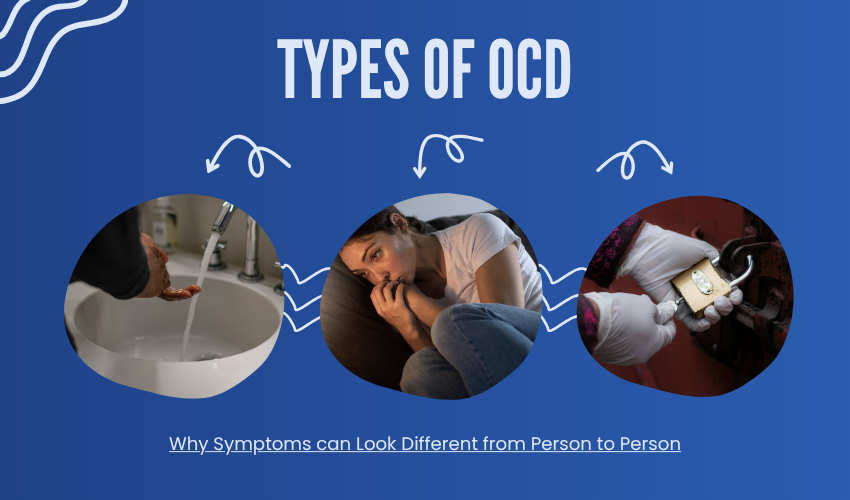
Here’s what most people get wrong about OCD:
They think it’s all about washing hands and organizing desk drawers.
But the person sitting next to you on the train, the one who looks completely calm? They might be performing mental rituals you’ll never see. Counting backwards from 100. Repeating phrases in their head. Trying desperately to “undo” a thought that won’t go away.
And from the outside, you’d never know.
This is the problem with OCD stereotypes. They’re not just inaccurate, they actively stop people from recognizing their own symptoms and getting help.
Look, if you’re reading this because you suspect you might have OCD, but your symptoms don’t match what you’ve seen on TV, you’re not alone. The reality is that OCD presents so differently from person to person that two people with the same diagnosis can look nothing alike.
Here’s what you’ll actually learn in this article:
- Why OCD symptoms cluster around specific themes (and why those themes matter less than you think)
- The real cycle that drives all types of OCD, regardless of what form it takes
- How to recognize OCD when it doesn’t look like the stereotype
- What actually works for treatment across all presentations
What you WON’T get: miracle cures, oversimplified categories, or reassurance that you definitely do or don’t have OCD. That’s what a proper assessment is for.
The Casual Language Problem That Makes Everything Worse
Here’s what happens every single day:
Someone says “I’m so OCD about my desk” because they like things tidy.
Another person jokes “That’s my OCD kicking in” when they double-check a lock.
And meanwhile, someone with actual OCD is spending three hours stuck in a mental loop they can’t break, wondering if they’re going insane.
Let’s separate the two.
OCD is not a personality quirk. It’s not about being particular or organized. It’s a mental health condition characterized by:
- Intrusive thoughts that cause genuine distress (obsessions)
- Repetitive behaviors or mental acts performed to reduce that distress (compulsions)
- Significant impairment in daily functioning
The difference? Time, intensity, and impact.
Someone who likes a clean desk spends 30 seconds straightening it and moves on. Someone with contamination OCD might spend four hours cleaning the same surface, miss work, and still feel consumed by anxiety.
One is a preference. The other is a disorder.
And because so many OCD symptoms happen internally in the form of mental rituals, reassurance-seeking, or hidden avoidance people often suffer for years before anyone, including themselves, realizes what’s actually happening.
What’s Actually Happening Inside the OCD Cycle
At its foundation, OCD follows the same pattern regardless of how it presents:
Intrusive thought or image → Intense anxiety or distress → Compulsive behavior or mental ritual → Brief relief → Cycle repeats
Here’s what makes obsessions different from regular worries:
They’re repetitive. They’re unwanted. They’re disturbing. And they’re incredibly difficult to dismiss with logic alone.
These aren’t passing concerns about a real problem. They’re thoughts that feel wrong, foreign, or completely at odds with who you are as a person.
Compulsions follow. They’re attempts to neutralize the distress or prevent something terrible from happening, even when, logically, the behavior makes no sense.
Examples include:
- Physical rituals like washing, checking, or arranging objects
- Mental rituals like counting, repeating phrases, or praying
- Reassurance-seeking from others
- Elaborate avoidance strategies
The critical piece most people miss: the relief is temporary.
Within minutes or hours, the anxiety returns. The thought resurfaces. The compulsion must be performed again.
That’s the trap. That’s what makes OCD so exhausting.
Why There Aren’t Actually “Types” of OCD (But We Talk About Them Anyway)
Here’s the truth: clinically, there’s one diagnosis. Obsessive-compulsive disorder.
That’s it.
But symptoms tend to cluster around certain themes. These clusters get labeled as “types” because it makes explanation easier and helps people recognize patterns in their own experience.
Think of them as common presentations, not separate conditions.
Two people can have the exact same OCD diagnosis while experiencing completely different fears, thoughts, and behaviors. One might be terrified of contamination. Another might be consumed by intrusive violent images. A third might be trapped in moral rumination that no one else can see.
Same diagnosis. Entirely different daily experience.
This is why understanding the range of OCD presentations matters. Not to fit yourself into a box, but to recognize that what you’re experiencing might be OCD even if it looks nothing like the stereotype.
The Most Common OCD Themes (And What They Actually Look Like)
Contamination and Illness Fears
This is the presentation everyone recognizes.
Fears typically involve:
- Germs and viruses
- Bodily fluids
- Chemicals or toxins
- Environmental contaminants
- Getting sick or making others sick
Common behaviors: excessive hand washing (sometimes until skin bleeds), repeated cleaning of surfaces, avoiding public spaces, changing clothes multiple times daily, creating elaborate “clean zones” in the home.
Here’s the line between normal hygiene and OCD: someone with contamination OCD might spend 4-6 hours per day on cleaning rituals. They’ll miss social events, struggle to maintain employment, and still feel consumed by fear despite the cleaning.
Normal hygiene takes minutes and provides actual relief.
Harm-Related Intrusive Thoughts
These are the thoughts people are most afraid to admit having.
Examples:
- “What if I left the stove on and the house burns down?”
- “What if I hit someone with my car and didn’t notice?”
- Sudden, graphic images of harming loved ones
- Fears of losing control and acting violently
This is crucial to understand: these thoughts don’t reflect intent or desire. They’re the opposite. They cause intense distress precisely because they contradict the person’s values and character.
Someone with harm OCD is not dangerous. They’re terrified of being dangerous.
Compulsions include: checking appliances repeatedly, retracing driving routes, seeking constant reassurance, mentally reviewing past events to confirm nothing bad happened, avoiding knives or other objects that trigger intrusive thoughts.
Sexual and Taboo Intrusive Thoughts
This is one of the most stigmatized and misunderstood presentations.
Intrusive thoughts may involve:
- Unwanted sexual images or scenarios
- Fears about sexual orientation that contradict the person’s actual orientation
- Taboo scenarios that violate personal values
- Fears of being attracted to inappropriate people
The shame surrounding these thoughts is immense. Many people delay seeking help for years because they’re terrified of being judged or misunderstood.
But here’s what you need to know: these are recognized OCD patterns. They don’t reflect your character, desires, or identity. They’re intrusive thoughts that cause distress specifically because they contradict who you are.
Compulsions often include mental checking (“Do I feel aroused by this? Am I certain I’m not?”), reassurance-seeking, and avoidance of situations that trigger the thoughts.
Religious and Moral Obsessions (Scrupulosity)
This involves:
- Intense fear of sinning or offending God
- Overwhelming guilt over minor actions
- Compulsive praying or confessing
- Constant questioning of moral adequacy
People with scrupulosity aren’t “too religious.” They’re trapped in a cycle where religious or moral concerns become the vehicle for OCD.
The anxiety isn’t about faith itself, it’s about achieving impossible certainty about being “good enough” or avoiding eternal consequences.
Compulsions: repeated prayers, excessive confession, seeking reassurance from religious figures, mentally reviewing actions for moral “purity.”
Symmetry, Order, and “Just Right” Feelings
This presentation looks different from fear-based OCD.
Instead of catastrophic worry, there’s an intense internal discomfort when things feel:
- Uneven or misaligned
- Incomplete
- “Not quite right”
It’s not about danger. It’s about an overwhelming need for things to feel correct.
Compulsions include: arranging objects repeatedly, counting to specific numbers, repeating actions until they feel “right,” tapping or touching things in specific patterns.
One person described it as “an itch I can’t scratch until everything is exactly how it needs to be, and sometimes that takes hours.”
The Compulsions You Can’t See (And Why They Matter Most)
Physical compulsions are easy to spot. Someone washing their hands for the 50th time that day? Obvious.
But mental compulsions are invisible, and often more debilitating.
Mental rituals include:
- Repeating phrases or prayers internally
- Counting in specific patterns
- Mentally reviewing events to check for mistakes
- Creating mental lists or sequences
- “Undoing” bad thoughts with good thoughts
Reassurance-seeking patterns:
- Repeatedly asking “Did I do something wrong?”
- Googling symptoms or scenarios for hours
- Confessing minor actions to seek validation
- Checking with others to confirm reality
Avoidance and neutralizing:
- Avoiding triggers entirely (places, people, media)
- Carrying “safety objects” to prevent feared outcomes
- Performing mental rituals to “cancel out” intrusive thoughts
Many people don’t realize mental rituals are compulsions. They think “I’m not doing anything, I’m just thinking,” but if you’re performing mental acts to reduce anxiety, that’s a compulsion.
This is why some presentations of OCD go unrecognized for years. The person looks fine from the outside while being completely trapped internally.
How OCD Symptoms Shift Over Time (And Why Static Labels Don’t Work)
Here’s something most people don’t expect: OCD themes can change.
Someone might start with contamination fears in their twenties, develop checking compulsions in their thirties, and shift to intrusive harm thoughts during a stressful life event.
The specific content changes. The underlying mechanism, the obsession-compulsion cycle, stays the same.
This is why rigid subtype categories aren’t clinically useful. Your brain doesn’t care about staying in one lane. It latches onto whatever creates anxiety in your current circumstances.
Life stress, major transitions, hormonal changes, trauma, all of these can shift which themes your OCD targets.
But the treatment approach remains consistent regardless of theme.
Why Two People With OCD Can Look Nothing Alike
Consider this:
Person A: Washes hands 50+ times daily, avoids public bathrooms, spends hours cleaning, visibly distressed when touching doorknobs.
Person B: Sits quietly at their desk, appears calm, but internally performs mental rituals for hours, replays conversations obsessively, seeks constant reassurance through texts.
Outwardly? Completely different.
Clinically? Both have OCD.
This variability is exactly why understanding the range of presentations matters. It reduces misdiagnosis, self-doubt, and the years people spend thinking “this can’t be OCD because it doesn’t look like what I’ve seen.”
If you’re stuck in an obsession-compulsion cycle that’s consuming your time and causing distress, the specific theme matters less than you think.
The “Subtypes” You’ll Find Online (And How to Use Them Without Going Crazy)
Search “types of OCD” and you’ll encounter terms like:
- Pure O
- Relationship OCD
- Health OCD
- Harm OCD
- Existential OCD
Here’s what you need to know: these aren’t official diagnoses.
They’re descriptive labels that help people articulate their experience. Sometimes they’re useful. Sometimes they become part of the problem.
Why “Pure O” Exists (And Why It’s Misleading)
“Pure O” stands for “purely obsessional,” the idea that someone has obsessions without compulsions.
The reality? Truly pure obsessions are extremely rare. What people call “Pure O” almost always involves mental compulsions that are harder to recognize.
If you’re ruminating for hours, mentally checking, or seeking reassurance, those are compulsions. They’re just not visible.
The Risk of Over-Identifying With Subtypes
Here’s where labels become counterproductive:
- They can increase anxiety (“Do I have the right kind of OCD?”)
- They encourage reassurance-seeking (“Is this really Relationship OCD or something else?”)
- They oversimplify what’s actually a complex, fluid presentation
Use labels as descriptive tools, not identities. The goal is understanding patterns, not achieving diagnostic certainty on your own.
Treatment approaches remain similar regardless of which label fits best.
How Professionals Actually Assess OCD Despite All This Variation
A proper psychiatric or psychological assessment doesn’t start with “Which subtype do you have?”
It focuses on:
- Detailed history of symptoms and when they started
- Exploration of intrusive thoughts and their content
- Identification of compulsions (both visible and mental)
- Impact on daily functioning, relationships, work
- Screening for co-occurring conditions like depression or anxiety
- Severity assessment
The clinician is looking for patterns, not perfect category fits.
The key questions are:
- Are you experiencing intrusive thoughts that cause significant distress?
- Are you performing behaviors or mental acts to reduce that distress?
- Is this cycle taking up substantial time and impairing your life?
- How severe is the impact?
If the answers point to OCD, the specific theme is secondary to developing an effective treatment plan.
What Actually Works for Treatment (Across All OCD Presentations)
Here’s the good news: despite the incredible variety in how OCD presents, treatment approaches are remarkably consistent.
Cognitive Behavioral Therapy (CBT) with Exposure and Response Prevention (ERP)
This is the gold standard for OCD treatment.
Here’s how it works:
ERP helps you gradually face feared situations (exposure) while resisting the urge to perform compulsions (response prevention).
The goal isn’t to eliminate anxiety. It’s to learn that anxiety reduces naturally without compulsions, breaking the cycle that keeps OCD alive.
Example for contamination OCD: touching a “contaminated” object and sitting with the anxiety without washing hands. The anxiety peaks, then naturally decreases over time.
Example for harm OCD: holding a knife while experiencing intrusive thoughts and resisting mental checking or reassurance-seeking.
It’s uncomfortable. It requires commitment. And it’s the most effective treatment we have.
Medication
Selective serotonin reuptake inhibitors (SSRIs) are commonly prescribed for OCD.
They don’t cure OCD, but they can reduce symptom intensity, making therapy more manageable.
Common options include fluoxetine, sertraline, and paroxetine, often at higher doses than used for depression.
Combined Approach
Many people see the best results combining medication with ERP therapy.
Medication takes the edge off. Therapy teaches new response patterns. Together, they provide comprehensive support.
Self-Management Strategies
Between therapy sessions, these practices help:
- Reducing reassurance-seeking (as hard as that is)
- Limiting avoidance of triggers
- Building tolerance for uncertainty
- Practicing mindfulness without using it as a mental compulsion
- Delaying compulsions rather than trying to eliminate them immediately
The realistic goal: changing your response to intrusive thoughts, not eliminating the thoughts entirely.
Most people with OCD continue to have occasional intrusive thoughts. Recovery means they no longer control your life.
When It’s Time to Actually Seek Professional Help
Consider assessment for OCD if:
- Symptoms consume more than an hour of your day
- Anxiety feels overwhelming or constant
- Work performance or relationships are suffering
- You feel trapped in rituals you can’t stop
- Intrusive thoughts feel shameful or disturbing
- You’re avoiding significant parts of life due to OCD
Early intervention typically leads to faster improvement.
In the UK, options include:
- GP referral to NHS mental health services
- Self-referral to NHS talking therapies (IAPT)
- Private psychiatric assessment for faster access
Don’t wait for it to become unbearable. OCD tends to worsen without treatment, not improve on its own.
The Questions People Actually Ask About OCD
Is OCD just about cleaning?
No. Cleaning is one possible presentation among dozens. Many people with OCD have no cleaning compulsions whatsoever.
Can OCD be purely mental?
Yes. Mental compulsions are extremely common and just as significant as physical ones. You can be completely trapped by internal rituals that no one else sees.
Do intrusive thoughts mean I secretly want them?
Absolutely not. In OCD, intrusive thoughts cause distress precisely because they contradict your values and desires. They’re the opposite of what you want.
Is OCD treatable?
Yes. With proper therapy (particularly ERP) and sometimes medication, most people see significant improvement. Complete elimination of symptoms isn’t always realistic, but regaining control of your life is.
Will I have OCD forever?
OCD is typically a chronic condition, but that doesn’t mean constant suffering. Many people achieve long periods of remission with treatment. Others manage symptoms effectively enough that OCD no longer controls their daily life.
The Bottom Line: What You Actually Need to Know
OCD doesn’t have a single face.
The person obsessively washing their hands and the person sitting quietly performing mental rituals have the same disorder. Different themes, same underlying cycle.
Understanding the range of OCD presentations helps you:
- Recognize symptoms earlier (in yourself or others)
- Reduce the stigma that stops people from seeking help
- Access effective treatment without getting stuck on labels
- Realize that “not matching the stereotype” doesn’t mean you don’t have OCD
If you’re experiencing intrusive thoughts that cause distress, performing compulsions (mental or physical) to manage that distress, and finding that this cycle consumes significant time or impairs your life, professional assessment is worth pursuing.
With the right approach, people with OCD can regain control and build lives that aren’t defined by obsessions and compulsions.
The symptoms may look different from person to person, but the path forward remains the same: recognition, proper assessment, and evidence-based treatment.
That’s not a promise of perfection. It’s a realistic expectation of significant improvement and a return to functioning. And for most people dealing with OCD, that makes all the difference.