How to Overcome Agoraphobia Fast: What Helps, What Doesn’t, and Why
January 31, 2026
Anxiety Disorder After Breakup: When It’s Normal and When It Becomes a Disorder
February 5, 2026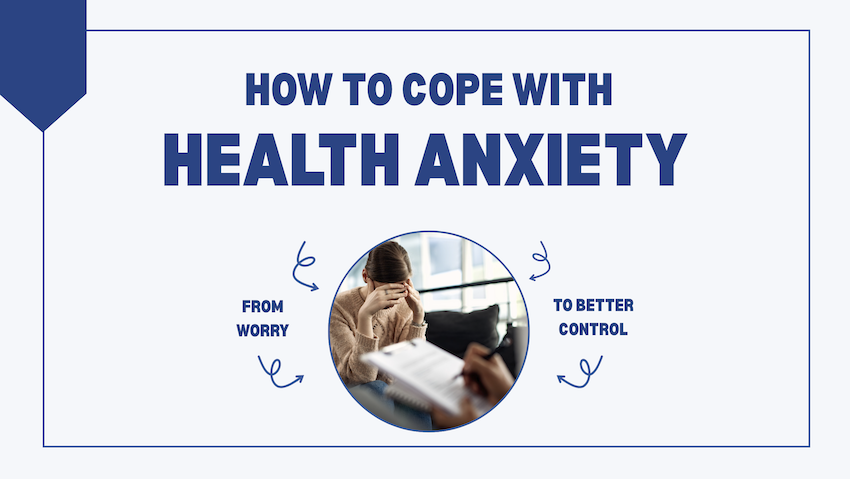
Here’s what most people get wrong about health anxiety:
They think the solution is finding the right reassurance. The perfect Google search. The test that finally puts their mind at ease.
It never works.
Because health anxiety isn’t a knowledge problem. It’s a pattern problem. And every time you check, search, or seek reassurance, you’re teaching your brain that those sensations are dangerous.
The cycle gets stronger. Not weaker.
If you’re reading this, you probably know exactly what I’m talking about. That racing heart that must mean something’s wrong. The headache that sends you spiraling into worst-case scenarios. The 3 AM Google sessions that leave you more terrified than when you started.
Here’s the reality: Health anxiety is one of the most common anxiety disorders. And it’s highly treatable.
But not by doing more of what you’re already doing.
This guide breaks down what health anxiety actually is, why it keeps happening, and—most importantly, how to cope with health anxiety in ways that actually work long-term.
Not by eliminating every worry. That’s not realistic. But by changing your relationship with uncertainty so fear stops running your life.
What Health Anxiety Actually Is (And Why Understanding It Matters)
Let’s start with what health anxiety isn’t:
It’s not being dramatic. It’s not “just in your head.” And the physical sensations you’re feeling? Those are real.
Here’s what’s happening instead:
Your brain’s threat detection system is stuck in overdrive. It’s scanning your body constantly for danger, treating every sensation as a potential emergency, and interpreting uncertainty as risk.
The sensations are real. What’s distorted is the interpretation.
A mild headache becomes “What if it’s a brain tumour?”
A racing heart becomes “Something is wrong with my heart.”
Fatigue becomes “I must have a serious disease.”
Your mind doesn’t just consider these possibilities, it jumps straight to them. First option. Worst-case scenario.
This happens because the alarm system in your brain has become oversensitive. And here’s the part that keeps people trapped for years:
The more you check and worry, the stronger this alarm system becomes.
Every Google search tells your brain the symptom is worth investigating. Every reassurance-seeking behavior confirms there’s something to be afraid of. Everybody scan reinforces the threat.
You think you’re solving the problem. You’re actually making it worse.
Understanding this cycle is the first step toward breaking it.
How Health Anxiety Shows Up in Real Life
Health anxiety doesn’t look the same for everyone, but the patterns are remarkably consistent:
You’re constantly checking your body for symptoms. Monitoring your heart rate. Pressing on that spot that felt different. Scanning for changes.
You’re Googling symptoms repeatedly, knowing it makes you feel worse but unable to stop.
You’re seeking reassurance from family, friends, doctors. Sometimes multiple times about the same concern.
You struggle to trust medical results. The relief lasts a few hours, maybe a day. Then doubt creeps back in.
Some people avoid hospitals or health information entirely, terrified of what they might discover. Others seek repeated tests and appointments.
Both extremes are driven by the same fear.
The “what if” thoughts are constant. You can’t fully relax. Illness preoccupies your mind even during moments that should be enjoyable.
Here’s what nobody tells you about these behaviors:
They provide short-term relief. That’s why they’re so hard to stop. But they increase anxiety in the long run because the reassurance fades quickly and the next doubt appears.
Over time, this becomes exhausting. It affects your work. Your sleep. Your relationships.
And the harder you try to eliminate uncertainty, the more trapped you become.
What “Coping” Actually Means (It’s Not What You Think)
When people ask how to cope with health anxiety, what they’re really asking is: “How do I make these thoughts stop completely?”
Let’s be honest about something:
You’re not going to eliminate worry altogether. That’s not the goal. And chasing that goal is part of what keeps you stuck.
Here’s the more realistic aim:
Reducing the intensity of fear. Breaking the checking habits that maintain the cycle. Responding differently to uncertainty. Learning that anxiety can be tolerated safely without needing immediate relief.
Control comes from changing your relationship with anxious thoughts, not winning every argument with them.
Think of it less as fighting anxiety and more as retraining your brain.
The goal isn’t to feel zero anxiety about your health. The goal is to reach a point where uncertainty doesn’t hijack your entire day. Where you can feel a strange sensation and not spiral. Where “I don’t know for certain” becomes tolerable instead of terrifying.
That’s what coping actually looks like.
The Psychological Strategies That Actually Reduce Health Anxiety
Evidence-based approaches can significantly reduce health anxiety. Most of these come from Cognitive Behavioural Therapy (CBT), which has strong research backing for anxiety disorders.
Here’s what works:
Reducing Checking and Reassurance
This feels counterintuitive. When you’re anxious, checking feels like the solution.
But here’s the truth: Repeated checking teaches your brain that symptoms are dangerous.
Every time you Google, seek reassurance, or scan your body, you’re reinforcing the alarm. You’re telling your brain, “Yes, this is worth being afraid of.”
Breaking the cycle means gradually reducing these behaviors:
Limiting Google searches. Setting boundaries around reassurance-seeking. Avoiding repeated body scanning.
The first few times you resist? Anxiety might increase slightly. That’s normal. Your brain is used to getting relief through checking.
But over time, confidence grows. Your brain learns that uncertainty isn’t the same as danger.
Challenging Catastrophic Thinking
Health anxiety loves worst-case scenarios. It jumps straight past “probably nothing” to “definitely something terrible.”
Learning to challenge this pattern doesn’t mean forcing positive thoughts. It means asking better questions:
What’s the most likely explanation for this sensation? Have I felt this before and been fine? What actual evidence supports this fear, not just possibility, but probability?
These questions don’t eliminate anxiety. They soften its intensity and create space between the sensation and the catastrophic conclusion.
Tolerating Uncertainty
Here’s the bottom line: No one can have 100% certainty about their health. Ever.
Trying to eliminate uncertainty is what fuels the anxiety cycle. You can’t get enough reassurance because absolute certainty doesn’t exist.
The paradox is that practicing acceptance of “not knowing” reduces anxiety more effectively than seeking certainty ever will.
This takes time to develop. But it’s surprisingly powerful once you get there.
Gradual Exposure to Feared Situations
Avoiding hospitals, health news, or medical settings strengthens fear. Your brain learns that these things are threats worth avoiding.
Gentle, gradual exposure helps rebuild tolerance. Not flooding yourself with fear, but systematically approaching what you’ve been avoiding in manageable steps.
This might mean reading a health article without immediately Googling symptoms. Scheduling a routine check-up you’ve been postponing. Watching a medical show you’d normally turn off.
Small steps. Consistent practice. Building evidence that you can handle these situations without catastrophe.
The Lifestyle Factors That Support Recovery
Psychological work is central to managing health anxiety. But daily habits influence how your nervous system responds to stress.
Small changes make a noticeable difference:
Sleep: Poor sleep heightens threat sensitivity. Your brain interprets ambiguous signals more negatively when you’re exhausted. Regular sleep routines help calm the nervous system.
Physical Activity: Exercise reduces stress hormones and improves mood regulation. It also gives you evidence that your body can handle physical demands without falling apart.
Caffeine and Alcohol: Both can increase anxiety symptoms like palpitations or restlessness, which you might then misinterpret as illness. Worth monitoring if you’re struggling.
Routine and Structure: Predictable days reduce mental space for worry spirals. When your schedule has shape, there’s less room for rumination.
Social Connection: Talking with others and staying engaged reduces isolation, which often amplifies anxious thinking.
These aren’t cures on their own. But they provide a steadier foundation for the psychological work.
When It’s Time to Stop Managing This Alone
Many people try to manage health anxiety privately for years before seeking help.
Here’s when professional support makes sense:
Worry occupies most of your day. You struggle to trust medical reassurance. Checking or Googling feels compulsive, you know it doesn’t help, but you can’t stop. Sleep is disrupted. Work or relationships are affected. You’re avoiding normal activities due to fear. Anxiety feels stuck or worsening despite your efforts.
When health anxiety begins to limit your life, it’s no longer just a personality trait. It may be part of a broader anxiety condition that responds well to structured treatment.
At this stage, professional care makes recovery faster and more sustainable.
What Professional Support Actually Looks Like
Health anxiety responds well to professional treatment. Here’s what’s available:
Psychological Therapy
CBT is first-line treatment with strong evidence for health anxiety. Therapy focuses on breaking checking cycles, addressing catastrophic thinking patterns, and building tolerance of uncertainty.
This isn’t just talking about feelings. It’s structured, skills-based work that changes how you respond to anxiety.
Psychiatric Assessment
If anxiety is severe, persistent, or overlapping with other conditions like depression or panic disorder, a psychiatric assessment can clarify diagnosis and treatment options.
This gives you a complete picture of what’s happening and what approaches might work best.
Medication
For some people, medication reduces anxiety intensity enough to make therapy more effective. It’s usually considered when symptoms are significant or long-standing.
Not everyone needs medication. But it’s worth discussing if psychological strategies alone aren’t creating enough change.
NHS and Private Options
In the UK, you can access support through your GP, NHS talking therapies services, or private mental health clinics.
NHS routes often involve waiting times. Private care provides faster access but costs more upfront.
Neither is inherently better, it depends on your timeline, budget, and severity.
Seeking help isn’t weakness. It’s often the most practical step toward actually feeling better instead of just managing symptoms.
The Questions People Actually Ask About Health Anxiety
How do I stop health anxiety?
You don’t “stop” it completely. You reduce checking, limit reassurance-seeking, challenge catastrophic thinking, and learn to tolerate uncertainty. Therapy guides this process effectively.
What causes health anxiety?
Often a combination: past illness experiences, family beliefs about health, stressful life events, or a general tendency toward anxiety. Rarely one single cause.
What’s the difference between OCD and health anxiety?
Both involve intrusive worries and checking behaviours. Health anxiety focuses specifically on illness fears. OCD can involve many unrelated obsessions and rituals. A professional assessment can clarify what you’re dealing with.
Moving From Constant Worry to Better Control
Here’s what matters:
Health anxiety is common. More people struggle with this than you realise. And it’s highly treatable when approached correctly.
Occasional health worry is normal. Persistent fear that disrupts your life may signal health anxiety worth addressing.
Checking and reassurance maintain the cycle, even though they feel like solutions.
Psychological strategies, reducing checking, challenging catastrophic thoughts, tolerating uncertainty, are effective when practiced consistently.
Support is available if you’re struggling. You don’t have to figure this out alone.
Learning how to cope with health anxiety isn’t about eliminating all worry. That’s not realistic, and it’s not the goal.
It’s about building confidence that you can handle uncertainty without fear running your life.
With the right approach, most people move from constant vigilance to a calmer, more balanced relationship with their health. And with themselves.