How to Cope With Health Anxiety: From Worry to Better Control
February 2, 2026
Understanding Separation Anxiety Across Childhood and Beyond
February 7, 2026Here’s what most people get wrong about anxiety disorder after breakup:
They think if they’re still anxious three weeks later, something’s broken. Or they assume every racing thought and sleepless night means they need medication.
Both extremes miss the point.
Some anxiety after a breakup is completely normal. Your nervous system is doing exactly what it’s supposed to do when something important falls apart. But here’s the problem: for some people, that normal distress doesn’t fade. It spreads. It intensifies.
And nobody tells you when that line gets crossed.
Let’s be honest about what’s happening in your brain right now, what’s normal, and when you actually need help. No fluff. No miracle promises about healing in seven days. Just the truth about anxiety disorder after breakup and what to do about it.
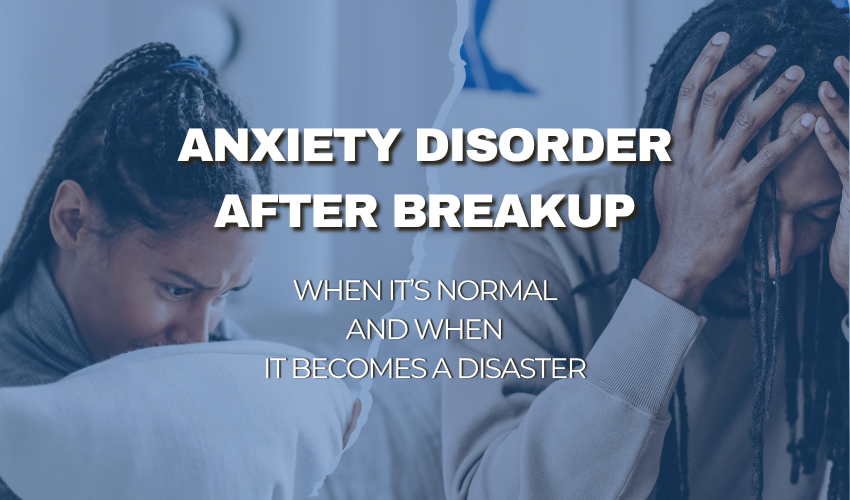
Why Your Brain Treats Breakups Like Actual Threats And Causes Anxiety Disorder After Breakup
Here’s the reality: your anxiety isn’t random.
Human attachment runs deep, deeper than most people realize. From a psychological and biological perspective, close relationships function as a security system. They regulate stress, provide reassurance, offer predictability.
When that system shuts down, your brain doesn’t interpret it as “sad event.” It reads it as threat.
Think about what happens simultaneously when a relationship ends:
You lose emotional safety. Your daily routines collapse. Social support often vanishes (especially if they were your primary person). The future becomes uncertain. And every interaction, every memory, every “what if” question attacks your self-worth.
Your body responds the same way it would to danger: increased heart rate, muscle tension, hyper vigilance. This is survival chemistry, not weakness.
This is why you’re experiencing restlessness, racing thoughts, sleep disruption, constant “what if” spirals, and compulsive urges to check messages or seek reassurance.
In the early weeks, these reactions are part of normal adjustment, not a disorder.
Here’s what this means for you: if you’re two weeks post-breakup and feeling anxious, that’s your nervous system functioning correctly. The question isn’t whether you should feel anxious. The question is whether that anxiety settles or spreads.
When Normal Grief Becomes Something Else
Most people gradually adapt. The anxiety curves downward over weeks. Sleep improves. Thoughts slow down.
But sometimes the nervous system doesn’t recalibrate.
Instead of settling, worry spreads beyond the breakup itself. You might notice the anxiety shifting from the relationship to work performance, health concerns, and financial stability. Persistent overthinking about many areas of life, not just your ex. Physical tension becomes your baseline state, most days.
You struggle to concentrate. You start avoiding social situations because they feel overwhelming. That constant “on edge” feeling never fully releases.
When anxiety generalises like this, it stops being situational stress and starts resembling Generalised Anxiety Disorder.
The breakup triggered it. But now the anxiety has momentum independent of the relationship.
This is the moment people usually say: “It’s not just heartbreak anymore, something feels wrong.”
Sound familiar?
Common Anxiety Disorder After Breakup
Let’s separate the truth from the misconception.
A breakup doesn’t directly “cause” mental illness. But it absolutely can act as a catalyst for underlying vulnerabilities, like striking a match near kindling that was already there.
Several anxiety conditions may appear or intensify during this time.
Generalized Anxiety Disorder
Excessive, persistent worry across many areas of life, not just the relationship. Your mind constantly anticipates problems. Relaxation becomes nearly impossible. The worry feels uncontrollable and disproportionate to actual risk.
Panic Disorder
Some people develop sudden panic attacks: breathlessness, dizziness, chest tightness, fear of losing control. These can hit without warning and feel terrifying. The fear of having another attack can become its own problem.
Social Anxiety
Confidence drops after rejection or loss. Fear of social situations intensifies. Dating again feels impossible. Even casual interactions trigger worry about judgment or embarrassment.
Adjustment Disorder
Short-term distress that feels intense but gradually improves over weeks to months. This sits between normal grief and clinical anxiety, significant enough to impair function but expected to resolve with time.
Each pattern requires slightly different support. This is why accurate assessment matters, not guessing based on internet articles.
How to Tell When Anxiety Crosses the Line
Here’s the question everyone asks: when does post-breakup anxiety become an anxiety disorder after breakup?
The answer isn’t about one specific symptom. It’s about duration, intensity, and impact.
Consider seeking professional support if your anxiety:
Lasts most days for several weeks or months without meaningful improvement. Feels disproportionate to the actual situation; the reaction doesn’t match the stimulus anymore. Interferes with work performance or study. Affects sleep consistently, not just occasional bad nights. Causes physical symptoms like palpitations, nausea, shaking, or digestive issues. Leads to the avoidance of everyday activities you used to handle easily. Feels completely out of control, despite your best efforts. Continues intensely even when you’re not actively thinking about the breakup.
Here’s the crucial difference:
Normal grief fluctuates. You have bad days and better days. Triggers are predictable. Intensity gradually decreases, even if slowly.
Clinical anxiety tends to feel constant and intrusive. It doesn’t respond to logic or reassurance. It interferes with basic functioning. Life starts to shrink because avoidance becomes your coping mechanism.
If you’re reading this and thinking “that’s me,” it may be time to talk to a professional. Not because you’re broken. Because your nervous system needs help recalibrating.
What Actually Works ForAnxiety Disorder After Breakup
The good news: anxiety disorders are highly treatable.
Let’s be clear about what “treatment” means here. Support doesn’t mean something is seriously wrong with you. It simply means your nervous system is stuck in a threat response pattern and needs help finding the off-switch.
Here’s what actually works:
Psychological Therapy
Talking therapies are often first-line treatment, and for good reason, they work.
Cognitive Behavioral Therapy (CBT) helps you recognize unhelpful thought patterns, reduce catastrophic thinking, build practical coping strategies, and gradually face situations you’ve been avoiding.
Other therapies may focus on attachment patterns, relationship experiences, and emotional processing, particularly useful if this breakup triggered deeper wounds.
Medication
In some cases, medication helps stabilize symptoms, particularly when anxiety is severe or persistent. This isn’t about dependency or permanent prescriptions. Sometimes reducing intensity enough for therapy to work is exactly what’s needed.
The goal is recalibration, not numbing.
Practical Support
Often overlooked, but genuinely effective: establishing sleep routines, maintaining physical activity, reducing alcohol or caffeine, rebuilding social connections, and creating structured daily plans.
These aren’t “nice to have” additions. They’re foundational. Small lifestyle adjustments can significantly improve recovery when combined with professional support.
The bottom line: anxiety disorders respond well to treatment. Most people recover fully with the right approach. But you have to actually use the tools, not just read about them.
Living With Anxiety While You Recover
Here’s what nobody tells you about recovery:
It’s rarely a straight line.
Some days feel manageable. Others feel impossibly heavy. That’s normal, not failure. Progress isn’t linear, and expecting it to be sets you up for frustration.
A few principles that actually help during this phase:
Allow feelings without judging them. Trying to suppress sadness or worry typically backfires. Emotions tend to settle when acknowledged rather than fought. You don’t have to like what you’re feeling to let it exist.
Maintain routine. Structure gives the brain signals of safety. Your nervous system responds to predictability, especially when internal states feel chaotic.
Avoid constant reassurance-seeking. Repeated checking or contacting an ex may temporarily soothe anxiety, but it prolongs recovery. Each contact resets the clock. It’s like picking a scab, relief is immediate but healing stops.
Stay connected. Isolation worsens anxiety. Gentle social contact helps regulate mood, even when it feels like effort. You don’t need to explain everything. Just don’t disappear.
Be patient with yourself. Breakups affect identity, not just relationships. You’re not just grieving a person, you’re grieving the future you imagined, the routines you built, the version of yourself that existed in that relationship.
Healing takes longer than most people expect.
Think of this as rehabilitation rather than quick repair.
When to Actually Seek Professional Help For Anxiety Disorder After Breakup
It can be hard to know when to reach out.
Here’s the truth: most people wait too long. They assume they should be able to handle it alone, or that seeking help means they’re weak, or that their situation isn’t “bad enough” yet.
All of that is nonsense.
Consider speaking with a GP, therapist, or psychiatrist if:
Anxiety feels overwhelming despite your best efforts. Panic attacks occur. You can’t function adequately at work or home. Sleep is severely disrupted for weeks. You feel hopeless or persistently low. Symptoms last beyond a few months without improvement. You’re genuinely unsure whether what you’re feeling is normal.
In the UK, support options include GP referral to NHS talking therapies, community mental health services, or private psychiatric assessment if you need faster access or more specialized care.
Early support often shortens recovery time.
There’s no prize for struggling alone. None. Zero recognition for white-knuckling your way through something treatable.
If you’re questioning whether you need help, that question itself is often the answer.
Common Questions About Anxiety Disorder After Breakup
Is anxiety disorder after breakup normal?
Yes. Short-term worry, sadness, and emotional upheaval are completely expected responses. It becomes a concern if symptoms persist intensely or significantly impair daily life beyond what adjustment should require.
Can a breakup trigger Generalized Anxiety Disorder?
It can act as a stressor that reveals or worsens underlying anxiety tendencies, especially in people already prone to worry. The breakup doesn’t create the vulnerability, but it can activate it.
How long should anxiety last after a breakup?
Many people improve within weeks to a few months. If anxiety remains intense beyond this timeframe, or if it’s spreading into other life areas, professional assessment may be helpful.
Will therapy really help?
Yes. Psychological therapy is highly effective for anxiety disorders and provides practical tools to manage both relationship loss and ongoing worry. It’s not just talking, it’s skill-building.
The Bottom Line on Anxiety Disorder After Breakup
Breakups are emotionally painful. Some anxiety is entirely normal and expected.
But when worry becomes constant, spreads into all areas of life, or starts limiting how you live, it represents more than situational distress.
An anxiety disorder after breakup isn’t a personal failing; it’s a treatable health condition.
With the right support, whether through therapy, lifestyle changes, or professional care, most people recover well and regain confidence in themselves and future relationships.
Here’s what matters: if you’re struggling, you don’t have to navigate it alone. Help is available. Improvement is absolutely possible.
The question isn’t whether you’re strong enough to get through this. The question is whether you’re getting the support that makes recovery faster and more complete. That’s a choice you get to make.