Overcoming Social Anxiety: Understanding the Process, Not Just the Symptoms
January 26, 2026
How to Overcome Agoraphobia Fast: What Helps, What Doesn’t, and Why
January 31, 2026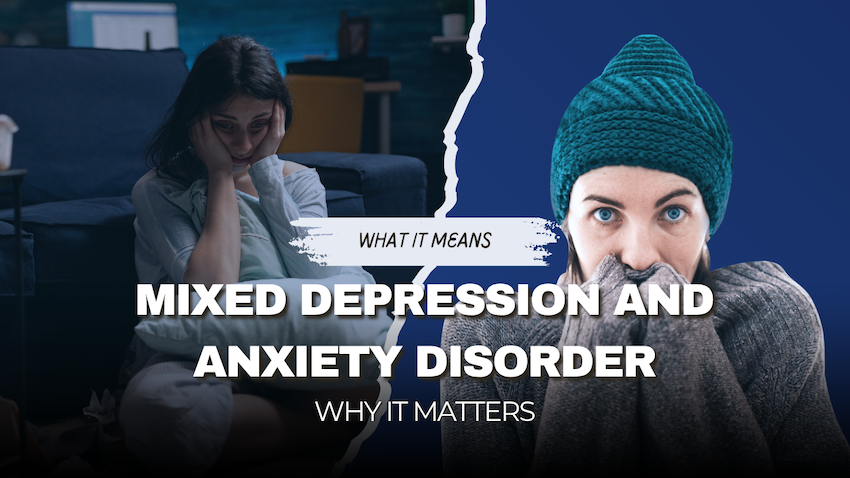
Here’s what most people don’t understand about feeling anxious and depressed at the same time:
You’re not broken. You’re not “doing it wrong.” And you don’t need to pick a lane.
The constant mental chatter of “Am I anxious or depressed?” misses the entire point.
Because here’s the reality: Your brain doesn’t give a damn about diagnostic categories. It just knows you’re struggling low, unmotivated, hopeless one moment, then tense, restless, and spiraling with worry the next.
When both show up together and neither backs down, you’re dealing with what clinicians call mixed depression and anxiety disorder.
And if you’ve been Googling this term at 2 AM trying to figure out where you fit, you already know the frustration. You don’t fully identify with “just depression” or “just anxiety.” Yet you’re clearly not fine.
Let’s fix the confusion.
This article breaks down what mixed depression and anxiety actually means clinically, the symptoms you’re probably experiencing, how it differs from single diagnoses, and what assessment and treatment look like in the UK.
No miracle promises. No oversimplified fixes. Just clarity.
What Psychiatrists Actually Mean by “Mixed Depression and Anxiety Disorder”
Here’s the clinical definition stripped of jargon:
Mixed depression and anxiety disorder describes a presentation where symptoms of both depression AND anxiety are present but neither clearly dominates on its own.
This isn’t two separate conditions running side-by-side like parallel train tracks.
It’s a blended pattern. Low mood and anxious distress are intertwined, feeding off each other, creating a loop that feels impossible to break.
You might feel emotionally flat or hopeless while simultaneously feeling tense, on edge, or constantly worried about things you can’t control.
Here’s what people get wrong: They assume “mixed” means “milder.”
It doesn’t.
In many cases, the combination is particularly exhausting and functionally impairing. You’re fighting two battles at once, and each one makes the other harder to win.
How Psychiatrists Actually Think About This (And Why Labels Matter Less Than You Think)
Clinically, anxiety and depression are recognized as distinct conditions. Different diagnostic codes, different treatment protocols, different clinical presentations.
But here’s the truth nobody tells you:
They share massive overlapping features. Both mess with your mood, thinking, physical energy, and ability to function day-to-day. Which is exactly why experiencing symptoms of both is common—not rare.
From a psychiatric perspective, mixed depression and anxiety can be understood as:
A single presentation with overlapping features, a point on a spectrum between anxiety and depression, a response to prolonged stress or emotional strain, or a stage in the development of one condition into another.
Some diagnostic systems (like ICD-11) explicitly recognize mixed anxiety and depressive presentations. Others rely on clinical judgment to describe the pattern rather than forcing a single label.
Here’s what actually matters: The key clinical focus isn’t the label itself. It’s understanding how your symptoms interact and affect your life.
Because treatment isn’t about picking the “right” diagnosis. It’s about addressing what’s actually happening in your brain and body.
What It Actually Feels Like When Mixed Depression and Anxiety Disorder Team Up Against You
When anxiety and depression coexist, they don’t just sit there independently.
They reinforce each other.
Anxiety increases rumination and worry. Depression reduces motivation and hope. Together, they make it exponentially harder to cope.
Here’s what mixed anxiety and depressive disorder symptoms typically look like:
Persistent low mood or emotional numbness, ongoing worry or feeling constantly on edge, loss of interest or pleasure in things you used to enjoy, fatigue and low energy that makes everything feel harder, difficulty concentrating or making even simple decisions, sleep disturbance—either struggling to fall asleep or waking up repeatedly, irritability that comes out of nowhere, physical symptoms like muscle tension, headaches, or stomach discomfort, and feelings of overwhelm or emotional exhaustion that never seem to lift.
People often describe feeling “mentally stuck.”
Unable to relax, but also lacking any real motivation or drive to do anything about it.
Sound familiar?
How This Differs From “Just” Depression or “Just” Anxiety
Let’s separate the two.
Mixed Depression and Anxiety Disorder Symptoms vs Major Depressive Disorder
Major depressive disorder is typically characterised by persistent low mood most of the day, loss of interest or pleasure, feelings of hopelessness or worthlessness, and slowed thinking or movement.
While anxiety can show up in depression, it’s not always prominent.
In mixed depression and anxiety disorder, anxiety symptoms, such as tension, worry, and restlessness, are central, not secondary.
They’re not background noise. They’re part of the main event.
Mixed Depression and Anxiety Disorder Symptoms vs Anxiety Disorders Alone
Anxiety disorders are often defined by fear-based symptoms: excessive worry, panic attacks, or avoidance behaviors. Mood might fluctuate, but persistent low mood isn’t always present.
In mixed presentations, depressive features like low motivation, emotional blunting, and pessimism are more prominent than in anxiety disorders alone.
This overlap is why you feel like you don’t “fit neatly” into one category.
Because you don’t. And that’s not a problem with you it’s a limitation of how we try to categorize complex human experiences.
What Actually Causes Mixed Depression and Anxiety Disorder (Spoiler: It’s Not One Thing)
There’s no single cause of mixed depression and anxiety.
Let’s be honest: Anyone who tells you otherwise is oversimplifying.
Contributing factors usually include a combination of biological, psychological, and social influences.
Common contributing factors include prolonged stress or burnout without adequate recovery, ongoing life difficulties with no breathing room, early life experiences involving emotional insecurity, personality traits like high sensitivity or self-criticism, genetic vulnerability to mood or anxiety disorders, and repeated experiences of feeling overwhelmed or unsupported.
Here’s what typically happens:
Over time, chronic anxiety leads to emotional depletion and low mood. Meanwhile, depression increases rumination and worry. The result? A reinforcing cycle that feeds itself.
You’re anxious about being depressed. Depressed about being anxious. And stuck in the middle.
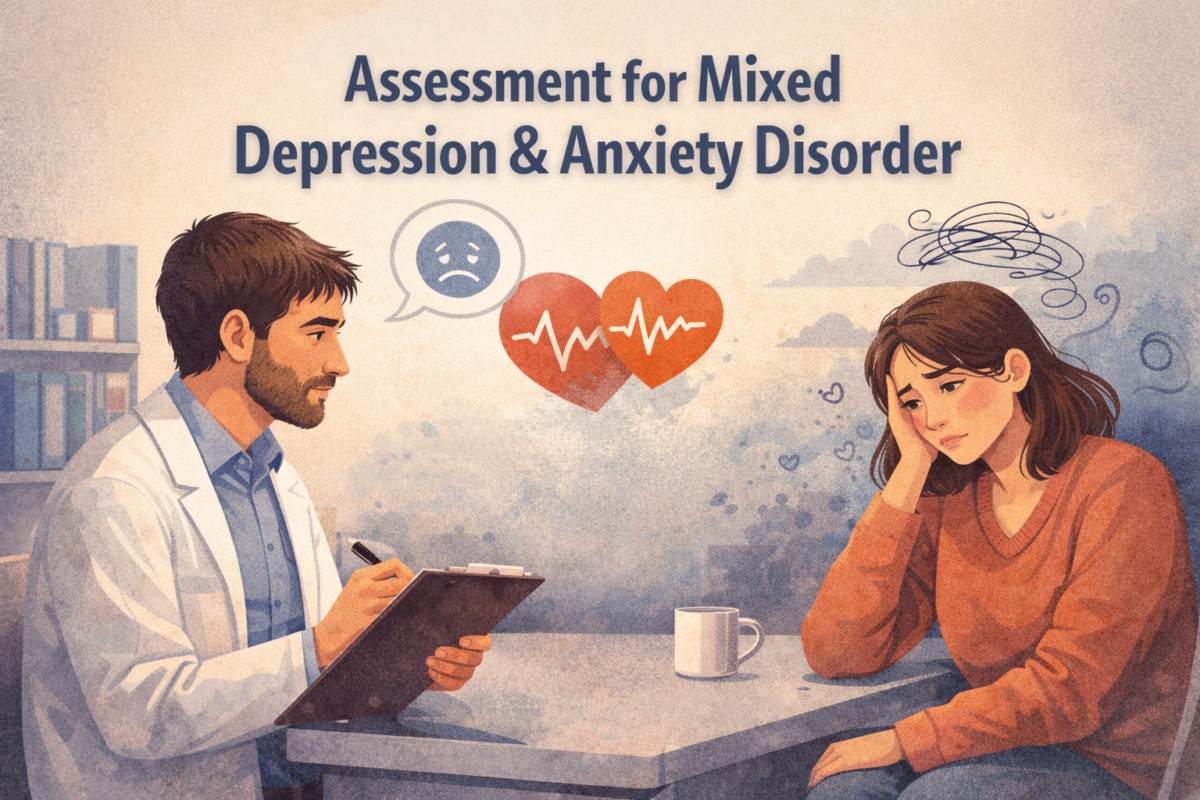
How a Proper Assessment Actually Works (Beyond Symptom Checklists)
Assessment involves more than ticking boxes on a questionnaire.
A comprehensive psychiatric assessment for Mixed Depression and Anxiety Disorder typically explores the nature, duration, and progression of your symptoms, which symptoms showed up first and how they interact now, the impact on your work, relationships, and daily functioning, your personal and family mental health history, physical health factors and any medications you’re taking, and your current stressors and coping strategies.
Rather than forcing you into a single diagnostic box, good clinicians focus on creating a clear clinical formulation.
This means explaining how anxiety and depression are operating together for you specifically.
This approach guides treatment far more effectively than labels alone ever could.
Treatment: What Actually Works When You’re Fighting Both
When anxiety and depression occur together, treatment addresses both simultaneously.
Not one at a time. Not “let’s fix the anxiety first then deal with the depression.” Together.
Psychological Therapies
Talking therapies are often central to treatment.
Approaches commonly used include Cognitive Behavioural Therapy (CBT) targeting negative thought patterns and avoidance behaviors, acceptance-based therapies focusing on emotional flexibility, and psychodynamic therapy exploring underlying emotional conflicts and relational patterns.
The goal isn’t just reducing anxious rumination OR depressive withdrawal.
It’s addressing both and the ways they reinforce each other.
Medication Considerations
Medication for Mixed Depression and Anxiety Disorder may be considered when symptoms are moderate to severe or significantly interfering with your ability to function.
In mixed presentations, medication choices are made carefully to address both mood and anxiety symptoms. Your psychiatrist isn’t just throwing SSRIs at the wall to see what sticks—they’re considering how to target both patterns simultaneously.
Here’s the reality: Medication is usually most effective when combined with psychological support, not used alone.
Lifestyle and Supportive Measures
Supportive strategies include improving sleep routines, gradually re-engaging with activities you’ve withdrawn from, reducing alcohol and excessive caffeine, and building predictable daily structure.
Let’s be clear about what these are: They support recovery. They’re not substitutes for professional care when symptoms are persistent and disruptive.
When You Should Actually Seek Professional Help
You should consider seeking professional assessment for Mixed Depression and Anxiety Disorder if low mood and anxiety persist for several weeks or months, symptoms interfere with work, relationships, or daily tasks, you feel emotionally exhausted or stuck in patterns you can’t break, or self-help strategies haven’t led to meaningful improvement.
Here’s why early assessment matters:
It can prevent symptoms from becoming more entrenched and reduce long-term impact. The longer you wait, the harder patterns are to shift.
Questions Everybody Asks About Mixed Depression and Anxiety (Answered Honestly)
Is mixed depression and anxiety a real diagnosis?
Clinically, it’s a recognised and commonly encountered presentation, even if diagnostic labels vary between systems.
Can mixed anxiety and depression improve?
Yes. With appropriate support, most people experience significant improvement.
Is treatment different from treating anxiety or depression alone?
Treatment is tailored to address both sets of symptoms together, rather than focusing on one in isolation.
Does having both mean symptoms are more severe?
Not necessarily, but the combination can feel more exhausting and complex without proper support.
Can I have Anxiety and Depression at the same time?
Yes. Anxiety and depression commonly occur together, with symptoms overlapping and interacting. This is sometimes described as mixed depression and anxiety disorder or mixed anxiety and depressive disorder.
What are the main symptoms of MADD?
The main symptoms include persistent low mood, ongoing worry or tension, fatigue, poor concentration, sleep disturbance, irritability, and physical symptoms such as restlessness or muscle tension.
What is the most effective way to treat anxiety and depression?
The most effective approach usually combines psychological therapy with, when appropriate, medication and lifestyle support, tailored to the individual’s symptoms and circumstances.
Bottom Line: What You Actually Need to Know
Mixed depression and anxiety disorder involves overlapping symptoms of both conditions. The symptoms can be deeply tiring and disruptive to your daily life. Having both doesn’t mean your symptoms are less valid or less serious often quite the opposite.
Accurate assessment focuses on patterns, not just labels. Effective treatment addresses anxiety and depression together, not separately. And with professional support, meaningful improvement is absolutely possible.
Understanding mixed depression and anxiety helps you feel less confused and more supported.
With the right assessment and care, you can regain emotional balance, clarity, and a sense of direction.
Not overnight. Not with some miracle cure. But genuinely, sustainably, with the right support in place.