
Is a Private Mental Health Clinic Worth it? What Patients Actually Get
January 13, 2026
How to Find a Private Psychiatrist in UK (Without Getting Messed Up)
January 15, 2026
Here’s what most people get wrong about booking a private psychiatrist in Glasgow:
Do you think:
- Faster access = better care?
- All psychiatrists offer the same service?
I understand that NHS waiting list stretching 6-18 months may sound frustrating because you need answer NOW. But rushing into private psychiatric care without understanding what you’re actually getting can leave you with unclear diagnoses, fragmented treatment, and a lighter wallet.
Here’s the reality: Private psychiatric care in Glasgow offers faster access, personalised assessments, and real continuity of treatment. But only if you choose the right psychiatrist.
This guide walks you through the 7 non-negotiables you must consider before booking. Not the marketing fluff. The actual factors that determine whether you get quality care or just a quick consultation that leads nowhere.
Why This Decision Actually Matters (More Than You Think)
Mental health treatment isn’t like ordering off a menu. You can’t just pick any psychiatrist and expect the same outcome.
A qualified consultant psychiatrist provides accurate diagnosis, safe prescribing practices, and structured follow-up care. They work within evidence-based frameworks and maintain accountability through professional registration.
The wrong choice? Unclear outcomes. Unnecessary costs. Treatment plans that don’t account for your medical history. Prescriptions without proper monitoring.
Here’s what a trusted private psychiatrist in Glasgow actually delivers:
Evidence-based clinical assessments using recognised diagnostic frameworks. Clear explanations of what’s happening and why. Safe prescribing practices with proper monitoring. Ongoing support when you need it, not just a one-off consultation that leaves you hanging.
The bottom line: Making the right choice from the start saves you time, money, and the emotional toll of starting over with someone new.
Qualifications and GMC Registration (This Isn’t Optional)
The Difference Between a Psychiatrist and Everyone Else
Not all mental health professionals are the same. And this distinction matters more than most people realise.
A consultant psychiatrist is a medically qualified doctor who completed medical school, foundation training, and then specialised in psychiatry for years. This medical training means they can diagnose complex mental health conditions, prescribe and manage medication, and assess how physical health interacts with mental health.
Psychologists, therapists, and counsellors play important roles in mental healthcare. But they cannot prescribe medication. They cannot provide medical diagnoses. And they’re not trained to spot when mental health symptoms are actually caused by underlying medical conditions.
Here’s what nobody tells you: If medication might be part of your treatment, or if you need a formal diagnosis for work, benefits, or specialist referrals, you need a psychiatrist. Not a different type of mental health professional.
GMC Registration: Your Safety Net
Every psychiatrist practicing in the UK must be registered with the General Medical Council (GMC). This registration isn’t just bureaucratic paperwork, it’s your confirmation that:
The person across from you is medically qualified and holds specialist status in psychiatry. They adhere to professional and ethical standards that can be enforced. They’re accountable within the UK healthcare system if something goes wrong.
You can verify GMC registration in under 2 minutes on the GMC website. If a psychiatrist isn’t GMC-registered, walk away.
When you choose a GMC-registered consultant psychiatrist in Glasgow, you’re ensuring your care meets national safety and quality standards. Not negotiable.
Clinical Expertise and What Conditions They Actually Treat
Not Every Psychiatrist Treats Everything
Here’s a mistake people make constantly: assuming all psychiatrists have the same expertise.
Psychiatry has subspecialties. Some psychiatrists focus on anxiety and depression. Others specialise in ADHD assessments for adults. Some work primarily with psychosis and schizophrenia. Others focus on trauma-related conditions or complex medication reviews.
This matters because accurate diagnosis depends on experience with your specific condition.
When booking a private psychiatrist in Glasgow, check whether their clinical expertise actually matches what you need. Look at their background. Check what conditions they commonly assess. Don’t assume.
Common Conditions Assessed Privately
Private psychiatric assessments in Glasgow commonly cover:
Generalised anxiety disorder and panic disorder. Depression and other mood disorders. ADHD and neurodevelopment assessments in adults. Sleep disorders affecting mental health. Medication optimisation when current treatment isn’t working.
But here’s the crucial part: matching your concerns to the psychiatrist’s experience leads to more accurate assessments and better outcomes. Generic expertise doesn’t cut it when you’re dealing with complex or nuanced conditions.
Clarify this before you book. Not after.
Assessment Process and Appointment Structure (Where Most Services Cut Corners)
What Actually Happens in a Quality Assessment?
A comprehensive psychiatric assessment isn’t a 15-minute chat and a prescription.
A reputable private psychiatrist in Glasgow conducts a detailed evaluation that includes your full psychiatric history, complete medical and medication review, family and personal background, and current symptoms with their functional impact on your daily life.
This process takes time. It requires depth. And it allows for accurate diagnosis rather than rushed conclusions based on incomplete information.
The Red Flag: Extremely Short Assessments
Be skeptical of appointments that run 20-30 minutes for an initial psychiatric assessment. Quality evaluations typically last 45-90 minutes depending on complexity.
Sound excessive? It’s not.
Understanding your mental health requires context. Pattern recognition across months or years. Medical history that might interact with psychiatric symptoms. Family history that influences diagnosis. The functional impact of symptoms on work, relationships, and daily life.
You can’t rush that into 20 minutes and call it comprehensive.
In-Person vs Online: Both Work, With the Right Approach
Appointments may be in-person consultations in Glasgow or secure online video assessments. Both formats can deliver quality care.
What matters isn’t the format—it’s the depth, clarity, and focus on patient understanding throughout the appointment.
Continuity of Care and Follow-Up Support (Or Lack Thereof)
One-Off Assessments vs Ongoing Treatment
Here’s a question most people don’t ask until it’s too late: What happens after the initial assessment?
Some private psychiatrists only offer one-off diagnostic evaluations. You get a diagnosis, maybe a prescription, and then… you’re on your own to figure out follow-up care.
Other psychiatrists provide ongoing treatment and monitoring as part of their service.
If medication is prescribed, follow-up care isn’t optional. It’s essential for monitoring effectiveness, adjusting dosages safely, managing side effects, and ensuring the treatment plan evolves with your needs.
What Continuity of Care Actually Looks Like
A reliable private psychiatrist in Glasgow should offer scheduled follow-ups after starting medication, easy access for medication reviews when needed, and clear pathways for ongoing support beyond the initial assessment.
This doesn’t mean you’re locked into seeing them forever. But it does mean you’re not abandoned with a prescription and no professional oversight.
Ask about this explicitly before booking: “What follow-up support is available after the initial assessment?” If the answer is vague or nonexistent, that’s your warning sign.
Costs, Fees, and What’s Actually Included (The Hidden Expenses)
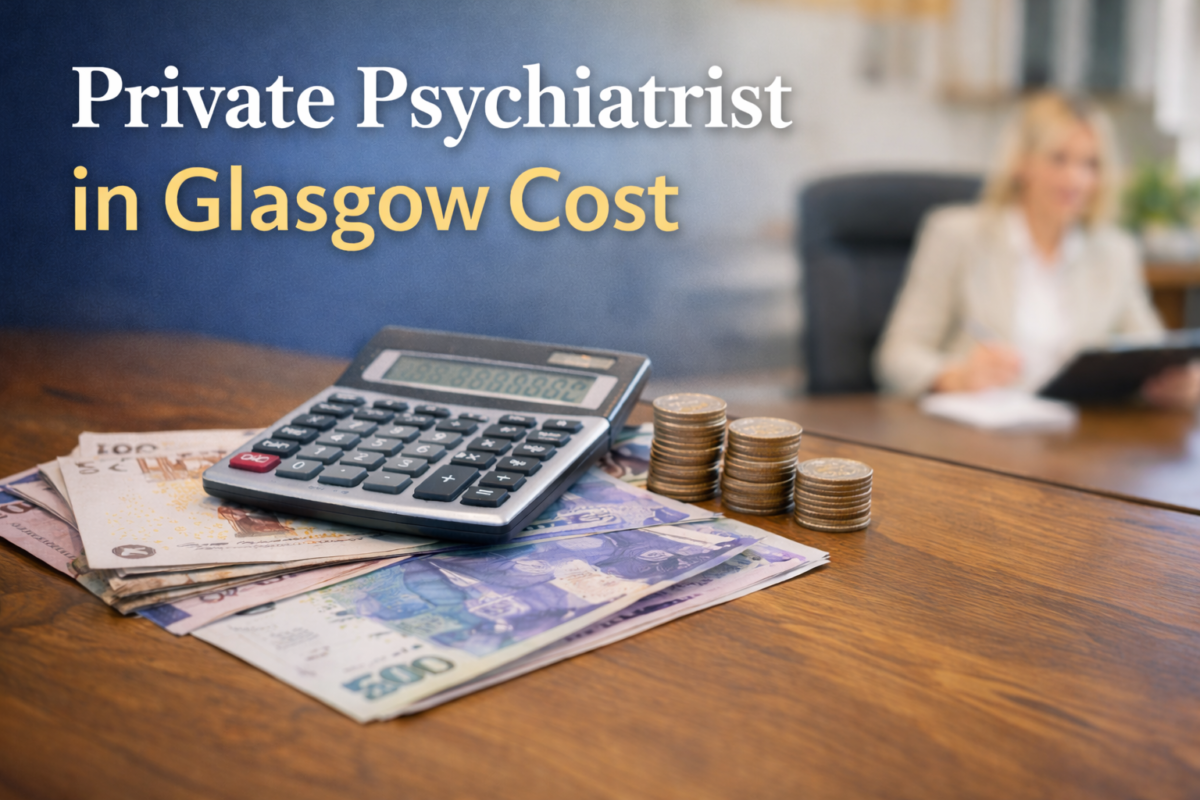
Understanding Private Psychiatrist Glasgow Costs
Private psychiatric care is an investment. Costs vary based on appointment length, complexity of assessment, and the psychiatrist’s experience level.
Let’s be direct: You’re paying for expertise, faster access, and personalized care. But transparency should be non-negotiable.
Always request a clear breakdown of fees before booking. Not an estimate. An actual breakdown.
What’s Included vs What Costs Extra
Here’s where things get tricky. Some clinics charge separately for:
Written diagnostic reports. GP letters documenting your assessment. Private prescriptions. Each follow-up appointment.
Others include these in the initial consultation fee.
The problem? Many people assume everything is included, then get hit with unexpected charges for the diagnostic report they need for their employer or the GP letter required for shared care arrangements.
Understanding what’s included upfront prevents financial surprises later. And it helps you compare services accurately, not just by headline consultation fees, but by total cost of care.
Communication With Your GP and Other Services (The Coordination That Makes or Breaks Treatment)
Why GP Letters and Shared Care Arrangements Matter
Your psychiatrist doesn’t exist in isolation. For most people, effective mental healthcare requires coordination between private psychiatric care and NHS services.
A professional private psychiatrist in Glasgow should provide detailed GP letters documenting your assessment and recommendations, support shared care agreements where appropriate for ongoing prescriptions, and coordinate with your GP when transitioning care or managing medications long-term.
Here’s the truth about private psychiatric assessments: They’re often the starting point, not the entire journey. Clear documentation and communication improve continuity when you transition back to NHS services and reduce delays in accessing ongoing treatment.
What Happens After Private Assessment
Many patients use private psychiatry for faster diagnosis, then work with their GP for ongoing NHS prescription and monitoring. This approach works, but only if your psychiatrist provides comprehensive documentation your GP can actually use.
Ask explicitly: “Will you provide a detailed letter to my GP? What information will it include? How does shared care work if medication is prescribed?”
Vague answers to these questions should concern you.
Availability, Waiting Times, and Accessibility (Speed vs Quality)
How Quickly You Can Actually Be Seen
One of the main advantages of private psychiatry is reduced waiting times. Many patients can be seen within days or weeks rather than the 6-18 month NHS wait.
This matters when you’re struggling. When you need clarity. When waiting months simply isn’t an option.
But here’s the critical caveat: Speed should never come at the cost of quality.
A psychiatrist who can see you tomorrow but rushes through a 20-minute assessment isn’t actually solving your problem. They’re taking your money while providing substandard care.
In-Person vs Online Appointments in Glasgow
Private psychiatrists in Glasgow typically offer both face-to-face consultations and online video appointments. This flexibility improves access for people with busy schedules, mobility challenges, or who live outside the immediate Glasgow area.
Both formats can deliver quality care. Choose based on your comfort level and practical considerations not because one is inherently better than the other.
Common Mistakes People Make When Booking (And How to Avoid Them)
Choosing Based on Speed or Cost Alone
Look, affordability matters. Availability matters. But choosing a psychiatrist solely based on who’s cheapest or who can see you fastest is a recipe for poor outcomes.
The consequences? Incomplete assessments. Unclear diagnoses. Treatment plans that don’t account for your full medical picture. Money spent on consultations that don’t actually move you forward.
Quality psychiatric care requires time, expertise, and proper process. Compromising on these factors to save £100 or get seen three days earlier often costs you more in the long run—in both money and mental health outcomes.
Not Clarifying Outcomes or Next Steps
People book private psychiatric assessments assuming the diagnosis will automatically lead to treatment, prescriptions will continue indefinitely with easy refills, and GP involvement is guaranteed without additional steps.
Then reality hits.
The assessment provides a diagnosis but no ongoing treatment plan. The prescription is private-only with no NHS pathway. The GP letter costs extra and takes weeks to arrive.
Ask these questions before you book:
What will I receive at the end of the assessment? Is ongoing treatment available or is this diagnostic only? How does prescription management work? What involvement will my GP have? What are my options after the initial consultation?
Clear answers to these questions prevent expensive misunderstandings.
How to Book a Private Psychiatric Appointment in Glasgow With Confidence
Booking the right private psychiatric appointment in Glasgow starts with informed decision-making, not desperate urgency.
Before you commit, verify GMC registration and consultant status—this takes two minutes online. Review their areas of expertise and confirm they match your specific needs. Understand the assessment structure, appointment length, and what’s included in costs. Ask explicitly about follow-up care and GP communication.
A thoughtful approach ensures you receive safe, ethical, and effective psychiatric care tailored to your actual needs.
Not just faster access. Not just any appointment. The right care that actually supports your mental wellbeing beyond a single consultation.
Because here’s what this really comes down to: Choosing the right psychiatrist isn’t about accessing care quickly. It’s about receiving care that truly helps now and in the future. That’s worth getting right the first time.