Private Psychiatric Assessment UK – What You Actually Get from it?
January 12, 2026
Private Psychiatrist in Glasgow: 7 Things You Must Consider Before Booking
January 14, 2026
Here’s what most people get wrong about private mental health clinics:
They think it’s either a magic solution that’ll fix everything in three sessions, or they assume it’s just overpriced management for wealthy people who don’t want to wait.
Both assumptions are dead wrong.
Look, if you’re searching for a private mental health clinic, you’re probably stuck. Maybe you’re on an NHS waiting list that stretches 6-18 months ahead. Maybe you’re overwhelmed and don’t even know what kind of help you need. Or maybe you’re asking yourself whether spending your own money on mental health care actually makes sense.
Here’s the reality: A private mental health clinic isn’t a cure. It’s not a luxury. And it won’t magically solve your mental health problems.
But here’s what it IS: A way to get professional, structured mental health care when waiting feels impossible and you need answers now.
This article explains exactly what you get, what you don’t get, who it’s right for, and how to decide if it’s worth it for your situation.
No hype. No miracle promises. Just the practical truth.
What a Private Mental Health Clinic Actually Is (And What It Isn’t)
Let’s start with the fundamentals.
A private mental health clinic is an independent healthcare service that provides specialist assessment and treatment for mental health conditions outside the NHS. These clinics are staffed by qualified professionals, consultant psychiatrists, psychologists, therapists, and mental health nurses.
Here’s the crucial distinction most people miss:
This isn’t informal counseling or life coaching. A private mental health clinic offers medical-level mental health care. Assessments are conducted by medically trained psychiatrists. Diagnoses follow recognized clinical criteria like ICD-11 or DSM-5. Treatment recommendations are evidence-based.
Private clinics don’t replace NHS services. They’re an alternative route to care—particularly when you need faster access, continuity with the same clinician, and personalized treatment planning.
Think of it this way: The NHS is doing essential work with limited resources. Private clinics exist because demand massively outstrips supply, and some people can’t wait or need something different.
What Services You Actually Get From a Private Mental Health Clinic
Psychiatric Assessment and Diagnosis
This is the core service most people come for.
A comprehensive psychiatric assessment means sitting down with a consultant psychiatrist for a detailed consultation, typically 60-90 minutes, sometimes longer for complex cases. They’re there to understand your symptoms, background, and current difficulties.
Here’s what gets explored:
Your presenting mental health concerns, your personal and family psychiatric history, physical health and current medications, and the psychological and social factors affecting your wellbeing.
Where appropriate, you’ll receive a formal diagnosis using recognised diagnostic frameworks. But here’s what nobody tells you: Sometimes a clinical formulation is more useful than forcing a diagnostic label.
A good psychiatrist won’t slap a diagnosis on you just because you’re paying for one. They’ll explain what you’re experiencing and what it means for treatment—with or without a formal label.
Therapy and Psychological Treatment
Most private mental health clinics either provide psychological therapies directly or make clear recommendations based on your assessment.
This might include Cognitive Behavioral Therapy (CBT), trauma-focused therapy, psychodynamic therapy, or supportive and integrative approaches.
Not all clinics deliver therapy in-house. But the good ones will tell you exactly what type of therapy would help and where to access it, whether through the clinic, privately elsewhere, or via NHS services.
Medication Review and Management
If medication is appropriate for your situation, a consultant psychiatrist can provide expert guidance.
This could mean starting medication, adjusting existing prescriptions, or reviewing effectiveness and side effects with you.
Here’s the truth about medication in private care: Decisions are never automatic. They’re made collaboratively, weighing risks, benefits, and your preferences. A responsible psychiatrist won’t push medication if it’s not right for you, and they won’t withhold it if it genuinely would help.
Who a Private Mental Health Clinic Is Actually For
Let’s be honest: Private mental health care isn’t the right choice for everyone.
Understanding whether it’s suitable for YOUR situation matters more than anything else in this article.
When Private Care Makes Sense
A private mental health clinic may be right for you if:
You’re experiencing persistent mental health symptoms that are affecting your daily life, and NHS waiting times feel too long for your needs. You want a thorough psychiatric assessment with adequate time—not a rushed 15-minute appointment. You need a second opinion or review of existing treatment that isn’t working.
Or maybe you value continuity with the same consultant psychiatrist instead of seeing different people each time. Perhaps you require a detailed report for work, education, or legal reasons.
Here’s what’s interesting: Many people choose private mental health clinics not because their difficulties are severe, but because they want clarity, structure, and timely support.
They’re not in crisis. They’re just stuck, confused, or deteriorating while waiting.
When NHS Care Is the Better Option
NHS care may be more appropriate if you’re in immediate crisis or at high risk of harm, if you require emergency or inpatient care, or if you need long-term intensive support without the ability to self-fund.
Private clinics do not replace emergency or crisis services. If you’re in genuine crisis, NHS emergency services or Crisis Teams are your best route, and good private clinics will tell you this directly.
They’ll often direct patients back to NHS pathways when it’s necessary for safety or continuity.
What Actually Happens When You Contact a Private Mental Health Clinic
Self-Referral and Getting Started
Here’s one of the biggest practical advantages: You can self-refer.
No GP referral needed. No bouncing between services trying to get someone to take you seriously.
The process typically looks like this:
You make initial contact by phone or email. Someone discusses your concerns and needs with you to determine if the service is appropriate. You book an assessment appointment—often available within days or weeks. You complete pre-assessment questionnaires so the clinician understands your situation before you arrive.
This early stage exists to ensure the service can actually help you and that expectations are clear from the start.
Building Your Treatment Plan
Following your assessment, the clinic works with you to develop a treatment plan.
This might include psychiatric follow-up appointments, therapy recommendations, medication management, or liaison with your GP or NHS services (with your consent, obviously).
The focus is creating a plan that fits your situation—not forcing you into a one-size-fits-all protocol.
Good clinics don’t just assess and disappear. They help you understand the next steps and connect you with the right support, whether that’s within the clinic or elsewhere.
Inpatient vs Outpatient Care: What’s the Difference?
Most people accessing a private mental health clinic use outpatient services.
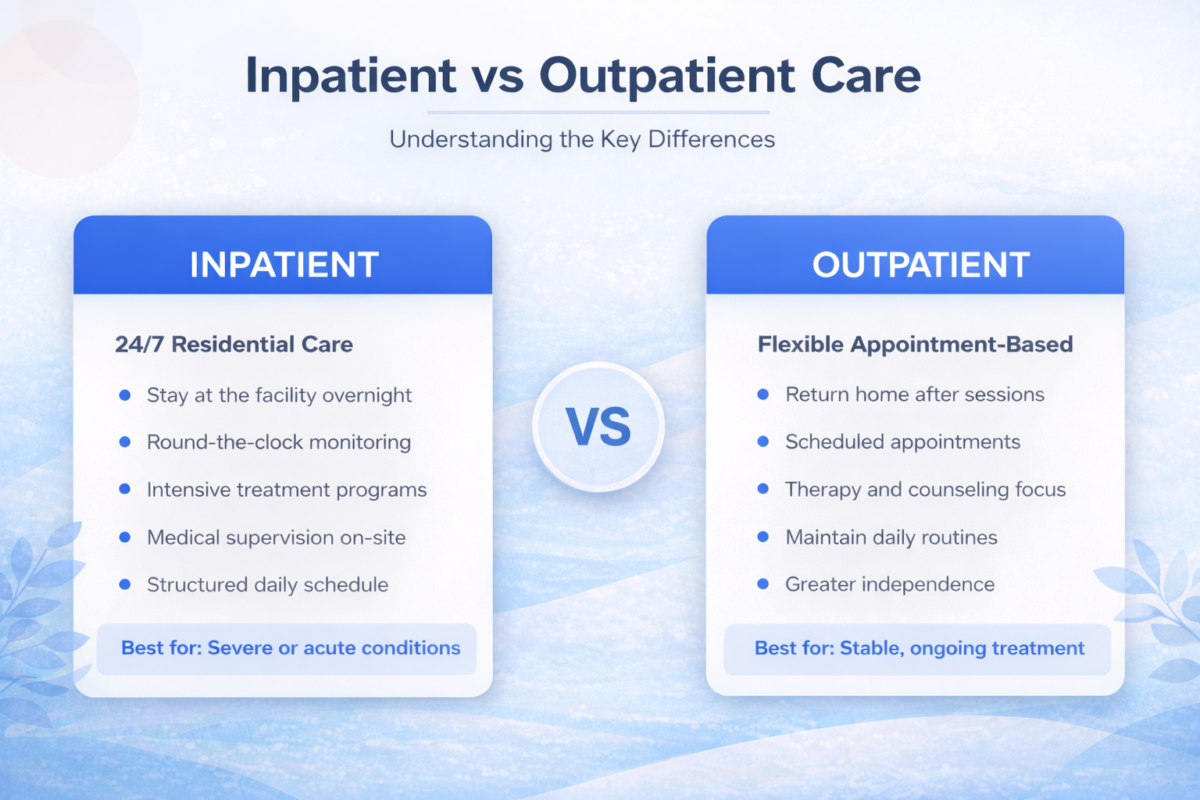
Outpatient care means attending appointments while continuing your daily life. You go home after each session.
Inpatient care means staying at a residential facility with 24-hour support—reserved for people who need close monitoring or intensive structured treatment.
How This Affects Cost and What You Get
Inpatient care is significantly more expensive due to staffing, accommodation, and treatment intensity.
It’s usually necessary only when risk levels are high or someone needs around-the-clock support to stabilize.
Outpatient care is more flexible, less costly, and often highly effective for many mental health conditions when risk is manageable.
Here’s the bottom line: Unless you specifically need inpatient care, you’ll be accessing outpatient services. And for most people, that’s exactly what works.
What You ACTUALLY Get From a Private Mental Health Clinic
Let’s separate what’s real from what’s marketing.
Speed of Access and Reduced Waiting Times
This is the most significant benefit and often the deciding factor.
Appointments are usually available within days or weeks rather than months. Sometimes even sooner if there’s urgency.
When your symptoms are escalating, when you’re losing functionality, or when you just need clarity urgently, this speed makes a substantial difference.
It’s not about jumping the queue because you have money. It’s about accessing care when waiting genuinely isn’t viable for your situation.
Continuity of Care With the Same Clinician
Private clinics usually offer continuity with the same clinician throughout your treatment.
This allows better understanding of your history, more consistent decision-making, and stronger therapeutic relationships.
Continuity is often cited by patients as one of the most valuable aspects of private care—and honestly, it’s something the NHS struggles to provide due to service structure and staffing constraints.
Seeing the same person who knows your story makes a real difference.
What You Do NOT Get From a Private Mental Health Clinic
Understanding limitations prevents disappointment.
No Guaranteed Outcomes or Diagnoses
A private mental health clinic cannot guarantee you’ll get a specific diagnosis, a cure, or a particular outcome.
Mental health is complex. Responsible clinicians don’t make promises they can’t keep.
Sometimes the answer is “we need more time to understand this.” Sometimes it’s “multiple factors are contributing and there’s no single diagnosis.” Sometimes treatment works brilliantly. Sometimes it takes trial and error.
Paying for care doesn’t change the complexity of mental health.
No Unlimited Therapy or Open-Ended Care
Private care is structured and time-limited unless otherwise agreed.
You’re not automatically getting unlimited therapy sessions or indefinite treatment just because you’re paying. Each session costs money, and good clinics are transparent about this from the start.
Some people need ongoing support and that’s fine. But it involves ongoing costs, and you need to know that upfront.
Private Mental Health Clinic vs NHS Care: The Honest Comparison
Access and Waiting Times
Private Mental Health Clinic: Faster access, appointments within days or weeks.
NHS Care: Longer waits, often 6-18 months for non-urgent cases, but free at the point of use.
Speed is often the deciding factor for patients choosing private care. If you can wait, NHS care is excellent. If you can’t, private care exists for that reason.
Cost vs Availability
Private care involves self-funding. NHS care is publicly funded.
Here’s what many people do: They use a private clinic for initial assessment and treatment planning, then continue treatment within the NHS once they have clarity and direction.
It’s not all-or-nothing. You can combine both systems strategically.
Continuity and Choice of Clinician
Private clinics often allow greater choice of clinician and more consistent follow-up.
NHS services may involve seeing different professionals due to service structure, staffing, and resource constraints. It’s not a failure of the NHS it’s a reality of a system under enormous pressure.
Common Questions About Private Mental Health Clinics
Are private mental health clinics regulated in the UK?
Yes. Clinics and clinicians must meet professional and regulatory standards. Psychiatrists are registered with the General Medical Council (GMC), psychologists with the HCPC, and services are often registered with the Care Quality Commission (CQC).
Can a private clinic work alongside my GP or NHS team?
Yes. With your consent, information can be shared between your private clinician and NHS services. In fact, good private care often involves this coordination.
Is online care available?
Many private mental health clinics now offer secure video consultations. This can be particularly useful if you live far from the clinic or have mobility challenges.
Final Thoughts: Is a Private Mental Health Clinic Worth It?
A private mental health clinic is not a shortcut or a luxury.
For many people, it’s a practical way to access timely, structured, and professional mental health care when the alternative is waiting months while struggling.
Whether it’s worth it depends entirely on your circumstances, needs, and priorities.
Can you wait for NHS care, or is waiting actively making things worse? Do you need clarity and structure now, or can you manage with current support? Do you have the financial means to self-fund without causing other problems?
Understanding what private clinics actually provide and what they don’t allows you to make an informed, confident decision.
At Dr Musa Sami’s psychiatric practice, care is focused on thoughtful assessment, ethical practice, and helping patients understand their mental health clearly.
No unnecessary labels. No false promises. Just honest, professional support when you need it.